• The forum upgrades have been completed. These were moderate security fixes from our software vendor and it looks like everything is working well. If you see any problems please post in the Forum Technical Support forum or email us at forum_moderator (at) aawforum.org. Thank you
  • February 2026 Turning Challenge: Cookie Jar! (click here for details)
  • Congratulations to Chad Eames for "Red Tines" being selected as Turning of the Week for February 23, 2026 (click here for details)
  • AAW Symposium demonstrators announced - If the 2026 AAW International Woodturning Symposium is not on your calendar, now is the time to register. And there are discounts available if you sign up early, by Feb. 28. Early Bird pricing gives you the best rate for our 40th Anniversary Symposium in Raleigh, North Carolina, June 4–7, 2026. (There are discounts for AAW chapter members too) For more information vist the discussion thread here or the AAW registration page
  • Welcome new registering member. Your username must be your real First and Last name (for example: John Doe). "Screen names" and "handles" are not allowed and your registration will be deleted if you don't use your real name. Also, do not use all caps nor all lower case.

Green Cherry Burl Bowl

Joined
Jan 31, 2026
Messages
6
Likes
5
Location
Graham, NC
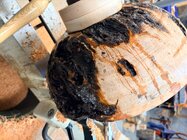
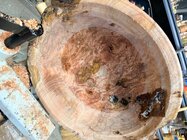
I like to throw some questions out to some of you that have some experience turning bowls from large green hurls, in this case cherry.
1. Should a Burl bowl be roughed out like a regular bowl with a 1:10 thickness to allow for drying? With the grain direction changes, soft spots and voids how should I allow for changes during the drying process? Can this be turned to the final thickness with some alternative treatment?
2. Soft spot, bark, voids and stability. I have use thin CA for some small parts in the past. What are your thoughts on wood stabilizers such as a PC Petrifier wood hardener?

I have attached my current project. I appreciate any help and advice.
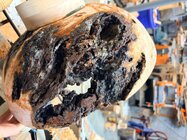
 

Attachments

  • IMG_1571.jpeg
    IMG_1571.jpeg
    524.9 KB · Views: 18
  • IMG_1570.jpeg
    IMG_1570.jpeg
    460.2 KB · Views: 18
  • IMG_1569.jpeg
    IMG_1569.jpeg
    560.1 KB · Views: 18
Every piece is different, but I usually turn burls straight to final size/thickness.
If it does move when it dries, it will hardly be noticeable against the backdrop of the burl figure.
One consideration I'd make for movement would be to have a foot on the bowl that can be sanded flat if/when/after it moves.

If I have any doubt at all about bark staying on all by itself, I'll remove it. Sometimes this requires prying or picking at it with various tools - from chisels to awls to wire brushes. I often leave bark on while turning for the tiny bit of structure it provides (unless it's going to turn into projectiles). But since I'm incorporating the bark voids into the final piece, sometimes the bark has to go early so I can see the voids developing.

I personally don't like wood stabilizers - the few times I've tried them (like the minwax stuff) I've had limited success and just felt like I was turning the wood into plastic. YMMV.
If there's small sections of soft/punky wood, I'd consider treating it like bark and removing it - in such a way that a sorta natural-looking void is left.
Bigger areas of soft punky wood - choice is to remove it (make smaller things) or do the stabilizer stuff.

$0.02 value - for free!
 
Thanks for getting back David. That is what I was thinking but this is only the second fairly large Burl that I have done and it is very green where as the first one was from a tree that had begun to die so half green, half dry. On the first one I took it all the way and after sanding, saturated it with tung oil. After several coats it turned out great. Thanks again for your advice.
 
Back
Top