• The forum upgrades have been completed. These were moderate security fixes from our software vendor and it looks like everything is working well. If you see any problems please post in the Forum Technical Support forum or email us at forum_moderator (at) aawforum.org. Thank you
  • Congratulations to Bernie Hyrtzak, People's Choice in the January 2026 Turning Challenge (click here for details)
  • Congratulations to David Croxton for "Geri's Basket Illusion" being selected as Turning of the Week for February 2, 2026 (click here for details)
  • AAW Symposium demonstrators announced - If the 2026 AAW International Woodturning Symposium is not on your calendar, now is the time to register. And there are discounts available if you sign up early, by Feb. 28. Early Bird pricing gives you the best rate for our 40th Anniversary Symposium in Raleigh, North Carolina, June 4–7, 2026. (There are discounts for AAW chapter members too) For more information vist the discussion thread here or the AAW registration page
  • Welcome new registering member. Your username must be your real First and Last name (for example: John Doe). "Screen names" and "handles" are not allowed and your registration will be deleted if you don't use your real name. Also, do not use all caps nor all lower case.

Importance of words...

Joined
Jun 16, 2004
Messages
1,268
Likes
1,601
Location
Colorado Springs, CO
Just came across a Google tool (Books Ngram Viewer) that displays a graph showing relative frequency of words and phrases occurring in a "corpus of books" (e.g., American English, British English, French, etc...) over a selected period of time.

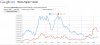
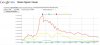
Here's a fun exercise - the first graph is an analysis of "wood art" "wood craft" "wood working" and "wood turning" from 1880 through 2008. The second graph is an analysis of "wood turning" versus "woodturning" over the same period. What conclusions do you draw?
 

Attachments
  • ngram1.JPG
    ngram1.JPG
    84.6 KB · Views: 116
  • ngram2.JPG
    ngram2.JPG
    90.2 KB · Views: 122
Last edited:
Wood working and Wood turning reached their peak usage during the "Craftsman" era. Wood turning peaked again prior and during the Second World War.

Wood art has been pretty much flat lined during much of the century.

Woodturning and wood art have gained traction and are on the rise since the founding of the AAW.
 
It's interesting when doing a search like Ed's at the bottom is a listing by year groups. When you click on a group it pulls up a Google page showing all a listing of the publications. One I pulled up show an article from about 1908. In it was a reference about young ladies learning woodturning at several schools.
 
What I see in the first chart is that woodworking and woodturning were both much more thriving industries a century ago than today.

In the second chart, it seems that the term wood turning was a casualty of the stock market crash of 1927 -- struggled to make a comeback, but was finally overtaken by the combined word "woodturning".
 
Back
Top