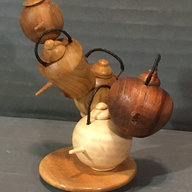
I did a small piece and applied an oil concoction sold at a local supplier - best I can guess, it's and oil/varnish/solvent mixture. The piece looked nice and it was a nice gift. Did the oil enhance the appearance? Yes, it looked nice. Will the finish preserve the piece? I doubt it. Will it protect against water vapor? No way.
I've been trying to analyze what I actually did. I applied the oil mixture and then wiped it off, leaving a thin film of solids. This film gets harder as the carrier solvents evaporate (gas out). After a few days I can abrade and re-apply, leaving another thin film of solids. After five or six coats, voila, it's done. But what was accomplished? Looks nice but for how long? I think it proper to classify any oil "wipe-off" finish as "low solids finishing".
To my thinking, a next stop up in long term appearance and protection are the spray lacquers. These impart a thicker layer of solids and generally require a considerable amount of "rubbing out" to avoid detractive surface textures that show under lighting. These might be termed "medium solids finishes" that better preserve appearance and better inhibit water vapor.
I'm seeing some reference to epoxy finishes - this would certainly be "high solids". The technique to apply and surface has to be super involved. Epoxy would certainly be the ultimate in preservation and inhibiting water vapor although every epoxy manufacturer I've talked to states that all epoxies will yellow over time.
My guess is that there is nothing available that is quick to apply that will both preserve and protect. Either you settle for quick to apply and compromise on the finished piece or a more involved finish that takes time and elbow grease. As there are a bunch of talented turners that know, and forgot, more than I ever will, would love to see your comments and suggestions.
I've been trying to analyze what I actually did. I applied the oil mixture and then wiped it off, leaving a thin film of solids. This film gets harder as the carrier solvents evaporate (gas out). After a few days I can abrade and re-apply, leaving another thin film of solids. After five or six coats, voila, it's done. But what was accomplished? Looks nice but for how long? I think it proper to classify any oil "wipe-off" finish as "low solids finishing".
To my thinking, a next stop up in long term appearance and protection are the spray lacquers. These impart a thicker layer of solids and generally require a considerable amount of "rubbing out" to avoid detractive surface textures that show under lighting. These might be termed "medium solids finishes" that better preserve appearance and better inhibit water vapor.
I'm seeing some reference to epoxy finishes - this would certainly be "high solids". The technique to apply and surface has to be super involved. Epoxy would certainly be the ultimate in preservation and inhibiting water vapor although every epoxy manufacturer I've talked to states that all epoxies will yellow over time.
My guess is that there is nothing available that is quick to apply that will both preserve and protect. Either you settle for quick to apply and compromise on the finished piece or a more involved finish that takes time and elbow grease. As there are a bunch of talented turners that know, and forgot, more than I ever will, would love to see your comments and suggestions.