I plan to regrind my large (1-1/4) spindle roughing gouge to change the bevel from the vendor ground 49 degree bevel to a 40 degree bevel. Should I leave the wings at 90 degrees to the bottom surface of the gouge, that is straight across, or should I rake them back slightly.

-
December 2025 Turning Challenge: Single Tree! (click here for details) -
Congratulations to Bob Henrickson, People's Choice in the November 2025 Turning Challenge (click here for details) -
Congratulations to Steven Gordon for "Dropped Ice Cream Cone" being selected as Turning of the Week for December 8, 2025 (click here for details) -
Welcome new registering member. Your username must be your real First and Last name (for example: John Doe). "Screen names" and "handles" are not allowed and your registration will be deleted if you don't use your real name. Also, do not use all caps nor all lower case.
You are using an out of date browser. It may not display this or other websites correctly.
You should upgrade or use an alternative browser.
You should upgrade or use an alternative browser.
Spindle Roughing Gouge Grind Shape
- Thread starter Lewis Elliott
- Start date

- Joined
- Apr 27, 2004
- Messages
- 9,303
- Likes
- 6,058
- Location
- Lakeland, Florida
- Website
- www.hockenberywoodturning.com
Depends on how you plan to use the tool.I plan to regrind my large (1-1/4) spindle roughing gouge to change the bevel from the vendor ground 49 degree bevel to a 40 degree bevel. Should I leave the wings at 90 degrees to the bottom surface of the gouge, that is straight across, or should I rake them back slightly.
lots of cuts for straight wings.
I want to minimize the possibility of catches, and it will ONLY be used for roughing out spindle type work.Depends on how you plan to use the tool.
lots of cuts for straight wings.
- Joined
- Apr 27, 2004
- Messages
- 9,303
- Likes
- 6,058
- Location
- Lakeland, Florida
- Website
- www.hockenberywoodturning.com
perfectly good reason .I want to minimize the possibility of catches, and it will ONLY be used for roughing out spindle type work.
I round over the sharp corner on the SRG in beginner classes.
once you get comfortable with the tool and want the sharp corners, it is easy to get back if it was just rounded slightly.
Last edited:
Thanks. I appreciate it.perfectly good reason .
I round over the sharp corner on the SRG in beginner classes.
once you get comfortable with tool and want the sharp corne, it is easy to get back if it was just rounded slightly.

I think you guys were talking 2 different things: angled wings vs sharp corners.
I slightly angle the wings back, just a few degrees, maybe 5. I do this to ensure no negative or concave area in the entire sweep of the edge, and makes it a bit less catchy.
Removing the sharp corners asain would only effect a plunge cut with the corner, which I dont do. There may be something else though.
I slightly angle the wings back, just a few degrees, maybe 5. I do this to ensure no negative or concave area in the entire sweep of the edge, and makes it a bit less catchy.
Removing the sharp corners asain would only effect a plunge cut with the corner, which I dont do. There may be something else though.
- Joined
- Apr 27, 2004
- Messages
- 9,303
- Likes
- 6,058
- Location
- Lakeland, Florida
- Website
- www.hockenberywoodturning.com
Yes.I think you guys were talking 2 different things: angled wings vs sharp corners.
rounding the corner leaves most of the straight wing so that it can be restored. With minimal tool loss.
the straight wing with a corner can make a peeling cut to make a tenon for a stool leg or any other tenon.
the gouge wing can cut with the flute facing down some what like a skew with the point down.
gets a pretty good surface.
3-4 times I saw a guy in the traveling Rawlings truck turn a major league bat using only an SRG.
used the sharp corner to shape the knob. Ans did that upside down finish cut.
Last edited:
Bevel angle has nothing to do with catches, and you just aren't paying attention if you take the point of that big SRG into the wood. I can maybe see it with a 3/4 SRG but not a 1 1/4".
My original post was a two parter. The first part mentioned my plan to re-shape my SRG to reduce the bevel angle and the second part was about changing the wing to possibly reduce the likelihood of a catch. The two are separate issues.Bevel angle has nothing to do with catches, and you just aren't paying attention if you take the point of that big SRG into the wood. I can maybe see it with a 3/4 SRG but not a 1 1/4".
When you grind back your wings by 5 degrees, do you flip the SRG over and adjust the platform to 5 degrees or do you do it freehand?I think you guys were talking 2 different things: angled wings vs sharp corners.
I slightly angle the wings back, just a few degrees, maybe 5. I do this to ensure no negative or concave area in the entire sweep of the edge, and makes it a bit less catchy.
Removing the sharp corners asain would only effect a plunge cut with the corner, which I dont do. There may be something else though.
This one SRG is actually slightly over 1-1/2 inches, I mis-quoted before. This SRG is quite a bit longer than my others and quite handle heavy. Somewhat awkward for both the “vee” arm and the platform. I use the “vee”-arm for my other shorter SRG’s but probably not for this one.

I do as Doug describes. For me, it's simply a matter of swinging the handle ever so slightly as I roll the tool from one corner to the other on the platform. It's somewhat akin to the subtle radius on the end of a wide, "flat" negative rake scraper, used on plate/platter bottoms--just gittin' those corners a little farther from trouble.
I'm not sure what you're thinking when you ask about flipping the tool over and adjusting the platform.
BTW, Montana's most accomplished woodturner, until Odie came along, used to grind his SRG's and scrapers with an acute angle. In use, they're pretty aggressive. If you're going to use the SRG ala Nick Cook for a large portion of your spindle turning, the aggressive angle is helpful and can achieve a good surface. In the hands of a novice, however, it's harder to control and more likely to get in trouble, as novices tend to get the edge in the wood before they have the bevel in contact. If your use of the SRG is simply to turn squares into cylinders, IMHO, a blunter angle will probably deal better with the 'pounding' of the corners.
I'm not sure what you're thinking when you ask about flipping the tool over and adjusting the platform.
BTW, Montana's most accomplished woodturner, until Odie came along, used to grind his SRG's and scrapers with an acute angle. In use, they're pretty aggressive. If you're going to use the SRG ala Nick Cook for a large portion of your spindle turning, the aggressive angle is helpful and can achieve a good surface. In the hands of a novice, however, it's harder to control and more likely to get in trouble, as novices tend to get the edge in the wood before they have the bevel in contact. If your use of the SRG is simply to turn squares into cylinders, IMHO, a blunter angle will probably deal better with the 'pounding' of the corners.
Last edited:
I have both on my SRGs. Some with a straight across grind and the others with a sweepback on the wings...
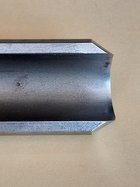
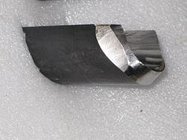
I use the ones with the swept back wings for planing cuts, like you would use a skew or bedan. It's like two tools in one. On some jobs I then don't have top pick up one of those other tools to complete the spindle turning.
When you say an acute angle do you mean a bevel angle on the order of about 25 degrees? Would that make the roughing out gouge perform like a spindle gouge for finer work?
BTW, I found out that making the bevel angle 40 degrees put the SRG close enough to the top of the grinding wheel that I was able to safely use the "vee"-arm. Because I have a high speed grinder I used a very light touch on the grinder; I rough re-shaped the SRG on the platform using my "blue" norton wheel and did the finish grind in the "vee"-arm using my 180 grit 1" wide CBN wheel. As a beginner, my rough re-shape was just that, very rough with such an awkward SRG; I don't have the muscle memory established to do a good job on the platform with such an unwieldy SRG. I may get to actually try it out next week and see whether my finish grind is any good. With all that steel to remove, it only took a few minutes to do the whole process.
I acquired much of my turning equipment many years ago (except for the CBN wheel and my newly acquired face turning equipment) but never got to use it until now. Back then, a high speed grinder was the recommended approach as was using the Wolverine "vee"-arm for SRG grinding, so I went with it . I realize that many modern turners have gone in a different direction, but I have to teach myself a light careful touch and use my vari-grind for spindle and bowl gouges.
BTW, I found out that making the bevel angle 40 degrees put the SRG close enough to the top of the grinding wheel that I was able to safely use the "vee"-arm. Because I have a high speed grinder I used a very light touch on the grinder; I rough re-shaped the SRG on the platform using my "blue" norton wheel and did the finish grind in the "vee"-arm using my 180 grit 1" wide CBN wheel. As a beginner, my rough re-shape was just that, very rough with such an awkward SRG; I don't have the muscle memory established to do a good job on the platform with such an unwieldy SRG. I may get to actually try it out next week and see whether my finish grind is any good. With all that steel to remove, it only took a few minutes to do the whole process.
I acquired much of my turning equipment many years ago (except for the CBN wheel and my newly acquired face turning equipment) but never got to use it until now. Back then, a high speed grinder was the recommended approach as was using the Wolverine "vee"-arm for SRG grinding, so I went with it . I realize that many modern turners have gone in a different direction, but I have to teach myself a light careful touch and use my vari-grind for spindle and bowl gouges.
Great information and pictures, thanks!I have both on my SRGs. Some with a straight across grind and the others with a sweepback on the wings...
I use the ones with the swept back wings for planing cuts, like you would use a skew or bedan. It's like two tools in one. On some jobs I then don't have top pick up one of those other tools to complete the spindle turning.
Why do you want to change the bevel angle then?My original post was a two parter. The first part mentioned my plan to re-shape my SRG to reduce the bevel angle and the second part was about changing the wing to possibly reduce the likelihood of a catch. The two are separate issues.
I was hoping for a slightly cleaner cut and to be able to position my largest SRG closer to the top of my grinding wheel to make the use of the “vee”-arm for sharpening safe.Why do you want to change the bevel angle then?
Clarification, do you adjust the platform “by” 5 degrees.When you grind back your wings by 5 degrees, do you flip the SRG over and adjust the platform to 5 degrees or do you do it freehand?
How do you accomplish the swept back wings? I assume you are grinding using the platform. It’s not clear to me how you get that swept back effect.I have both on my SRGs. Some with a straight across grind and the others with a sweepback on the wings...
I use the ones with the swept back wings for planing cuts, like you would use a skew or bedan. It's like two tools in one. On some jobs I then don't have top pick up one of those other tools to complete the spindle turning.
@Lewis Elliott I do as Dean described to angle the wings - done on a platform set for the bevel angle (40 deg for me) slightly pivot the handle toward the wing to “push” it into the wheel. You can do it using the vee and rolling the tool - spend a bit more time on the areas where material needs to be removed. My wings are just slightly tilted - will try to get a pic.
Its ok to create “multi facets” when reshaping. After you get the shape, make very light passes to blend it all together for a single facet. Resharpening is the same as straight wings, no need to “hover” as the shape already exists.
Its ok to create “multi facets” when reshaping. After you get the shape, make very light passes to blend it all together for a single facet. Resharpening is the same as straight wings, no need to “hover” as the shape already exists.
Thanks for the clarification, I appreciate it
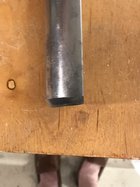
Pic of my 1-1/2” srg. The wing angle is so slight you may not be able to tell. It is not really a “primary” tool for me. For square stock, or whole logs that get turned to vases/hf’s, I do most of the rough work with a long wing bowl gouge - the srg can be catchy in rough interrupted cuts where its easy to get too much edge into the wood - also whole logs can have branches and other swirly areas an srg does not like.
I’ll use the srg after the work is mostly rounded and doesnt have large swirly grain areas. Great to use vs a skew for a fine cut using the wings (rolled way over, almost upside down).
I’ll use the srg after the work is mostly rounded and doesnt have large swirly grain areas. Great to use vs a skew for a fine cut using the wings (rolled way over, almost upside down).
I do like a tiny bit of sweep to my SRG wings, but not much. I only sharpen it on a platform, which is how I do all of my sharpening anyway. I do like a 40 or so degree bevel angle on it. They do a nice job with peeling cuts. If you are trying to get 'cleaner' cuts, then you need to do shear cuts, which would have the flutes rolled all the way over on the side, and the cutting edge at about 45 degrees to the wood as it spins. The shear angle makes for a cleaner cut with any tool you use.
robo hippy
robo hippy
Many SRGs are made and connected to wooden handles via a tang and collar. That connection may weaken in time. If that condition occurs, Sharpening on a vee-arm applies pressure to that connection causing the gouge to move into the sharpening wheel breaking the wheel or the tool. Worse it may result in injury. There have been incidences reported on this forum. Unless the SRG tool and handle have a solid connection, it is safer to sharpen this tool on a platform where the tang is not involved with supporting the tool.I was hoping for a slightly cleaner cut and to be able to position my largest SRG closer to the top of my grinding wheel to make the use of the “vee”-arm for sharpening safe.
My next comment is regarding the use of the SRG. If you turn away the edges of the SRG you will be losing the ability to use the tool to form pummels. The SRG can form them by holding the SRG perpendicular to the work peeling downward. If you round the edges, it's going to cost you a lot of metal grinding it back to the way you bought it which is usually square. I would watch the Stuart Batty videos provided by the AAW resources to explore and learn further uses of the SRG.
Thanks to all for your information. I appreciate it.
If you want a slightly cleaner cut, rotate the flute, and the chisel, and cut with the vertical surface like a skew. I've used the V arm all the time to grind the bevel at a 45 degrees. I've done that since Oneway started selling this fixture. That's before they used extrusions for the bases, so for decades.I was hoping for a slightly cleaner cut and to be able to position my largest SRG closer to the top of my grinding wheel to make the use of the “vee”-arm for sharpening safe.
How do you accomplish the swept back wings? I assume you are grinding using the platform. It’s not clear to me how you get that swept back effect.
Yes, Lewis, I freehand sharpen both of those SRGs on the platform. In the case of the one with the swept back wings, that has happened in small increments over time. I didn't just decide one day to put that grind profile on it... but increasingly preferred it as the wings crept back.
ThanksYes, Lewis, I freehand sharpen both of those SRGs on the platform. In the case of the one with the swept back wings, that has happened in small increments over time. I didn't just decide one day to put that grind profile on it... but increasingly preferred it as the wings crept back.
@Lewis Elliott you mentioned your large srg is cumbersome to sharpen. Might consider making a handle for it that is removable. You would have to use a platform vs the vee, but its an option. All of my large BG’s are removable, much easier to handle them in a jig for resharpening.
My 1-1/2+ SRG now works fine in the “vee” pocket for sharpening, once I reshaped the bevel angle to 40 degrees on the platform (the platform reshape was the unwieldy part); nice and high on the wheel with a very light touch and one or two sweeps across the wheel due to the aggressive metal removal from my high speed Jet grinder. I’m satisfied with that.
I do have a different question though. What causes the susceptibility to catches with a skew sharpened using the “vee” pocket, if you don’t hone afterwards? I see the catch issue mentioned but not explained.
I do have a different question though. What causes the susceptibility to catches with a skew sharpened using the “vee” pocket, if you don’t hone afterwards? I see the catch issue mentioned but not explained.
That catch on the grinder wheel is from having the bevel angle so blunt that you put the gouge on at center height on the wheel rather than higher on the wheel. The downward turn of the grinding wheel can catch the edge and jam the SRG in between the wheel and the end of the V arm. Platform is much safer, but I do all of my sharpening with platforms. With the Tormek and clones, this is not a problem since the wheel turns away from the cutting edge.
robo hippy
robo hippy
Hello Dennis,Many SRGs are made and connected to wooden handles via a tang and collar. That connection may weaken in time. If that condition occurs, Sharpening on a vee-arm applies pressure to that connection causing the gouge to move into the sharpening wheel breaking the wheel or the tool. Worse it may result in injury. There have been incidences reported on this forum. Unless the SRG tool and handle have a solid connection, it is safer to sharpen this tool on a platform where the tang is not involved with supporting the tool.
My next comment is regarding the use of the SRG. If you turn away the edges of the SRG you will be losing the ability to use the tool to form pummels. The SRG can form them by holding the SRG perpendicular to the work peeling downward. If you round the edges, it's going to cost you a lot of metal grinding it back to the way you bought it which is usually square. I would watch the Stuart Batty videos provided by the AAW resources to explore and learn further uses of the SRG.
I have often wondered why the "Spindle Roughing-in Gouge" as so named by Ernie Conover (one of my woodworking/turner heroes) in concert with many earlier AAW members, SRG, wasn't manufactured more like a pig sticker chisel, which has a metal ledge upon which the wooden handle sits which absorbs the strong blows from a mallet in use when making mortises by hand. Does anyone here know the specifics of how Crown or Taylor manufactures their SRG's? Is there something built into the handle to provide resistance against the tanged metal being pushed further into the handle from the force of usage? Since the visible design of the SRG has been around for 50+ or maybe even 100+ years, why has it remained the same, with the potential problem you mention.
I remember watching Norm Abram using the SRG on a spindle and what he would always do is remove the square corners of the rough spindle on his table saw before attaching the resultant hexagonal reshaped spindle onto his lathe for rounding with the SRG. It seems to me that if you did that, any chance of loosening goes away.
Due to the fear instilled by several comments on the topic here I have been considering the following. For a rough log, intended for vessel work, I was thinking about sawing off, by hand, any rough protrusions and then using my stout 3/4" Bowl Gouge to remove the bark, and then transitioning to my SRG to rough out the piece to round, would that work? That approach should remove any chance of the SRG loosening from use. Dennis, what do you think about this?
Comments/critiques are welcome and desired.
Thanks for the clarity on this Robo! I agree to the logic and was what prompted me to reduce the bevel angle on my SRG. It now sits way up on the wheel in what I believe is a very safe position.That catch on the grinder wheel is from having the bevel angle so blunt that you put the gouge on at center height on the wheel rather than higher on the wheel. The downward turn of the grinding wheel can catch the edge and jam the SRG in between the wheel and the end of the V arm. Platform is much safer, but I do all of my sharpening with platforms. With the Tormek and clones, this is not a problem since the wheel turns away from the cutting edge.
robo hippy
The catch question that I posed above was regarding what I have heard about Skew Chisels, ground using the grinder wheel without honing out the hollow, having a tendency to be catchy in the wood in use. I don't quite understand what would cause the catch in the wood when using the hollow-ground skew.That catch on the grinder wheel is from having the bevel angle so blunt that you put the gouge on at center height on the wheel rather than higher on the wheel. The downward turn of the grinding wheel can catch the edge and jam the SRG in between the wheel and the end of the V arm. Platform is much safer, but I do all of my sharpening with platforms. With the Tormek and clones, this is not a problem since the wheel turns away from the cutting edge.
robo hippy
- Joined
- Apr 27, 2004
- Messages
- 9,303
- Likes
- 6,058
- Location
- Lakeland, Florida
- Website
- www.hockenberywoodturning.com
All catches have one thing in commonThe catch question that I posed above was regarding what I have heard about Skew Chisels, ground using the grinder wheel without honing out the hollow, having a tendency to be catchy in the wood in use. I don't quite understand what would cause the catch in the wood when using the hollow-ground skew.
the cutting edge is presented to the wood in a Way that allows the wood to drive on to the edge burying the edge tinto the woody until something breaks.
a simple example a scraper held level on a convex surface
1. Cannot get a catch below center - the wood cannot drive onto the tool
2. used above center the wood will drive onto the tool when the bevel contacts the wood - catch!!!
the skew. - a skew has to be honed after coming off the grinder or it only cuts in the side with the burr up.
honing takes away the hollow ground effect.
The turning tools cut in following the bevel. More or less a straight flat cut.
a hollow bevel wants to cut the slight curve of the hollow this can turn the tool from the supported cutting position - it rolls off the bevel and lets the wood drive onto the tool edge- catch
honing Creates a short micro bevel which is flat and not curved.
Last edited:
Thanks for the explanations. A lot of nuggets of turning wisdom, which will take a little thought for me to begin to completely unpack. Do you hone all of your cutting tools or just the skew? I noticed that Cindy Drozda hones the inside of the flute of all of her bowl gouges, but not the bevels.All catches have one thing in common
the cutting edge is presented to the wood in a Way that allows the wood to drive on to the edge burying the edge tinto the woody until something breaks.
a simple example a scraper held level on a convex surface
1. Cannot get a catch below center - the wood cannot drive onto the tool
2. used above center the wood will drive onto the tool when the bevel contacts the wood - catch!!!
the skew. - a skew has to be honed after coming off the grinder or it only cuts in the side with the burr up.
honing takes away the hollow ground effect.
The turning tools cut in following the bevel. More or less a straight flat cut.
a hollow bevel wants to cut the slight curve of the hollow this can turn the tool from the supported cutting position - it rolls off the bevel and lets the wood drive onto the tool edge- catch
honing Creates a short micro bevel which is flat and not curved.
For example, when I finish-ground my SRG (supplied with the British-grind) on Tuesday, I was left with a bevel all the way around the end of the tool that conformed to the curvature of the round 8" CBN grinding wheel, slightly hollow ground. Will the "turning-action" you describe above also happen with my SRG, that is, is it necessary to hone the entire cutting edge, tip to heal, from hollow to flat? That would be a considerable amount of hand work, and difficult to pull off without severely rounding over the very cutting tip for me.
Also, when you hone the skew are you attempting to completely remove the entire hollow grind from the tip to the heal of the business end of the skew or to just remove the hollow from the very tip of the skew's cutting edge? And in doing so you also remove the burr, of course. To hone my skew, I would consider using my hand tool honing jig so as not to inadvertently roll over the cutting edge.

- Joined
- Feb 28, 2021
- Messages
- 1,770
- Likes
- 1,582
- Location
- Roulette, PA
- Website
- www.reallyruralwoodworks.com
Not necessarily - hollow grind resulting from an 8" wheel would be rather minimal and I wouldn't worry about that - the point of honing as a general rule, is to refine the edge to as keen as possible and removing burrs left from grinding. Keener edges cut better but need more frequent touch-up with the hone. I usually will just go straight from grinder to the lathe without honing for an SRG or bowl gouge while roughing out a project, since the edge will dull relatively quickly , and a honed edge will dull even faster.For example, when I finish-ground my SRG (supplied with the British-grind) on Tuesday, I was left with a bevel all the way around the end of the tool that conformed to the curvature of the round 8" CBN grinding wheel, slightly hollow ground. Will the "turning-action" you describe above also happen with my SRG, that is, is it necessary to hone the entire cutting edge, tip to heal, from hollow to flat?
So, unless you're aiming to get a skew-chisel-like finish cut, which is where you might want to then hone your edge, but even then I don't see the need to hone away the hollow grind. but that's JMHO.
There's a lot of variation among turners - some will hone only to refine the edge as mentioned, others will want a perfectly flat surface, so they'll hone or grind until hollow grind is removed, others like the convex bevel on their skew - to each their own. My own preference for skew is just to hone the edge with a credit-card sized diamond hone to get a keen edge, the hollow grind lets me put a nice micro-bevel at the cutting edge reducing the amount of honing to get sharp keen edge, as that micro-bevel gets wider the more you hone, eventually I'll go back to the grinder and put a fresh hollow grind on it. But that's just me.That would be a considerable amount of hand work, and difficult to pull off without severely rounding over the very cutting tip for me.
Also, when you hone the skew are you attempting to completely remove the entire hollow grind from the tip to the heal of the business end of the skew or to just remove the hollow from the very tip of the skew's cutting edge? And in doing so you also remove the burr, of course. To hone my skew, I would consider using my hand tool honing jig so as not to inadvertently roll over the cutting edge.
Tom Gall
TOTW Team
Lewis, I think you are over thinking this whole thing and getting too technical. The SRG is a "roughing" gouge - why waste the time to hone it? And, no - you don't hone to remove the hollow ... you will be doing that forever and never get to do any turning!!! If you want a flat bevel use a belt sander. For what its worth, I rarely hone any of my tools .... except for the skew (which I try to avoid!)Thanks for the explanations. A lot of nuggets of turning wisdom, which will take a little thought for me to begin to completely unpack. Do you hone all of your cutting tools or just the skew? I noticed that Cindy Drozda hones the inside of the flute of all of her bowl gouges, but not the bevels.
For example, when I finish-ground my SRG (supplied with the British-grind) on Tuesday, I was left with a bevel all the way around the end of the tool that conformed to the curvature of the round 8" CBN grinding wheel, slightly hollow ground. Will the "turning-action" you describe above also happen with my SRG, that is, is it necessary to hone the entire cutting edge, tip to heal, from hollow to flat? That would be a considerable amount of hand work, and difficult to pull off without severely rounding over the very cutting tip for me.
Also, when you hone the skew are you attempting to completely remove the entire hollow grind from the tip to the heal of the business end of the skew or to just remove the hollow from the very tip of the skew's cutting edge? And in doing so you also remove the burr, of course. To hone my skew, I would consider using my hand tool honing jig so as not to inadvertently roll over the cutting edge.

- Joined
- Apr 27, 2004
- Messages
- 9,303
- Likes
- 6,058
- Location
- Lakeland, Florida
- Website
- www.hockenberywoodturning.com
I use a slip stone to clean and polish the flute of gouges whenever they look like they need it.Do you hone all of your cutting tools or just the skew? I noticed that Cindy Drozda hones the inside of the flute of all of her bowl gouges, but not the bevels.
this removes sap et
i hit the top of a scraper with a stone or diamond card to remove the old burr before sharpening
the only edge I hone are the skews
when you hone the skew are you attempting to completely remove the entire hollow grind from the tip to the heal of the business end of the skew or to just remove the hollow from the very tip of the skew's cutting edge?
when I sharpen skews I rarely take them to a grinder.
I use a soft and hard Arkansas stones. working the edge.
then I use a leather strop wheel on the tormek. During the turning I go back to strop 4-5 times.
then use the stones.
after lots of sharpening the bevel gets a little convex so I regrind it. On the tormek
Thanks all, great information!