suggestions for guaranteed success using spray can lacquer on 8 inch turned bowls.

-
Congratulations to Chris Lawrence for "Dragon's Grip" being selected as Turning of the Week for March 30, 2026 (click here for details) -
Welcome new registering member. Your username must be your real First and Last name (for example: John Doe). "Screen names" and "handles" are not allowed and your registration will be deleted if you don't use your real name. Also, do not use all caps nor all lower case.
You are using an out of date browser. It may not display this or other websites correctly.
You should upgrade or use an alternative browser.
You should upgrade or use an alternative browser.
steps for success
- Thread starter cwearing
- Start date

Step 1: Practice
Step 2: Practice
Step 3: Practice

[ain't no other way, Charles ]
]
Hints: Light coats, about a hour apart in warm weather, no sanding (between coats)
note: If the bowl is to be used, the film finish will fail, peel, and look bad. Consider oil
Step 2: Practice
Step 3: Practice
[ain't no other way, Charles
]Hints: Light coats, about a hour apart in warm weather, no sanding (between coats)
note: If the bowl is to be used, the film finish will fail, peel, and look bad. Consider oil
Last edited:

Charles:
I routinely use rattle-can lacquer to finish non-utilitarian ['artistic'] bowls and vessels. My procedure is:
1. sand wood to at least 320 or 400
2. seal with a 1-pound cut of ultra-blonde shellac. Let dry thoroughly.
3. sand entire piece again from 180 up to about 400 or 600.
4. use multiple LIGHT coats of sprayed lacquer (I have tried over 10 different brands, and my favorite rattle can brand is Deft).
5. evaluate surface; if acceptable stop at 3-5 light coats.
6. If orange peel, any runs, or surface irregularities exist, when the finish is thoroughly dry, flatten with 3M 260L finishing film abrasive discs (600 grit).
7. Either re-coat, or buff with Beall type abrasives/wax, or use the Don Pencil "PL" compound. Wax optional.
When using lacquer, I prefer a gloss sheen; pieces finished 'gloss' seem to sell better than pieces with matte or flat finishes. The gloss surface and clear film coat tends to heighten and accentuate the fine details of grain, color, and texture of the wood. It's probably my favorite finish for showing-off exceptional pieces of wood. Thick polyurethane or acrylic finishes tend to look like they have been dipped in plastic - I don't like that look, since I prefer to show off the wood as much as the form I have created.
And as Mark says - PRACTICE, and then practice again.
Rob
I routinely use rattle-can lacquer to finish non-utilitarian ['artistic'] bowls and vessels. My procedure is:
1. sand wood to at least 320 or 400
2. seal with a 1-pound cut of ultra-blonde shellac. Let dry thoroughly.
3. sand entire piece again from 180 up to about 400 or 600.
4. use multiple LIGHT coats of sprayed lacquer (I have tried over 10 different brands, and my favorite rattle can brand is Deft).
5. evaluate surface; if acceptable stop at 3-5 light coats.
6. If orange peel, any runs, or surface irregularities exist, when the finish is thoroughly dry, flatten with 3M 260L finishing film abrasive discs (600 grit).
7. Either re-coat, or buff with Beall type abrasives/wax, or use the Don Pencil "PL" compound. Wax optional.
When using lacquer, I prefer a gloss sheen; pieces finished 'gloss' seem to sell better than pieces with matte or flat finishes. The gloss surface and clear film coat tends to heighten and accentuate the fine details of grain, color, and texture of the wood. It's probably my favorite finish for showing-off exceptional pieces of wood. Thick polyurethane or acrylic finishes tend to look like they have been dipped in plastic - I don't like that look, since I prefer to show off the wood as much as the form I have created.
And as Mark says - PRACTICE, and then practice again.
Rob
Charles -
Did you 'receive' the information above? We haven't heard from you....
Do you have any questions?
(BTW - There is no such thing as "guaranteed" success - it is up to the individual and their abilities.)
Rob
Did you 'receive' the information above? We haven't heard from you....
Do you have any questions?
(BTW - There is no such thing as "guaranteed" success - it is up to the individual and their abilities.)
Rob
Charles -
Did you 'receive' the information above? We haven't heard from you....
Do you have any questions?
(BTW - There is no such thing as "guaranteed" success - it is up to the individual and their abilities.)
Rob
I think I can hear crickets . . .
Maybe a small owl as well, but not sure . . .
Yup. Crickets. Definitely just crickets . . .
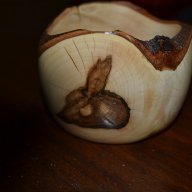
Yup. Crickets. Definitely just crickets . . .
maybe Hawks in the background.
I use salad bowl finish on bowls that i know someone will put food in them. On ones that i turn for artistic measures I have use deft, automotive clear laquer, oil and polish with buffing.:cool2:

Is there a pond nearby? I think I hear frogs...

Who knows! Maybe there is a "perfect world" where "guaranteed success" is available with no practice!!
Who knows! Maybe there is a "perfect world" where "guaranteed success" is available with no practice!!
[Barry, shhhhhhhh, you're scaring the crickets]