I'm looking for ideas associated with different materials to use as a thin accent in turnings, e.g. thin piece of maple with walnut, etc.. Obviously a thin piece of wood works very well, however I suspect a number of turners have found other solutions, i.e. thin plastic of some kind, etc. Any thoughts or ideas would be appreciated.

-
April 2026 Turning Challenge: Salad Bowl! (click here for details) -
Congratulations to David Bartell, People's Choice in the March 2026 Turning Challenge (click here for details) -
Congratulations to Ted Pelfrey for "Cherry Blossoms on Cherry" being selected as Turning of the Week for April 27, 2026 (click here for details) -
Welcome new registering member. Your username must be your real First and Last name (for example: John Doe). "Screen names" and "handles" are not allowed and your registration will be deleted if you don't use your real name. Also, do not use all caps nor all lower case.
You are using an out of date browser. It may not display this or other websites correctly.
You should upgrade or use an alternative browser.
You should upgrade or use an alternative browser.
Thin Accent Material
- Thread starter Roger Domina
- Start date
How thin? I know there are a number of veneers you can buy, and probably lots of different species. You can buy 1 1/16 inch thick baltic birch plywood at toy stores that carry stuff for people who make RC airplanes.
robo hippy
robo hippy
Are you talking about an inlay accent, or are you thinking of gluing up a block?
Thanks - am thinking 1/16, 1/8, in that range. Will keep this in mind. ThanksHow thin? I know there are a number of veneers you can buy, and probably lots of different species. You can buy 1 1/16 inch thick baltic birch plywood at toy stores that carry stuff for people who make RC airplanes.
robo hippy
Am looking for accents to glue up. ThanksAre you talking about an inlay accent, or are you thinking of gluing up a block?

- Joined
- Apr 27, 2004
- Messages
- 9,334
- Likes
- 6,163
- Location
- Lakeland, Florida
- Website
- www.hockenberywoodturning.com
There are so many things used by turners.
Turned Wood, corian, resins, pewter, copper, silver, veneers, pvc,.....
Turned Wood, corian, resins, pewter, copper, silver, veneers, pvc,.....
Thanks, a couple ideas here I had not considered.There are so many things used by turners.
Turned Wood, corian, resins, pewter, copper, silver, veneers, pvc,.....

I normally use colored wood veneers to separate contrasting embellishments on yo-yos, for example, this Swiss Pear body and ColorPly lamination:

I also use a lot of knife handle scale materials for laminations:


But for good looking laminations to work, you have to get the mating surfaces perfectly flat.
I also use a lot of knife handle scale materials for laminations:
But for good looking laminations to work, you have to get the mating surfaces perfectly flat.
Last edited:
This is great Ed. Great ideas, appreciate it.I normally use colored wood veneers to separate contrasting embellishments on yo-yos, for example, this Swiss Pear body and ColorPly lamination:

Guitar pick material is one I have used in the past. With plastic like materials I use epoxy when making the laminations. You can find in colors with the most poplar being white sandwiched between black.
Very good idea William. That's the input I'm looking for. ThanksGuitar pick material is one I have used in the past. With plastic like materials I use epoxy when making the laminations. You can find in colors with the most poplar being white sandwiched between black.
Hmm, that makes me think of the plastic pick guard materials used on the electric guitars. Some of the ones on acoustic guitars has that turtle shell type pattern, and a host of others. Not sure how you would glue it up....
robo hippy
robo hippy
Bill indicates he uses epoxy to glue it up.Hmm, that makes me think of the plastic pick guard materials used on the electric guitars. Some of the ones on acoustic guitars has that turtle shell type pattern, and a host of others. Not sure how you would glue it up....
robo hippy
Hmm, that makes me think of the plastic pick guard materials used on the electric guitars. Some of the ones on acoustic guitars has that turtle shell type pattern, and a host of others. Not sure how you would glue it up....
robo hippy
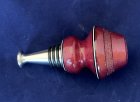
Well I guess I don’t understand your concern. I have glued plastic to wood many times. With the guitar material you need to rough the sides that will be glued and use epoxy glue. Below is a picture of the material I have used. Bottle stopper with the laminated material.
Last edited:
William, I only glue up wood to wood. Never did any of the other materials....
robo hippy
robo hippy

Google micro lumber and you will find multiple sources or using your table saw or band saw you can cut your own, but it helps to have a drum sander to clean it upThanks - am thinking 1/16, 1/8, in that range. Will keep this in mind. Thanks