• The forum upgrades have been completed. These were moderate security fixes from our software vendor and it looks like everything is working well. If you see any problems please post in the Forum Technical Support forum or email us at forum_moderator (at) aawforum.org. Thank you
  • April 2026 Turning Challenge: Salad Bowl! (click here for details)
  • Congratulations to David Bartell, People's Choice in the March 2026 Turning Challenge (click here for details)
  • Congratulations to Ted Pelfrey for "Cherry Blossoms on Cherry" being selected as Turning of the Week for April 27, 2026 (click here for details)
  • Welcome new registering member. Your username must be your real First and Last name (for example: John Doe). "Screen names" and "handles" are not allowed and your registration will be deleted if you don't use your real name. Also, do not use all caps nor all lower case.

Walnut Cracks

Joined
Jul 24, 2008
Messages
775
Likes
238
Location
Montfort, Wisconsin
This is a piece of walnut that came from either the stump or the root of a walnut tree that was blown down in a tornado.
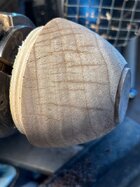
Walnut Cracks.jpeg

This is the stump and the rest of the tree it came from
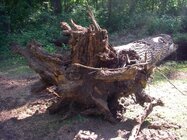
Stump 1.jpg

I've not seen this pattern of cracking before. Has anyone seen it and what may have been the cause of something like this? Thank you for your responses.

 
I don’t know, but may have been a lightening strike somewhere on the tree. I had some walnut that had lines similar but more irregular shaped. I was doing a hollow form and it came apart on me.
 
I got one tree once that was in a land slide, and it had micro cracks all through the log. Won't do that one again. I would guess that if the tree gets uprooted, it may not be in bad shape. If it is broken off half way up the trunk, I wouldn't bother. Not sure about your piece here. Those do look like drying cracks to me.

robo hippy
 
You may be right Reed. The wood was really wet when I harvested it and I had so much I threw pieces in brown paper bags and set them on a shelf in the shed. It's gotten really hot in the summer and freezing in there in the winter. Not the best place but I've got a shed full of wood. Other pieces have been fine.
 
Robo's explanation is the most likely scenario here....but, there is another possibility. I have seen cracks similar to this form on an unseasoned bowl during the roughing process. If the turner's methods are causing some heat.....or his lighting creates additional heat, it might contribute to conditions that could result in checking like this...

Note: If anyone is still using incandescent lathe lighting, these lights create more heat than fluorescent or the more modern LED lighting.

=o=
 
Last edited:
Back
Top