

-
Congratulations to David Bartell, People's Choice in the March 2026 Turning Challenge (click here for details) -
Congratulations to Chris Lawrence for "Dragon's Grip" being selected as Turning of the Week for March 30, 2026 (click here for details) -
Welcome new registering member. Your username must be your real First and Last name (for example: John Doe). "Screen names" and "handles" are not allowed and your registration will be deleted if you don't use your real name. Also, do not use all caps nor all lower case.
You are using an out of date browser. It may not display this or other websites correctly.
You should upgrade or use an alternative browser.
You should upgrade or use an alternative browser.
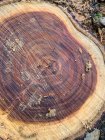
Wood id, please
- Thread starter Daniel Warren
- Start date
- Joined
- Apr 27, 2004
- Messages
- 9,334
- Likes
- 6,159
- Location
- Lakeland, Florida
- Website
- www.hockenberywoodturning.com
Did you ask the arborist?
Could be black Walnut. does it have a chambered pith?
Only butternut and walnut have a chambered pith.
It looks like a rosewood. Several rosewoods grow here in Florida.
I know you have eucalyptus and other exotics growing in CA.
Maybe you have rosewoods too?
Could be black Walnut. does it have a chambered pith?
Only butternut and walnut have a chambered pith.
It looks like a rosewood. Several rosewoods grow here in Florida.
I know you have eucalyptus and other exotics growing in CA.
Maybe you have rosewoods too?
Had the arborist been around I would have asked, the front desk people just send me to the yard to take as much as possible these days.
I'm almost certain not walnut as I have several pieces left from a recent haul. This wood did not stain my hands at all like the walnut, and smelled entirely different.
I too am leaning towards a euc variety as there are many eucs near. Though a quick search of rosewood seems possible too but I do not know if rosewood grows in N. California.
I'm almost certain not walnut as I have several pieces left from a recent haul. This wood did not stain my hands at all like the walnut, and smelled entirely different.
I too am leaning towards a euc variety as there are many eucs near. Though a quick search of rosewood seems possible too but I do not know if rosewood grows in N. California.
My first thought was cocobolo, which I believe is in the rosewood family. Very hard and dense, and has kind of a spicy smell to it as you turn. I haven't turned much of the eucalyptus woods, but don't remember any particular scent other than in the groves where they grow.
robo hippy
robo hippy
I am not so sure of this being cocobolo as this wood didn’t seem to be very oily, which in the past has been my experience with cocobolo. No spicy odor unless that’s suppressed when wet. I am surprised that cocobolo grows here?
I’ll turn some more of it today/tonight and take more photos. Thanks for the responses.
I’ll turn some more of it today/tonight and take more photos. Thanks for the responses.

- Joined
- Feb 6, 2010
- Messages
- 3,520
- Likes
- 2,597
- Location
- Brandon, MS
- Website
- threeringswoodshop.square.site
Eucalyptus has a scent kind of like a spicy incense. Have only had one piece but it turned well

Odie
Panning for Montana gold, with Betsy, the mule!
The question of what species a sample of wood is, is asked quite frequently. You would think a bunch of guys who've been dealing with various species of woods for years could be more conclusive, but many times the answers are more speculative, than affirmative. It usually comes down to a process of elimination, rather than positive identification in these threads.....
Here is a photo of some eucalyptus logs that look fairly close to what you have there......but, still not conclusive.

-----odie-----
Here is a photo of some eucalyptus logs that look fairly close to what you have there......but, still not conclusive.
-----odie-----
There’s many species of eucalyptus - a friend brought me some eucalyptus robustus that bears no likeness to the gum trees I’m familiar with, but the bark doesn’t match up. Could it be an acacia variant? Looking at the bark it does resemble the black acacia I’ve been working with lately.
Think horse, not zebra!
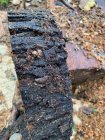
Bark is a walnut, dark heart and light sap wood are walnut characteristics; the marbled appearance of the heart is indicative of Claro walnut (Juglans hindsii (also J. californica)). It certainly looks like the Claro I've turned, though the lack of skin staining is curious.
Bark is a walnut, dark heart and light sap wood are walnut characteristics; the marbled appearance of the heart is indicative of Claro walnut (Juglans hindsii (also J. californica)). It certainly looks like the Claro I've turned, though the lack of skin staining is curious.

- Joined
- Jan 27, 2005
- Messages
- 13,223
- Likes
- 5,851
- Location
- Dalworthington Gardens, TX
- Website
- pbase.com

I have seen red gum that looked very similar to that.
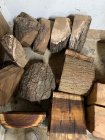
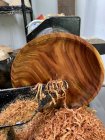
Still no stained hands. I have a photo of it next to some black walnut from some months back. The walnut has chunkier bark. Whether it's ever identified two facts stand true- it's nice to work with and I find it to be pretty wood. I appreciate the feedback. I have to imagine Acacia or some sort of eucalyptus after looking through Bill's link. Odie, I happen to have a very large piece of positively identified Eucalyptus. I saw the grove it was taken from and it has that unmistakable flat bark and odor.
Attachments
- Joined
- Apr 27, 2004
- Messages
- 9,334
- Likes
- 6,159
- Location
- Lakeland, Florida
- Website
- www.hockenberywoodturning.com
positively identified Eucalyptus.
There are over 800 species of eucalyptus and the turning desirability varies.
We frequently get red gum and lemon here for turning.
In misguided forestry management clear cuts in California, Peru, and other places were planted in some type of eucalyptus. Results were reforestation by fast growing trees of little use for lumber or native wildlife.

I'll add to Bill's recommendation of looking at the endgrain. Here is another site with more pictures of domestic and exotics. http://hobbithouseinc.com/personal/woodpics/index.htm