• The forum upgrades have been completed. These were moderate security fixes from our software vendor and it looks like everything is working well. If you see any problems please post in the Forum Technical Support forum or email us at forum_moderator (at) aawforum.org. Thank you
  • Congratulations to David Bartell, People's Choice in the March 2026 Turning Challenge (click here for details)
  • Congratulations to Chris Lawrence for "Dragon's Grip" being selected as Turning of the Week for March 30, 2026 (click here for details)
  • Welcome new registering member. Your username must be your real First and Last name (for example: John Doe). "Screen names" and "handles" are not allowed and your registration will be deleted if you don't use your real name. Also, do not use all caps nor all lower case.

Bradford pear source

Joined
Jan 24, 2010
Messages
3,362
Likes
1,045
Location
Cleveland, Tennessee
My son has a stack of Bradford that was cut in the last couple of weeks. Some will fit my lathe. Your thoughts?

 
Very prone to cracking , just like any fruit wood, remove pith ,cut over size and seal right away. I love Turning Bradford pear especially for anything that has a lot of detail, like basket illusion pieces, cuts well, polishes easily and has pleasant pinkish/ reddish brown color when dry.
 
Not sure what you are saying about removing the pith. These are small branches and logs up to about 16-18 inches diameter.
 
Not sure what you are saying about removing the pith. These are small branches and logs up to about 16-18 inches diameter.
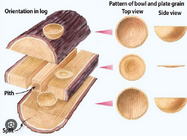
The pith is the heart /center stem going all the way up the tree, its the first area that cracks will develop from . You should also try and select logs with less branches coming out as the branch areas will be prone to cracking as well , below is a cut diagram , the pith / heart gets thrown away and the rest gets used 1775433729548.png
 
The pith is the heart /center stem going all the way up the tree, its the first area that cracks will develop from . You should also try and select logs with less branches coming out as the branch areas will be prone to cracking as well , below is a cut diagram , the pith / heart gets thrown away and the rest gets used View attachment 86952

Great picture.
 
Familiar with the pith. Just wondering that you were suggesting. As Alan stated, thanks for the picture. Any way to copy it for future reference? Next is to find a place to store the wood.
 
John - if using a Windows computer just Right Click on the photo and save it. On an iPad just press on it and save to photos. I have maintained a folder on my computer of wood turning web finds for about 25 years. Now have more than 3 GB in 80 folders of various categories. I export from my iPad to the computer by emailing to myself.
 
Like any wood, especially fruit wood, you'll have your best luck with the trunk of the tree that was hopefully growing nice and vertical. Branches can be a problem, as there is a lot of stress in the wood from supporting itself in a more horizontal orientation. As Bob mentioned above, get the pith out before prepping it for storing. It's probably already cracking. As an additional FYI, Bradford pear is typically planted as an ornamental, and many communities have outlawed them, as they are highly prolific and considered an invasive species.
 
And they stink when in bloom. Wife and I used to walk a couple of neighborhoods when we noticed a bad odor. Bradford pear trees!
The selection will be trunk sections and branches. Will be picky when I look this weekend.
 
Terrible trees, but I save every bit of good sized bradford pear wood I can get. I cut it through the pith then cut squares as large and long as possible with the bandsaw, coat the ends with thickened anchorseal, and let them air dry, track the dryness by weight. Great turning wood - hard, fine grain, love it. (I of course turn it dry, not green.) Have pieces from a log drying now. I don't bother with small branches, not my thing.

FYI, Bradford pear is typically planted as an ornamental, and many communities have outlawed them, as they are highly prolific and considered an invasive species.
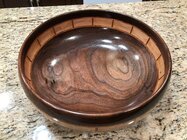
In addition the way the branches grow from the main trunk they tend to split off, make a mess, an expense. Some towns/cities that planted them long ago for the white blooms are taking them out now.

JKJ
 
Back
Top