Anyone have a good methodology for a clean removal of burl bark? I know there are methods of soaking, boiling or pressure washing, but I do not know any of the specifics for doing so. I have a number of pieces both dry and green that I want to keep the burl surface, but not the bark.

-
Congratulations to David Bartell, People's Choice in the March 2026 Turning Challenge (click here for details) -
Congratulations to Chris Lawrence for "Dragon's Grip" being selected as Turning of the Week for March 30, 2026 (click here for details) -
Welcome new registering member. Your username must be your real First and Last name (for example: John Doe). "Screen names" and "handles" are not allowed and your registration will be deleted if you don't use your real name. Also, do not use all caps nor all lower case.
You are using an out of date browser. It may not display this or other websites correctly.
You should upgrade or use an alternative browser.
You should upgrade or use an alternative browser.
Burl bark removal
- Thread starter Valerie Henschel
- Start date
-
- Tags
- bark burl de barking green wood

- Joined
- Feb 6, 2010
- Messages
- 3,520
- Likes
- 2,597
- Location
- Brandon, MS
- Website
- threeringswoodshop.square.site
Have only done that once and the piece was cut a few months before. I just used a chisel to carefully pry the bark off
I’ve used a pressure washer to remove burl bark with mixed success. Depends on how long the pice was cut and how it was handled. Madrone burl generally is the toughest to deal with. On BL Maple burl, if its been sitting for a while it generally responds well to pressure washing. Nothing seems to get it all - I find myself sitting with a small chisel and a couple of awls and carefully picking it off - usually from the edge of NE bowls.
A sand blaster or bead blaster is another method to remove the left over pieces of bark that
are hard to remove. There are several types of media that can be used that is less aggressive
then the sand media.
are hard to remove. There are several types of media that can be used that is less aggressive
then the sand media.

- Joined
- Apr 1, 2015
- Messages
- 603
- Likes
- 451
- Location
- Sitka, Alaska, United States
- Website
- www.zachlaperriere.com
For bark details that can be pried off, I cut a piece of purpleheart roughly 1/2" square by 6"+ long. Cut an acute angle on that and you have a great little prying tool. Easy to resharpen the tip with 120 grit powersanding.
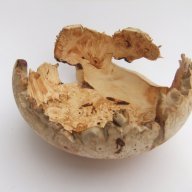
The last burr I had to take the bark off was a mixture of tools some was easy and able to get a chisel under without damaging the surface that I wanted to keep and for those hard to reach little pieces I use dentist picks (new Ones)

john lucas
AAW Forum Expert
I find a rotary burr in my flex shaft to be about the fastest with a chip carving knife right behind. Usually a combination of both.

Got a picture here from a turner that did steam his turnings for a couple of hours, as he elevated the turnings above the water and then boiled the water with a loose fitting lid on the container.
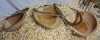

Leo....those are roughouts...did the steam shorten the time before the wood equalized???????
I don’t know Charlie, the turner did the steaming rather than boiling the wood to see if this would work to reduce splitting, as he said the energy use is so much less than boiling a pot full of water.