I have a small toaster oven gathering dust in the basement. Can it be used in place of a microwave? If so, what are your recommendations?




My go-to for Madrone and fruitwood, unless the project is thin - then I soak in denatured alcohol. Actually, DNA will work on thicker bowls if they're soaked for a few days. With thin projects, 24-48 hours works.Just about all "shortcuts" to drying your bowls leads to more cracking. Possible exception is boiling. Trying to speed up the drying process results in "internal" stress, and wood relieves stress by cracking.
robo hippy
He did say drying ON a toaster oven, not IN.I wouldn’t try it, and if I tried it I’d have a fire extinguisher standing by.
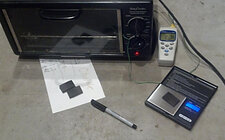
I have a small toaster oven gathering dust in the basement. Can it be used in place of a microwave? If so, what are your recommendations?
Huh? Did I miss something Alan? Was the original message edited?He did say drying ON a toaster oven, not IN.
Read the title…..Huh? Did I miss something Alan? Was the original message edited?
Doh! (Dope slap!). Thanks!Read the title…..
Having had a toaster oven fire in my garage...i gotta disagree. I was using a PID controller, and it was a new toaster oven (not an old beater). I had noticed when setting up the PID that when i cut power at 155-f i still had a temp rise to near 350-f after the power cut. Used it several times successfully, but one afternoon (with 5 buckeye burl pen blanks in it)--i went back out to the shop after a few hours to find the oven door open, and the buckeye was just pile of ash. The fire had blown the door open. Fortunately the fire did not spread beyond the toaster oven.I use a toaster oven to dry wood for stabilizing. You just control it to 105c. Not a fire risk. The temp controllers are notoriously inaccurate, so make sure to use a temp gauge or thermocouple. I actually use a separate temp controller with mine. I haven’t used it for green wood, but I don’t see why it wouldn’t work so long as you can control the temp to a low number. No different to using a light bulb in a refrigerator etc.
that sounds like the PID loop lacked the necessary adjustments.Having had a toaster oven fire in my garage...i gotta disagree. I was using a PID controller, and it was a new toaster oven (not an old beater). I had noticed when setting up the PID that when i cut power at 155-f i still had a temp rise to near 350-f after the power cut. Used it several times successfully, but one afternoon (with 5 buckeye burl pen blanks in it)--i went back out to the shop after a few hours to find the oven door open, and the buckeye was just pile of ash. The fire had blown the door open. Fortunately the fire did not spread beyond the toaster oven.
Dental lab ovens are not hard to find used, and relatively inexpensive. Work very well with good thermal mass for steady temps. Never will have another toaster oven in my house or garage.
Obviously a control issue. You would want a PID controller with a thermocouple that responds quicker, you can also position the thermocouple closer to the elements for better control. I also set the oven stat at a low temp as a backup. Note this is a standard practice method to dry blanks for stabilizing with cactus juice, many thousands of people are doing it successfully.Having had a toaster oven fire in my garage...i gotta disagree. I was using a PID controller, and it was a new toaster oven (not an old beater). I had noticed when setting up the PID that when i cut power at 155-f i still had a temp rise to near 350-f after the power cut. Used it several times successfully, but one afternoon (with 5 buckeye burl pen blanks in it)--i went back out to the shop after a few hours to find the oven door open, and the buckeye was just pile of ash. The fire had blown the door open. Fortunately the fire did not spread beyond the toaster oven.
Dental lab ovens are not hard to find used, and relatively inexpensive. Work very well with good thermal mass for steady temps. Never will have another toaster oven in my house or garage.
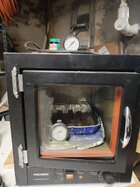
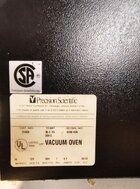
All i know is that i saw well over 100 f temperature rises AFTER the power was cut to the oven. I fixed the problem by buying a lab oven that weighs about 35 pounds, takes a half hour to warm and stays in a 2 f range for 18-24 hours. I know that many folks use toaster ovens for stabilizing, but i'm sticking with my old lab oven. Side benefit is that drying the CJ after stabilizing i get much less push-out as the temps are very stable. Paid $50 for the lab oven, and sleep well at night.Obviously a control issue. You would want a PID controller with a thermocouple that responds quicker, you can also position the thermocouple closer to the elements for better control. I also set the oven stat at a low temp as a backup. Note this is a standard practice method to dry blanks for stabilizing with cactus juice, many thousands of people are doing it successfully.
If you burned your blanks - you can fix the problem if you want to......
What type of lab oven do you have? I don’t disagree that toaster ovens are not good at controlling temp. The temp rise after turning off the oven is still a control issue. Moving the control thermocouple closer to the element will help with this so it turns off sooner. The element is at 1000 degrees and although we are calling them PÍĎ controllers, all they are doing is turning the element on or off, so there is no P, I or D happening. If you move the thermocouple closer to the element rather than on the wood, it will turn off sooner and reduce the amount of heat generated and reduce the over temp issue.All i know is that i saw well over 100 f temperature rises AFTER the power was cut to the oven. I fixed the problem by buying a lab oven that weighs about 35 pounds, takes a half hour to warm and stays in a 2 f range for 18-24 hours. I know that many folks use toaster ovens for stabilizing, but i'm sticking with my old lab oven. Side benefit is that drying the CJ after stabilizing i get much less push-out as the temps are very stable. Paid $50 for the lab oven, and sleep well at night.