The hose from the vacuum pump to the headstock collapses slightly in on itself, due to the vacuum. Wondering whether to use a stiffer plastic hose - this one is rated for well over 26 psi. I think the vacuum action caused this collapse. Any thoughts most welcome. Cheers

-
Congratulations to David Bartell, People's Choice in the March 2026 Turning Challenge (click here for details) -
Congratulations to Chris Lawrence for "Dragon's Grip" being selected as Turning of the Week for March 30, 2026 (click here for details) -
Welcome new registering member. Your username must be your real First and Last name (for example: John Doe). "Screen names" and "handles" are not allowed and your registration will be deleted if you don't use your real name. Also, do not use all caps nor all lower case.
You are using an out of date browser. It may not display this or other websites correctly.
You should upgrade or use an alternative browser.
You should upgrade or use an alternative browser.
Gast vacuum pump hose
- Thread starter Allan Pleaner
- Start date

- Joined
- Jan 27, 2005
- Messages
- 13,223
- Likes
- 5,851
- Location
- Dalworthington Gardens, TX
- Website
- pbase.com
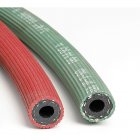
You need a much more substantial hose than that. A hose rated for 26 PSI means the internal pressure and not a vacuum where atmospheric pressure could flatten the hose. Look for a thick walled reinforced rubber or PVC hose.

john lucas
AAW Forum Expert
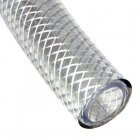
I used the clear web version above and it does not collapse but it gets really stiff over the years.
- Joined
- Jan 27, 2005
- Messages
- 13,223
- Likes
- 5,851
- Location
- Dalworthington Gardens, TX
- Website
- pbase.com
I used the clear web version above and it does not collapse but it gets really stiff over the years.
Yes it certainly does that. I'm thinking about switching to a rubber hose.

I use clear pvc hose from the bin at Lowes and have never had a problem.
Tom Gall
TOTW Team
I use a 3/8" ID quality rubber air hose with 1/4" NPT fittings. Length doesn't matter .... think of the excess length as a reservoir tank!The hose from the vacuum pump to the headstock collapses slightly in on itself, due to the vacuum. Wondering whether to use a stiffer plastic hose - this one is rated for well over 26 psi. I think the vacuum action caused this collapse. Any thoughts most welcome. Cheers
 I only use the braided clear hose to slide over a short piece of lamp rod (about 3") attached to my rotary adaptor. This is a perfect fit to slide into my spindle (hand wheel side). Quick insertion - one second in & one second out. I also have a short piece (12" ?) attached to a swivel fitting.....that most people don't have and don't need.
Thanks so much to you all - this is really helpful.
Also for the quick responses. Much appreciated.
A new question and I'm wondering if there's a discussion on this out there already: I'm reverse chucking a bowl,
and am using a threaded live centre on tailstock -
screw on the vacuum chuck so that is centered on the open face of the bowl. Keeping this
center, I then screw off the vacuum chuck and holding it in place on the bowl manually, screw vacuum chuck onto the headstock.
This way it stays centered. This method seems clunky and I'm wondering if there's a better way to reverse chuck and
maintain centering using the vacuum chuck. Hope this makes sense.
Any thoughts very welcome?
Also for the quick responses. Much appreciated.
A new question and I'm wondering if there's a discussion on this out there already: I'm reverse chucking a bowl,
and am using a threaded live centre on tailstock -
screw on the vacuum chuck so that is centered on the open face of the bowl. Keeping this
center, I then screw off the vacuum chuck and holding it in place on the bowl manually, screw vacuum chuck onto the headstock.
This way it stays centered. This method seems clunky and I'm wondering if there's a better way to reverse chuck and
maintain centering using the vacuum chuck. Hope this makes sense.
Any thoughts very welcome?

Since you have a threaded live center, leave the bowl attached to chuck and screw both onto the live center. Install vac chuck onto head stock spindle then bring up tail stock with bowl. I usually turn/spin the whole assembly by hand while tightening up the quill, turn on vac, then release the bowl tenon from the chuck. Sometimes it just doesn't want to play, then I lower the vacuum and bump the bowl into position. The key then is to remember to increase the vacuum before turning. Yep, learned that the hard way.
Since you have a threaded live center, leave the bowl attached to chuck and screw both onto the live center. Install vac chuck onto head stock spindle then bring up tail stock with bowl. I usually turn/spin the whole assembly by hand while tightening up the quill, turn on vac, then release the bowl tenon from the chuck. Sometimes it just doesn't want to play, then I lower the vacuum and bump the bowl into position. The key then is to remember to increase the vacuum before turning.
Yep, learned that the hard way.
Excellent advice - thanks so much
Last edited by a moderator: