Hello everyone,
I’d like to start a discussion about a project I’ve been obsessed with lately: a Linear Rail Hollowing Rig. When I first saw Alan Trout’s system, I was blown away by its precision and stability, and I knew I had to try building one myself. I’ll be the first to admit — I’m still gaining both life and technical experience. But I’m a firm believer that if you don’t try and you don’t make mistakes, you’ll never truly learn anything. So, this is the beginning of my journey into precision hollowing. I’m here to learn, so please — criticize my ideas, share your advice, and speak your mind. That’s exactly why I’m starting this thread. I don’t know the exact specs of Alan’s original build, so I’m reverse-engineering it and looking for the best available materials.
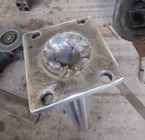
Let’s start with the base for the guide rails. I’ve been weighing three options:
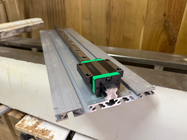
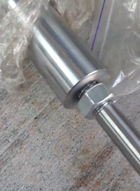
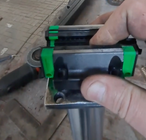
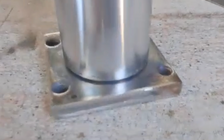
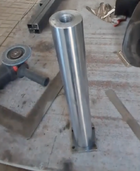
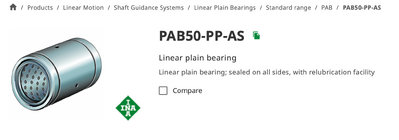
I have started selecting the diameter for the shaft. I was choosing between three options: 40, 50, and 60 mm. The 40mm seems a bit flimsy, while the 60mm, on the contrary, feels heavy — I am concerned that the extra weight will kill the guide bearings, although the sellers say they can withstand a lot. I settled on 50mm, but I am also making one for 60mm in parallel. For the guide rail, I initially took a size 20, but then switched to 25. For the 60mm bar, I will need at least a size 30 rail.
I’d like to start a discussion about a project I’ve been obsessed with lately: a Linear Rail Hollowing Rig. When I first saw Alan Trout’s system, I was blown away by its precision and stability, and I knew I had to try building one myself. I’ll be the first to admit — I’m still gaining both life and technical experience. But I’m a firm believer that if you don’t try and you don’t make mistakes, you’ll never truly learn anything. So, this is the beginning of my journey into precision hollowing. I’m here to learn, so please — criticize my ideas, share your advice, and speak your mind. That’s exactly why I’m starting this thread. I don’t know the exact specs of Alan’s original build, so I’m reverse-engineering it and looking for the best available materials.
Let’s start with the base for the guide rails. I’ve been weighing three options:
- Steel (Heavy and rigid, but requires precision welding and surfacing).
- Phenolic/Textolite (Great damping, but can be expensive and tricky to tap).
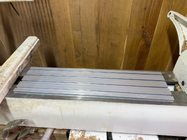
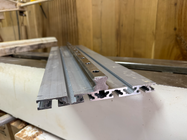
- Aluminum T-Slot Plate/Profile (Excellent geometry and ease of mounting).
I have started selecting the diameter for the shaft. I was choosing between three options: 40, 50, and 60 mm. The 40mm seems a bit flimsy, while the 60mm, on the contrary, feels heavy — I am concerned that the extra weight will kill the guide bearings, although the sellers say they can withstand a lot. I settled on 50mm, but I am also making one for 60mm in parallel. For the guide rail, I initially took a size 20, but then switched to 25. For the 60mm bar, I will need at least a size 30 rail.