• The forum upgrades have been completed. These were moderate security fixes from our software vendor and it looks like everything is working well. If you see any problems please post in the Forum Technical Support forum or email us at forum_moderator (at) aawforum.org. Thank you
  • February 2026 Turning Challenge: Cookie Jar! (click here for details)
  • Congratulations to Chad Eames for "Red Tines" being selected as Turning of the Week for February 23, 2026 (click here for details)
  • AAW Symposium demonstrators announced - If the 2026 AAW International Woodturning Symposium is not on your calendar, now is the time to register. And there are discounts available if you sign up early, by Feb. 28. Early Bird pricing gives you the best rate for our 40th Anniversary Symposium in Raleigh, North Carolina, June 4–7, 2026. (There are discounts for AAW chapter members too) For more information vist the discussion thread here or the AAW registration page
  • Welcome new registering member. Your username must be your real First and Last name (for example: John Doe). "Screen names" and "handles" are not allowed and your registration will be deleted if you don't use your real name. Also, do not use all caps nor all lower case.

Log coring

Joined
Mar 12, 2017
Messages
163
Likes
386
Location
Sweden
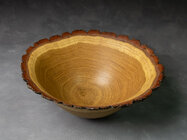
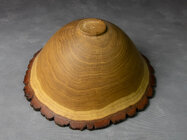
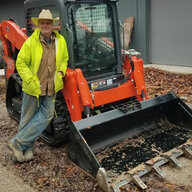
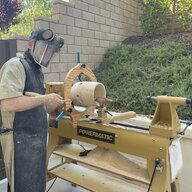
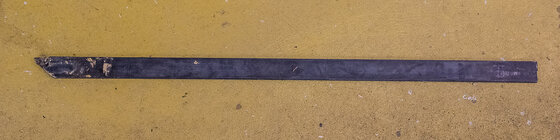
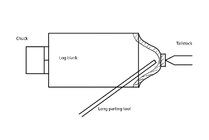
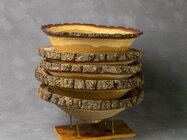
Many use bowl coring tools where you can create several blanks from one blank instead of shavings. A variation is to cut a number of cones from a log. Here I have done it with a large shop made parting tool 8x40x930 mm, rough-turned the cones into blanks and allowed to dry. Then finished turning. As usual, a number of layers of Osmo 3032 for surface treatment. Oak 29x13 cm.
coring.jpg K3_07314LRs.jpg K3_07310LRs.jpg K3_07311LRs.jpg
 
Oak, Quercus robur. Might add that it is the most perfect oak log I have come across, not even a tendency to crack.

I looked that up - English Oak, I see Wood Database classifies it as a type of white oak but a little softer and lighter weight than what we see. I don't think I've ever seen English Oak around here, at least not on our property. The wood is beautiful! We have a LOT of red oak (usually not very stable) and white oak (probably not as stable as what you used).

You could ship me a log but, yikes, the cost! Maybe push a log into the ocean and aim it this way - I'll drive down to Myrtle Beach and look for it. :)

That's an ingenious way of coring. Your method allows room for expression while turning. I might try that on a sassafras log - usually quite stable.

I assume you made the tool tip a little wider than the shaft.

JKJ
 
Back
Top