
Gary, oak makes for great firewood, giving off lots of heat.
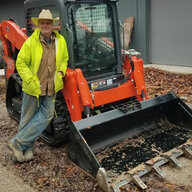
BTW, what lake is in the background? I guess walleye and yellow perch.
BTW, what lake is in the background? I guess walleye and yellow perch.


Yes it does and sadly I have some to burn. Lake Superior near the lighthouse along the north shoreGary, oak makes for great firewood, giving off lots of heat.
BTW, what lake is in the background? I guess walleye and yellow perch.
This has worked well for me except with white oak which often cracks unless I seal it too, but it does burn nice in the fireplace.
Gary, oak makes for great firewood, giving off lots of heat.
You are right John. I have turned WO from logs in my yard I let sit under plastic with the log ends sealed for over a year. I did get some very nice bowls from this wood. To be fair the last WO I turned was not ideal and probably too close to the pith. The Sawyer cutting in my neighborhood brought me a 14in by 2 foot log which is still in my garage, plus four 14 in by 7 inch disks. In my haste to take something back to the homeowner, I cut some pieces out of the disks which failed. I gave a disk which was totally sealed very well to my son who has it in his garage. It is cracking radially like crazy. Maybe the moral of the experience is never try to make something out of wet disk wood.Oh no! With white oak I have success, perhaps because I usually cut smaller blanks, then seal and dry the blanks on wire shelves before turning. This, of course, takes longer but with enough blanks there are always some to choose from.
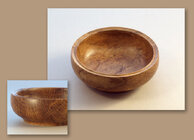
View attachment 87659
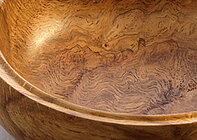
View attachment 87660
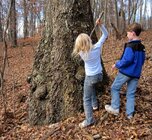
Also, most of the white oak I've used comes from the "buttress" near the ground of some of the white oaks on our property, like this one the kids are using for tree-whacking practice. These have incredible figure inside. Wonder if there is something in the soil here. The red oaks here don't do this.
View attachment 87661
I've also wondered if the burled grain/figure inhibited cracks from starting and turning into large cracks.
I've never tried rough-turning white oak.
JKJ

Yeah, some of my pieces just look better in the fireplace.I typically turn large and small bowls to a 10% wall thickness and store each in a grocery bag with dry shavings in my dry cool basement shop. I weigh the piece and write the weight and date on it someplace before storing it. I wait a couple of weeks and weigh again. If the shavings are damp I replace them. I do this every two weeks until the weight levels off. Then I leave it out in the shop and check it occasionally. Typically the leveling off takes 8-10 weeks and by the time I finish the piece it may be 12 or more weeks. I also measure the moisture initially and after it has leveled off. I usually end up under 10% on my non pin reader. This has worked well for me except with white oak which often cracks unless I seal it too, but it does burn nice in the fireplace.
That's some pretty oak, John. Most white oak I've seen is pretty straight grained. That looks a little like the complex grain patterns we get in the live oak around here.Oh no! With white oak I have success, perhaps because I usually cut smaller blanks, then seal and dry the blanks on wire shelves before turning. This, of course, takes longer but with enough blanks there are always some to choose from.
View attachment 87659
View attachment 87660
Also, most of the white oak I've used comes from the "buttress" near the ground of some of the white oaks on our property, like this one the kids are using for tree-whacking practice. These have incredible figure inside. Wonder if there is something in the soil here. The red oaks here don't do this.
View attachment 87661
I've also wondered if the burled grain/figure inhibited cracks from starting and turning into large cracks.
I've never tried rough-turning white oak.
JKJ