• December 2025 Turning Challenge: Single Tree! (click here for details)
  • Congratulations to Bob Henrickson, People's Choice in the November 2025 Turning Challenge (click here for details)
  • Congratulations to Steven Gordon for "Dropped Ice Cream Cone" being selected as Turning of the Week for December 8, 2025 (click here for details)
  • Welcome new registering member. Your username must be your real First and Last name (for example: John Doe). "Screen names" and "handles" are not allowed and your registration will be deleted if you don't use your real name. Also, do not use all caps nor all lower case.

Nudger

Joined
Jan 10, 2024
Messages
1,027
Likes
574
Location
Bournemouth, UK
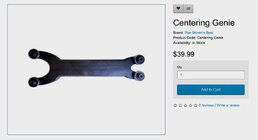
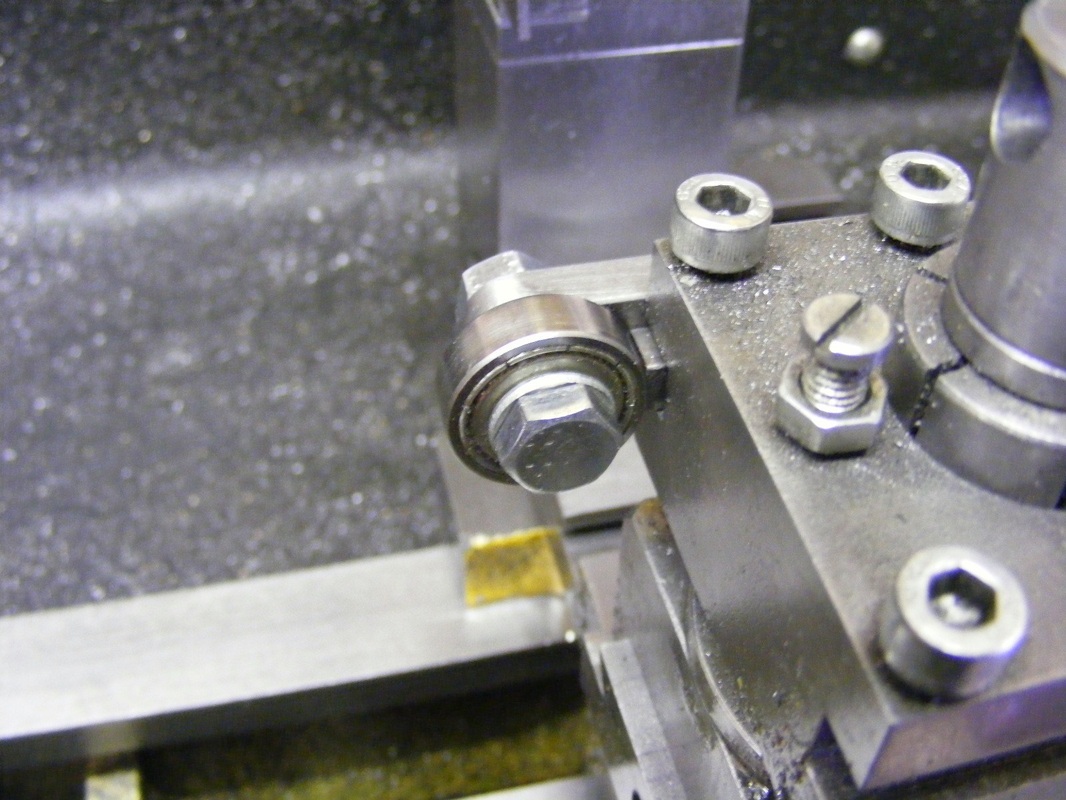
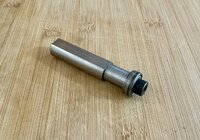
Those of you that also run a Metal working lathe may already be familiar with the humble Nudger. šŸ˜† It’s simply a bearing race fixed to a holder. Mounted in a toolpost it’s used on a workpiece to get it to run true before final tightening of the chuck jaws. I have used this one once on an errant spindle turning to get it running right. Not easy though because it’s obviously designed for a metal lathe.
I’m going to make one for my wood turning lathe at some point to see how useful it may be. The orientation of the bearing will be different to the one shown so it can be used with a wooden handle. I may use hard rubber or plastic over the bearing.
I just wondered if anyone else has used something similar?

Edit: It’s often used on a piece that has already been turned but had to be removed from the chuck for some reason before re-turning.
IMG_5357.jpeg
 
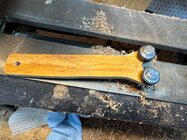
Thanks for that Bob. An adjustable two bearing Nudger is now on my to do list.

Edit: Pictute of the tool in Bob’s link above in case it’s of interest.

IMG_5375.jpeg
 
Last edited:
Never used one. On metal lathe and milling machine, dial indicators or edge finders have always done what I need. At least so far.

One thing you might try on errant spindles held with a center on at least one end, especially if they are quite thin and developed a wobble in the middle due to "something" inflicted by the turner. I use a tool handle and with the lathe spinning, gently tap the spindle somewhere in the middle. If it was true before and something knocked it out of whack, tapping several times will eventually bump it just right and it will snap back into running true. This will work. In it's heart the wood wants to run true again.

I'd be concerned that a metal bearing would mark/burnish wood. Perhaps something like a nylon bearing would work.

JKJ
 
Never used one. On metal lathe and milling machine, dial indicators or edge finders have always done what I need. At least so far.


I'd be concerned that a metal bearing would mark/burnish wood. Perhaps something like a nylon bearing would work.

JKJ

At the last count I’ve got three Dial Test Indicators and three Dial Gauges, all top brands. They’re perfect for checking work but obviously no good at all for adjustment, you need something like a hammer for that. The reason I started this thread is that I had a job the other day, a short section of 1ā€ diameter of steel bar that needed to be turned. Placed in the chuck the runout was obvious. Slowly moving the Nudger against the piece whilst it was rotating trued it up in under 10 seconds. Tapping with a hammer and measuring with a DTI or Dial gauge would have taken very much longer. Give it a try, it takes no time at all to make one if you have a suitable bearing.

An example from another machinist.


When I trued up a piece of wood some time ago the bearing didn’t leave a mark, not that it would have mattered as the piece needed finishing anyway.
It’s a valid concern though, so as I mentioned earlier, hard rubber or plastic might be a better bet. Skate wheels would probably be ideal except they are quite large.
 
Although I’ve used one lots of times on my metal lathe, I’ve only needed one once for wood turning. No excuse not to make one though.
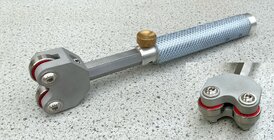
Better to have it and not need it than vice versa. Made from bits I had in the the scrap bin. Fitted to one of my small interchangeable handles.

IMG_5534.jpeg
 
In a video way back, I saw a turner use the backside of his tool to center a spinning piece in a jamb chuck. I had remembered using a nudger in a machine shop where I worked as a kid, but hadn't really thought about it with wood before seeing it. Now I can't remember how he did it; seems like he used the tool rest/post as a fulcrum?? 🫣
 
Back
Top