• The forum upgrades have been completed. These were moderate security fixes from our software vendor and it looks like everything is working well. If you see any problems please post in the Forum Technical Support forum or email us at forum_moderator (at) aawforum.org. Thank you
  • April 2026 Turning Challenge: Salad Bowl! (click here for details)
  • Congratulations to David Bartell, People's Choice in the March 2026 Turning Challenge (click here for details)
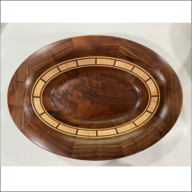
  • Congratulations to Ethan Hoff for "Basket Illusion Platter" being selected as Turning of the Week for April 13, 2026 (click here for details)
  • Welcome new registering member. Your username must be your real First and Last name (for example: John Doe). "Screen names" and "handles" are not allowed and your registration will be deleted if you don't use your real name. Also, do not use all caps nor all lower case.

One Tool Rest Height to rule them all

Joined
Dec 3, 2025
Messages
9
Likes
6
Location
vineland NJ
Does anyone else dread adjusting their tool rest every time they switch tools? I've been on the hunt for an HSS tool line (not carbide) that solves this problem.

What I'm looking for is a brand where every tool in the lineup puts the cutting tip at the same center height when held parallel to the centerline — so once your rest is set, it stays set. No more fussing between tools.

I'll admit I'm not sure how they'd pull this off with a skew or a 5/8" bowl gouge given how differently they're ground and handled, but I'm curious whether any brand has cracked this. Has anyone come across something like this, or found a practical workaround that achieves the same result?
 
I don't really think about that much. I change tools all the time without changing the tool rest height. For bowl turning the tool rest is usually a bit lower, and the angle of the tool makes the tip at center height. Spindle turning the only time I change height is planing with a skew, then I will lift it a little.
 
Hi Timm. My answer to your opening question is no, I have never dreaded any aspect of the woodturning operation. Turning wood by hand-held tools simply does not provide a tool presentation method to which you seek. It doesn't exist. 30 years of it for me and I've never considered your idea, nor found the concept realistic when I consider your proposal. It is the same for anyone using any kind of tool to manually manipulate the shape of the material they work with- wood, clay, metal, glass... Turning by hand is about keeping your body, your entire body from head to toe, relaxed, fluid, and working in harmony with the tool and its cutting edge as presented to the ever-changing shape of the wood. These changing shapes necessitate that you stay fluid in your movement and tool presentation, including fine tuning of the tool rest.

To find what you seek, you will end up setting down your gouge, scraper and skew, and you'll start programing a CNC-controlled lathe instead. You'll be at a computer screen, not at the lathe.

I ask this respectfully- is manual woodturning for you?
 
Last edited:
Does anyone else dread adjusting their tool rest every time they switch tools? I've been on the hunt for an HSS tool line (not carbide) that solves this problem.

What I'm looking for is a brand where every tool in the lineup puts the cutting tip at the same center height when held parallel to the centerline — so once your rest is set, it stays set. No more fussing between tools.

I'll admit I'm not sure how they'd pull this off with a skew or a 5/8" bowl gouge given how differently they're ground and handled, but I'm curious whether any brand has cracked this. Has anyone come across something like this, or found a practical workaround that achieves the same result?

Tool rest height is more a function of WHAT you are doing than what tool you are using. One simple example is using a scraper on the outside of a bowl versus the inside. You don’t always hold a tool level, the tool handle is dropped about 45º when shear cutting or using a beading tool. A thin parting tool is necessary tall. I have gouges of various diameters from a ¼ inch spindle gouges to a ¾ inch bowl gouges. I have a large stable of skew chisels from a miniature ¼ inch skew up to Alan Lacer’s slab-of-steel skew (about 1½ inches wide).
 
A better solution Timm is to make the tool rest move easy and stay where you put it. The problem is usually when you move the tool rest it drops to low or moves too high and there is a fiddle factor. My tool rest has a threaded post with a nut, to keep the tool rest where you want it and moves easily when needed.
 
Hmm. Never considered tool rest height to be a nuisance when turning. For me, tool rest height is determined by the tool, what I'm turning and what I'm trying to do with the tool itself. As I had mentioned in an earlier thread, a demonstrator was changing the tool rest with whatever he was doing for a lidded box.
 
One tool rest height is impractical for all the reasons mentioned.

You could reduce your anxiety by using a stop collar and shims. Set the collar for your lowest position and use shims for higher settings using various tools.
 
I do have stop collars on most of my tool rests. They are set such that for most things I know that this tool works well at the stop-collar height, and for that tool I raise it up a few mm, etc. But for some operations I readjust (or remove) the collar.
So the stop collars are just a convenience for me to know the rough tool rest height, and to get it set easily for most things I typically am doing. But when I do something new or pick up a rarely-used tool, they can get in the way. They are just a guide or aid, not an absolute.

The only ones I generally don't move are on my hollowing stabilizer, the 'castle' for the mcnaughton coring knifes, a home-made rest for holding a pencil at center-line, and a platform for a router.
 
Appreciate all the input—this pretty much confirmed what I’ve been finding in practice. There really isn’t a true “one height,” it’s all about getting the presentation and cut to feel right based on the tool, grind, and what you’re trying to do.

Sounds like most of you are making small adjustments on the fly without even thinking about it, which is probably where this ends up anyway once the muscle memory is there.

I still like the idea of a repeatable baseline just to speed things up, but it seems like that’s more of a starting point than a rule. Was mainly curious if anyone had come across a setup that minimized the constant tweaking aside from collars or shims—but it sounds like the tweaking is the system
 
Does anyone else dread adjusting their tool rest every time they switch tools? I've been on the hunt for an HSS tool line (not carbide) that solves this problem.

What I'm looking for is a brand where every tool in the lineup puts the cutting tip at the same center height when held parallel to the centerline — so once your rest is set, it stays set. No more fussing between tools.

No dread. No chance of leaving the rest in one spot, at least with the tools I use and the way I turn. I'm constantly adjusting the rest height depending on several factors such as tool shaft diameter, type of tool, the grind, the piece I'm turning, and even how that piece of wood is responding to the cutting edge. Fine tool control demands it, in my opinion.

I make many small adjustments but but each with a reason - for the cut I want and feedback from the too presentation and preceding cut. It's not on automatic, but follows years of experimentation and refinement.

Big thing missing - what type of tools are you using and what kind of turnings. All bowls? Bowls, boxes, spindles, platter, finials, finger tops, material (wood, acrylic, aluminum)?

And I don't understand this: "puts the cutting tip at the same center height when held parallel to the centerline". With few exceptions I almost never hold a tool parallel to the rotational center of the piece. Maybe a scraper, box scraper, NRS, a flat-topped carbide tool (if I hadn't given them all away). Rarely if ever with a skew, spindle gouge, Hunter tool, etc. Maybe provide more info. Those who primarily turn the same types and sizes of things may have different requirements.

make the tool rest move easy and stay where you put it. The problem is usually when you move the tool rest it drops to low or moves too high and there is a fiddle factor.

I have zero problem with this. As I described in another thread, before loosening the locking lever I pinch the tool rest shaft between my left thumb and forefinger, both resting right where the tool rest shaft enters the banjo. This both prevents the tool rest from accidentally dropping, and allows me to make micro or medium height adjustments up and down simply by twisting my fingers a bit. I think I'll should add this to my next demo since it works so well and maybe there are some who haven't tried this method.

My "pinch" method also lets me rotate the tool rest to better fit parts of the piece without risking raising or lowering the rest by accident. I've been using this method for as long as I can remember.

From other discussion, for evaluation I bought one of those threaded collars that fastens to the rest shaft with set screws and has threads for little adjustments up or down. My evaluation: a waste of money. It only allows a limited movement and more needs adjustment of the set screws. I'll prob take it to the next demo too and show what I don't like about it.

My dream is a sturdy electronic tool rest adjuster that will advance up or down in user-defined increments, perhaps of 1/2mm or so.

 
Well, no such thing as near as I can tell. Tool rest height varies between inside and outside the bowl, depending on which tool I am using. Slightly higher or lower for scrapers and gouges, and higher for the skew chisel. I do use them some times....

robo hippy
 
Back
Top