• The forum upgrades have been completed. These were moderate security fixes from our software vendor and it looks like everything is working well. If you see any problems please post in the Forum Technical Support forum or email us at forum_moderator (at) aawforum.org. Thank you
  • February 2026 Turning Challenge: Cookie Jar! (click here for details)
  • Congratulations to Matt Carvalho for "Red Mallee Folded Form" being selected as Turning of the Week for February 9, 2026 (click here for details)
  • AAW Symposium demonstrators announced - If the 2026 AAW International Woodturning Symposium is not on your calendar, now is the time to register. And there are discounts available if you sign up early, by Feb. 28. Early Bird pricing gives you the best rate for our 40th Anniversary Symposium in Raleigh, North Carolina, June 4–7, 2026. (There are discounts for AAW chapter members too) For more information vist the discussion thread here or the AAW registration page
  • Welcome new registering member. Your username must be your real First and Last name (for example: John Doe). "Screen names" and "handles" are not allowed and your registration will be deleted if you don't use your real name. Also, do not use all caps nor all lower case.

Pendant Light Shades... Cool or Fire Hazard?

Joined
Mar 16, 2015
Messages
47
Likes
22
Location
Texas
I've gotten a few requests recently to turn a few pendant Light Shades. Do any of you have experience with this? I know they are out there already, but over a standard bulb, I see these being a hazard/ liability to the producer (me). Paired with an LED bulb no worries. But I'm not building the entire light, just the shade. What is your take?

 
I did a test one day with wood very near an incandescent light bulb. I don't remember all the details of how close I was or what size bulb but do remember it wasn't a concern. I had the same concern you do and that's why I did that. It wouldn't take any time at all to do a test of your own.
 
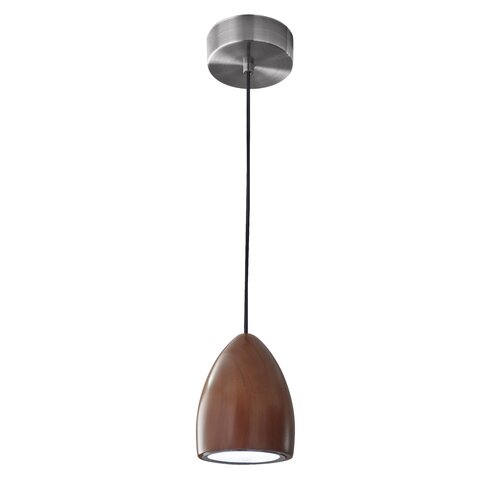
Cypress+1+LED+Light+Mini+Pendant.jpg


this is simular to what has been requested Bill. This particular version is LED.
 
Last edited by a moderator:
Even if you test it yourself with the LED or CFL, you have no guarantee that someone will put something else in the light fixture. Personally, I would shy away from it. We have a fellow that builds and repairs lamps and light fixtures her in town. Been considering turning some lamp bases for him and let him build the actual lamp or fixture. Liability would be his to deal with. Keep in mind, though, that you can get DIY lamp kits as places like Lowe's. BTW, if you go through with the project, we would love to see pictures. Hint. Hint.
 
Thanks for the picture, Rusty. The flash point of wood is about 575 degrees Fahrenheit so it isn't going to catch on fire. However, catching on fire might be preferable to what is likely to occur. Any finish that you put on the wood such as varnish or lacquer is going to darken until it is eventually an dark ugly brown if somebody puts a high wattage tungsten bulb in the fixture. With all of the trapped heat, the wood will warp and probably also develop some ugly cracks.

A much more sensible approach would be to make a lampshade that is open on both ends and has some separation from the lightbulb.
 
I worked for a lighting fixture manufacturer for a long time. Designed some fixtures and had to deal with UL to get them approved.
Fire is a concern on a fixture like that....even if it was not wood (we dealt with glass shades).
Even with LED or CFL lamps (bulbs are the glass part...lamps are what lights up :)) the head build up when it is trapped is higher than you think.
If you do make this type of lamp, I would include some venting holes near the top of the shade to allow the heat to escape (heat goes up).
 
Back
Top