• The forum upgrades have been completed. These were moderate security fixes from our software vendor and it looks like everything is working well. If you see any problems please post in the Forum Technical Support forum or email us at forum_moderator (at) aawforum.org. Thank you
  • March 2026 Turning Challenge: Olla! (click here for details)
  • Congratulations to David Wyke, People's Choice in the February 2026 Turning Challenge (click here for details)
  • Congratulations to Tim Connell for "Black Locust Basket Illusion Series #4" being selected as Turning of the Week for March 16, 2026 (click here for details)
  • Welcome new registering member. Your username must be your real First and Last name (for example: John Doe). "Screen names" and "handles" are not allowed and your registration will be deleted if you don't use your real name. Also, do not use all caps nor all lower case.

Persimmon Wood

Joined
Nov 22, 2023
Messages
859
Likes
5,956
Location
Morganton, NC
Friend called and said they had a Plum tree down if I wanted it. I’ve only had one person who offered me wood that actually knew the species 😁.
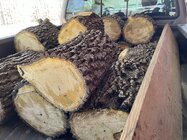
This turned out to be Persimmon that averages 12” in diameter. Planning on turning a few natural edge bowls and using the rest for hollow forms depending on how it looks. Grain seems fairly plain.

I usually pull logs on my dump trailer but could not get access with the trailer so had to cut oversized and load.

I imagine Persimmon is like most fruit wood and cracks easily. Best to turn thin? Any success roughing out and sealing? Any suggestions?

1773779901071.jpeg
 
If you once turn this plan on it moving a lot. Even though it seems plain it can have some interesting grain. I tried to turn once turned hollow forms and they moved more than any wood I have tried. Would be great for natural edge bowls because of the thick bark. Lean towards thinner sidewalls as it will crack. I have not tried bleaching the wood after it's dried but I think it would look nice to whiten it up.
If you turn things with the intent of twice turned items seal the end grain on both sides with pva glue. It's super hard stuff but turns really nice green. I ponded a lot of mine that I wanted to keep in plastic 55gal barrels of water instead of sealing it. Works great but a little stinky when you do pull it out to use.
 
Friend called and said they had a Plum tree down if I wanted it. I’ve only had one person who offered me wood that actually knew the species 😁.
This turned out to be Persimmon that averages 12” in diameter. Planning on turning a few natural edge bowls and using the rest for hollow forms depending on how it looks. Grain seems fairly plain.
...
I imagine Persimmon is like most fruit wood and cracks easily. Best to turn thin? Any success roughing out and sealing? Any suggestions?

Persimmon is an Ebony (American Ebony, White Ebony) and along with Dogwood is one of my favorite woods to turn when dry. The grain is very fine, figure is sometimes present but not prominent in the trees around here, usually very small black heartwood, quite heavy and strong. I cut it into blanks, seal the end grain, and let it air dry. I don't turn it green so can't comment on cracking from that.

Very unlike pear, plum, cherry fruit-bearing trees. I can't remember any solid blanks cracking but they do take a long time to dry. Can warp a LOT. Sands like other types of ebony.

Like many species, the white will darken and turn to yellow/brown. There have been several threads about Persimmon. I put a few photos in message #8 in this thread:


JKJ
 
If you once turn this plan on it moving a lot. Even though it seems plain it can have some interesting grain. I tried to turn once turned hollow forms and they moved more than any wood I have tried. Would be great for natural edge bowls because of the thick bark. Lean towards thinner sidewalls as it will crack. I have not tried bleaching the wood after it's dried but I think it would look nice to whiten it up.
If you turn things with the intent of twice turned items seal the end grain on both sides with pva glue. It's super hard stuff but turns really nice green. I ponded a lot of mine that I wanted to keep in plastic 55gal barrels of water instead of sealing it. Works great but a little stinky when you do pull it out to use.
I may just turn most of it natural edge. I usually leave the wall 1/4” so I’ll try a couple and see how they do. On my twice turned bowls I always seal the entire bowl.
 
Persimmon is an Ebony (American Ebony, White Ebony) and along with Dogwood is one of my favorite woods to turn when dry. The grain is very fine, figure is sometimes present but not prominent in the trees around here, usually very small black heartwood, quite heavy and strong. I cut it into blanks, seal the end grain, and let it air dry. I don't turn it green so can't comment on cracking from that.

Very unlike pear, plum, cherry fruit-bearing trees. I can't remember any solid blanks cracking but they do take a long time to dry. Can warp a LOT. Sands like other types of ebony.

Like many species, the white will darken and turn to yellow/brown. There have been several threads about Persimmon. I put a few photos in message #8 in this thread:


JKJ

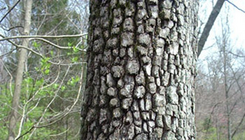
Interesting about the color, I saw no black anywhere on this log. When I got out of the truck he said it’s seems like a hard wood and all white inside. I knew then it probably wasn’t Plum and when I saw the bark I know it was Persimmon.
I may cut a few slabs if I can’t get it all turned in a few days.
 
Looking forward to the turnings. Persimmon was used for drivers in the golf game. Jack Nicklaus had one for years that finally fell apart.
 
Interesting about the color, I saw no black anywhere on this log. When I got out of the truck he said it’s seems like a hard wood and all white inside. I knew then it probably wasn’t Plum and when I saw the bark I know it was Persimmon.
I may cut a few slabs if I can’t get it all turned in a few days.
I've never seen persimmon that big without some black heartwood at or near the pith, often smaller than a pencil in diameter. (pieces with significant bark as in one of the meat tenderizer handles shown in the other thread is rare!)

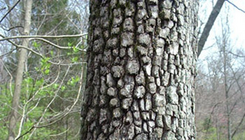
The bark can be a good reference although Persimmon bark can vary a lot with age and probably growing conditions. The thing common to all Persimmon bark I've seen in the south east is when seen from a dozen or so ft away the bark will look quite black compared to the browns and greys in many other species. And a "checked" look is common, at least for the Persimmon trees in our part of the country (and all I've seen on our property)

With live trees at the right time of the year, the fruit is distinctive, light orange and strongly astringent before soft and ripe and tasty! Seeds are large and brown and difficult to remove from the fruit. But for the persimmon common here, note that just the female trees produce fruit - the male trees produce only flowers for pollen. (None of this helps without having live trees around, but it's nice to know when out and about looking at trees.)
1773796054538.png

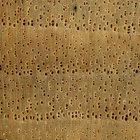
If you want to verify the species, the quickest way is to look at the end grain with a magnifier. Cut a small sample exposing the end grain with at least 2 or 3 rings, maybe 1/2" wide, 1" long, thick enough to grip firmly with the fingers. Shave the endgrain with a single-edge razor blade to cleanly expose the pores. (Can't really prepare the end grain for examination by sanding since the sawdust will clog up the pores plus destroy detail.) Examine with a magnifier (10x recommended)

Persimmon is more or less ring porous and the pores are in singles or multiples of two or three like the picture. Rays are very thin.
1773794765066.png

The Wood Database has info about the density, sometimes useful to help verify a species (cut a block, measure and weigh carefully, see if it's in the ballpark with the .numbers given (52 lbs per cubic ft, dry)
www.wood-database.com/persimmon/

Their article on Wood ID is helpful. Some instructions about preparing and examining the sample are in section 7 on this page:
www.wood-database.com/wood-articles/wood-identification-guide/

The "Still stumped?" section at the bottom of the page tells how to send a sample off for free gov lab ID. I did that once to verify my own ID of someone's wood. My ID, fortunately, was the same as theirs! Stick a chunk if you want me to take a look - doesn't have to be very big - 2x2" cut somewhere away from the pith is good. I'm no expert but it's an interesting hobby. The book "Identifying Wood" by R. Bruce Hoadley is a good introduction to wood ID. I got started on this when someone passed around a bowl at the club marked "Cherry" on the bottom. One look, even without a preparing a sample, told me it could NOT be cherry.

JKJ

 
Back
Top