• January 2026 Turning Challenge: Turned and Bent! (click here for details)
  • Congratulations to Phil Hamel, People's Choice in the December 2025 Turning Challenge (click here for details)
  • Congratulations to David Wyke for "Maple Platter #567" being selected as Turning of the Week for January 5, 2026 (click here for details)
  • Welcome new registering member. Your username must be your real First and Last name (for example: John Doe). "Screen names" and "handles" are not allowed and your registration will be deleted if you don't use your real name. Also, do not use all caps nor all lower case.

platter turning question

Joined
Jan 14, 2020
Messages
323
Likes
126
Location
Austin, TX
I've been turning a couple of platters recently. The wood is plainsawn, which I know is not optimal, quartersawn I believe is the preferred cut. But I mean you'd have to have a pretty damn big log to get ~ 16" or greater quartersawn. Regardless, I get the feeling that when I start to turn down to size that it's kind of a race to get it done before it moves a little bit. Especially on the outside. I turn the bottom first then the top, outside to center so when I get to the outside of the face outside bottom has wobble to it. That's not the worst since it's completed and sanded, but if I have to go back for whatever reason things get tight.
I guess my question is a) am I imagining this, specifically that you need to get the outside front and back done asap or it will move, or perhaps this is just a number of different issues contributing. b) is this largely because of the plainsawn vs quartersawn? and c) what strategies do people employ to combat this, provided it's not all in my head. If that's the case, I think there's some medication I can take :)
 
Most of the time I turn sloppy wet wood, even for platter/plate forms. I do finish turn them completely, then flip them over to turn the inside. Since I use a recess exclusively, I sand them, both inside and outside at the same time. These flatter forms seem to be far more sensitive to bevel rub pressure and they do seem to vibrate more than bowls, especially bigger ones. For finish cuts on the inside, I always have my fingers pressing lightly on the outside. If fingers are getting hot, then I am pressing too hard.

robo hippy
 
I'd cut the blank and not turn it until dry. I rarely turn wet wood. I don't think I'd try turning a platter without at least twice turned.

Almost all the platters I turn are from dry slabs, plainsawn to get the width.
The largest of these two is over 19". Both from the same board, dry Sapele, probably kiln-dried.

1767464919879.jpeg

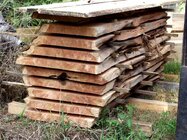
I didn't quite do that on this cedar log since I have a lot of use for narrower pieces. Love turning cedar.
1767465596803.jpeg

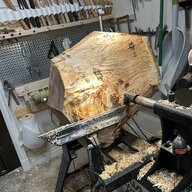
Ever see "rainbow" tulip poplar? The tree was struck by lightning. Does interesting things to the wood.

1767465846886.jpeg

JKJ
 
I should have mentioned I have been twice turning them so the wood has acclimated to the shop. But I think there maybe internal pressure that is released in the second turning. My first turn leaves it still pretty thick ~ 2-2.5".
JKJ that ain't no Texas Cedar. That looks like a Lebanese Cedar!
That Rainbow Tulip is pretty awesome.
 
A platter doesn't have to be quartersawn, but the closer you can get to it the better. Mine are rarely true quartersawn. I take say an 18" log cut through the pith with my chainsaw, then cut a platter blank on either side. The remaining pieces become bowl or box blanks. How long are you drying your platter blanks? At 2 1/2" thick you may need 3 years to dry them enough.
 
Howdy Raif, I always expect wood movement in every project... it's just how well (or poorly) I keep that in mind as I work. Your question brought to mind one of the finest woodturners I know, Tom Wirsing. I think he is the "King of Platters". Tom is also just a real great guy who is incredibly generous with sharing his excitement for woodturning and helping others. I cannot recommend highly enough his platter turning demo for the Rocky Mountain Woodturner's. The demonstration is one of the best to watch for a thoughtful and well explained for success in a process for platters.
View: https://www.youtube.com/watch?v=BkdHwwt2omc

RMWT Tom Wirsing Platter Demo

In this demo, Tom mostly addresses the work at the lathe, but a visit to his studio a few years back included a look at a couple shelves of platter blanks being kept for long periods of time to "rest" and "stabilize". I don't remember how long he kept them in the wings waiting to be used, but my brain says the time could have been measured in years.

By the way, Thank you for the nudge to watch that demonstration Tom did for RMWT again. Just a pleasure to watch and give the brain a refresher of some good woodturning techniques... not to mention, bring some memories of Tom's influence on the start of my woodturning journey in the Front Range Woodturners.
 
kind of a race to get it done before it moves a little bit
the wood has acclimated to the shop. But I think there maybe internal pressure that is released in the second turning.
Wood always has internal stress, and turning always releases some of it. Sometimes it is very noticeable. Sometimes annoying only to the turner.

So for me, whether it's bowls or platters or whatever... If the wood is dry but starts moving too much during the "2nd turning"... I'll relieve some stress and let it settle. Turn it down some and put it back on the shelf to equalize again (this time, I'm probably waiting for stress equalization rather than moisture).
Even if you turn it quickly, if there's stress movement it will still move after you're done. As you turn, you have to judge if that movement is going to be ok in the end result - or else stop and plan on a 3rd (4th etc) turn.
 
I do the same as @Dave Landers, cut on the dry 2nd turning some, then remove it and let it settle. May do this 2-3 times. If storage and shop temp/hum are much different though, it could well start moving. My shop has hvac and stores fairly consistent, and my drying 2nd turns are in the house.

Have you seen enough wood movement to justify 2-1/2” 1st turn thickness? If the wood is fairly strait grained I find the 10% rule works pretty well. If aI plan to do a platter out of a chunk, I will turn some other pieces 1st to see how much it moves during drying.
 
Howdy Raif, I always expect wood movement in every project... it's just how well (or poorly) I keep that in mind as I work. Your question brought to mind one of the finest woodturners I know, Tom Wirsing. I think he is the "King of Platters". Tom is also just a real great guy who is incredibly generous with sharing his excitement for woodturning and helping others. I cannot recommend highly enough his platter turning demo for the Rocky Mountain Woodturner's. The demonstration is one of the best to watch for a thoughtful and well explained for success in a process for platters.
View: https://www.youtube.com/watch?v=BkdHwwt2omc

RMWT Tom Wirsing Platter Demo

In this demo, Tom mostly addresses the work at the lathe, but a visit to his studio a few years back included a look at a couple shelves of platter blanks being kept for long periods of time to "rest" and "stabilize". I don't remember how long he kept them in the wings waiting to be used, but my brain says the time could have been measured in years.

By the way, Thank you for the nudge to watch that demonstration Tom did for RMWT again. Just a pleasure to watch and give the brain a refresher of some good woodturning techniques... not to mention, bring some memories of Tom's influence on the start of my woodturning journey in the Front Range Woodturners.
Very helpful video on platters. Thanks for sharing, I hadn’t seen this before.
Tom
 
How much the wood moves after drying and beginning the final shape might depend on the type of wood too. Some are inherently more stable: mesquite, sassafras.

Some can have more stress even after drying: how it grew (branch wood, reaction wood (branch, leaning tree), proximity to juvenile wood), variations in rings from seasonal growth changes, fast or slow growing, air dried or kiln dried which can "bake" stress into the wood, blank cut from small or large tree

Also, whether the wood was actually dry at EMC when final turning. It's easy to think some is dry based on time, feel, experience, or moisture meters that measure moisture only close to the surface. I always use the weight method with a sensitive gram scale to track drying, especially important if the wood or roughed blank was stored/dried in once environment then brought into another for turning.

JKJ
 
Howdy Raif, I always expect wood movement in every project... it's just how well (or poorly) I keep that in mind as I work. Your question brought to mind one of the finest woodturners I know, Tom Wirsing. I think he is the "King of Platters". ...


I've never heard of Tom Wirsing or watched a video, but from just watching the beginning so far he is my new hero, hitting ALL the points I believe in and and teach and preach - turning cleanly, NRS, platter form for function, perfect surfaces with no humps/divots, undercut rim underneath for holding, NO POWER SANDING EVER.

Thanks @Curt Vogt for posting this! So far it's made a wonderful day even better. Can't wait to get time to watch the rest.

Makes me want to book a flight to wherever his next demo is, just so I can pump my fist and say "YES!" :)
Maybe I can con my way into a shop visit. I'll be in Colorado in the spring.

JKJ
 
I should have mentioned I have been twice turning them so the wood has acclimated to the shop. But I think there maybe internal pressure that is released in the second turning. My first turn leaves it still pretty thick ~ 2-2.5".
JKJ that ain't no Texas Cedar. That looks like a Lebanese Cedar!
That Rainbow Tulip is pretty awesome.

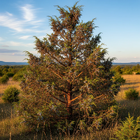
West of the Mississippi the eastern red cedar is known as a small, shrub-like tree. In the east, they can grow to 100' tall and 3-4' in diameter. I'm not sure what the difference is. Probably climate more than soil.
 
West of the Mississippi the eastern red cedar is known as a small, shrub-like tree. In the east, they can grow to 100' tall and 3-4' in diameter. I'm not sure what the difference is. Probably climate more than soil.

Trees and plants can go by numerous local names, I think just to confuse us!

It would be nice to know if the "small, shrub-like trees you mentioned are actually Juniperus virginiana. I wonder if they are a different species or a dwarf cultivar. Are they widely found in the forests/edges of fields?

Be nice to get a sample of the wood from one and have it tested.

I had to take an 14" ERC down the other day - it was damaged and in the way of some construction I'm doing - I'll cut it into blanks for drying. (I dig up around the roots of most and push them over. I have another larger one that's in the way of a planned fence that is too big for me to push over and no good place for it to fall - I'll ask an arborist if he can get it down safely. Probably saw into slabs.

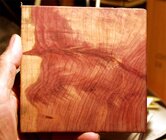
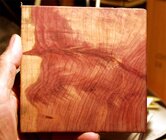
Love turning ERC after it dries. I really like it when it has streaks of white and interesting figure.
Slice from end of one dry blank. From a neighbor's yard. I think the tree was over 2' diameter.
cedar_P9064289esc.jpg

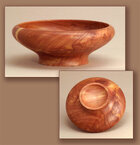
From almost 20 years ago, practicing turning bowls.
cedar_bowl_figured_2.jpg

JKJ
 

Attachments

  • 1767627584510.jpeg
    1767627584510.jpeg
    76.5 KB · Views: 3
Trees and plants can go by numerous local names, I think just to confuse us!

It would be nice to know if the "small, shrub-like trees you mentioned are actually Juniperus virginiana. I wonder if they are a different species or a dwarf cultivar. Are they widely found in the forests/edges of fields?

Be nice to get a sample of the wood from one and have it tested.

I had to take an 14" ERC down the other day - it was damaged and in the way of some construction I'm doing - I'll cut it into blanks for drying. (I dig up around the roots of most and push them over. I have another larger one that's in the way of a planned fence that is too big for me to push over and no good place for it to fall - I'll ask an arborist if he can get it down safely. Probably saw into slabs.

Love turning ERC after it dries. I really like it when it has streaks of white and interesting figure.
Slice from end of one dry blank. From a neighbor's yard. I think the tree was over 2' diameter.
View attachment 83768

From almost 20 years ago, practicing turning bowls.
View attachment 83769

JKJ
In theory they are juniperus virginiana. Here's a shot from a Wyoming nursery. I grew up in South Dakota and there they were used for shelter belts.

1767630724111.png
 
The tangents you guys go on always amaze me (you know who you are 😜 ). Back to the original poster, I agree with others, you may need to turn them three or four times. I've turned a lot of plates, which are basically small platters, and 3x turning seems to work out pretty good for plain sawn.
 
I suspect it depends heavily on the species, and probably even the specific plank. I've turned many plates (and taught plate classes), and a number of 'platters' -- actually more wall hangings -- up to 20" in diameter from 4/4 planks. All from well-dried planks. The large pieces were mostly ash and maple, not quarter-sawn, although in most the grain was balanced across the width of the plank. I turned all of them from start to finish in one session, usually to thicknesses 1/8" to 3/32", without much trouble with the blank going out of true / out of plane during turning. All were thoroughly dry timber, 4/4 thickness, kept in controlled environment (finished basement) for several years prior to turning, thus stabilized. None of the larger ones have gone out of true in the several years or more since turning/finishing.
 
Last edited:
little story on my platters
1767642542044.jpeg1767642588547.jpeg1767642604955.jpeg
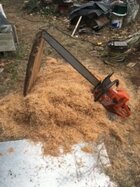
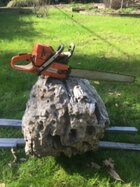
cypress stump from Swamps of South Carolina that divers find and recover the full tree, this is the scrap.
I have no idea how old but it was not fully dry and did not smell to good. I cut 8 slabs and stacked them up for the summer.
Attached a glue block with hot melt glue and turned a flat surface. Added a block to a slight recess with TBII and turned it to finish.
Largest is 25", most are around 18". The finished ones are in the next post. learning how to do this.
To answer the first question, what do you do? As john says often, it depends.
cheers.
 

Attachments

  • 1767642571536.jpeg
    1767642571536.jpeg
    37.4 KB · Views: 5
@Curt Vogt Hi, yep, that video answered all my questions and more. That was a great resource! Thanks for the link. And thanks to everyone else who posted.
I'll mention one thing causing wobble that was a clear user error. I made my recess a bit too large, I also made it just slightly bigger than jaw width. On the inside section of the recess I put a bead. But when the recess is larger than the closed circle of the chuck the jaws actually need more width to fit in. So the jaws were not really sitting flat against the bottom of the recess. What a pain. Well, suffer and learn, that's my motto.
 
Raif, I too find that you have to get the perimeter of a platter done pronto or the inevitable movement from released stress (even in completely dry wood) will impair your cuts, especially if you are putting a bead on the rim.

One technique (that I learned from Glenn Lucas) will require jaws you probably don't have but might consider getting if you do a lot of platters. This is to use very large dovetail jaws to expand into a recess that is relatively close to the perimeter. This helps to stabilize the perimeter and creates an attractive recess with a broad stable foot for the platter. I use the largest Vicmarc dovetail jaws, which have an 8-3/4" exterior diameter; this results in a nice recess and foot for a 12"-14" plate or platter.
 
Last edited:
Back
Top