• The forum upgrades have been completed. These were moderate security fixes from our software vendor and it looks like everything is working well. If you see any problems please post in the Forum Technical Support forum or email us at forum_moderator (at) aawforum.org. Thank you
  • It's time to cast your vote in the March 2026 Turning Challenge. (click here for details)
  • Congratulations to Chris Lawrence for "Dragon's Grip" being selected as Turning of the Week for March 30, 2026 (click here for details)
  • Welcome new registering member. Your username must be your real First and Last name (for example: John Doe). "Screen names" and "handles" are not allowed and your registration will be deleted if you don't use your real name. Also, do not use all caps nor all lower case.

RIchard Findley: Turn Better Bowls Episode-2

Joined
Feb 2, 2016
Messages
3,651
Likes
4,159
Location
Clinton, TN
I see Richard has released his part 2 of his Turn Better Bowls videos.

As usual, he is masterful in explaining design decisions, tool expertise and explanation of the tool motions, and even the clarity and positioning of the camera. Good discussion of dealing with grain orientation. I'm not done watching it yet and even though turning bowls is not my primary focus, I am enjoying this video (as I did the first episode).

View: https://www.youtube.com/watch?v=5zvgta9gG24


The first video in the series is about getting started, mounting options, truing, different cuts, and the reasons.
For those who are beginning and those who want to refine their game, these may be worth watching.
The first video in the series:

View: https://www.youtube.com/watch?v=vIvfdpE0YGI


But ahah, he DOES hold tool handle by the right hand when appropriate! :)
An ambidextrous turner is a happy turner,,,

JKJ
 
I see Richard has released his part 2 of his Turn Better Bowls videos.

As usual, he is masterful in explaining design decisions, tool expertise and explanation of the tool motions, and even the clarity and positioning of the camera. Good discussion of dealing with grain orientation. I'm not done watching it yet and even though turning bowls is not my primary focus, I am enjoying this video (as I did the first episode).

View: https://www.youtube.com/watch?v=5zvgta9gG24


The first video in the series is about getting started, mounting options, truing, different cuts, and the reasons.
For those who are beginning and those who want to refine their game, these may be worth watching.
The first video in the series:

View: https://www.youtube.com/watch?v=vIvfdpE0YGI


But ahah, he DOES hold tool handle by the right hand when appropriate! :)
An ambidextrous turner is a happy turner,,,

JKJ

Thanks for the mention, John. Glad you’re enjoying the series. Episode 3 will be out on Tuesday evening (evening in the UK, I guess lunchtime in the US) with the fourth and final episode on the following Tuesday.

Richard
 
Episode #3 is out now. Pretty good, even if he does not turn like I do.... But, no body does....

robo hippy
 
I just watched the last video of the 4-part series by @Richard Findley, Turn Better Bowl - Episode 4. Excellent!

View: https://www.youtube.com/watch?v=fyoJRvolrF8


Richard is a joy to watch - tool control is incredible. And he makes some excellent points - one many people skip and pay for it later is to feel the surfaces carefully with the fingers to reveal even small irregularities that may be invisible - until the finish is applied and cured!! So true - I've seen so many otherwise beautiful pieces avoidably degraded. Some of most most noticable and avoidable embarassments are humps or depressions inthe left in center and inside curves of bowls or platters. (I feel the surfaces often while turning..But the finer can feel wat the eye might not see.
When I find these while turning I mark them carefully with a pencil then turn away the pencil marks.) When off the lathe I use a different method hand scrapers to fix but the effect is the same - a perfect surface.

For those who may have missed these, start with Episode 1. Well worth watching the series even for those who may not turn a lot of bowls. Richard shows and explains everything clearly!
.
I've never used the Hard Wax Oil but now I want to try it! Especially that with the whte pigment. I prefer a satin finisn on most things.

-----------------------------------------------------------------------------------------------------------
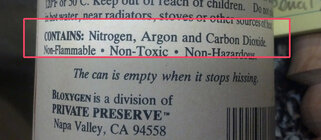
Related to Richard's comment about buying small cans of the finish since what's unused can set up and be ruined, I have something to consider. I've written about this several times before but for those not familiar: I've solved this problem in my shop years ago: Before resealing the lid on a can or bottle I displace the air inside with inert gas. (I do this for large bottles of CA glue too.)

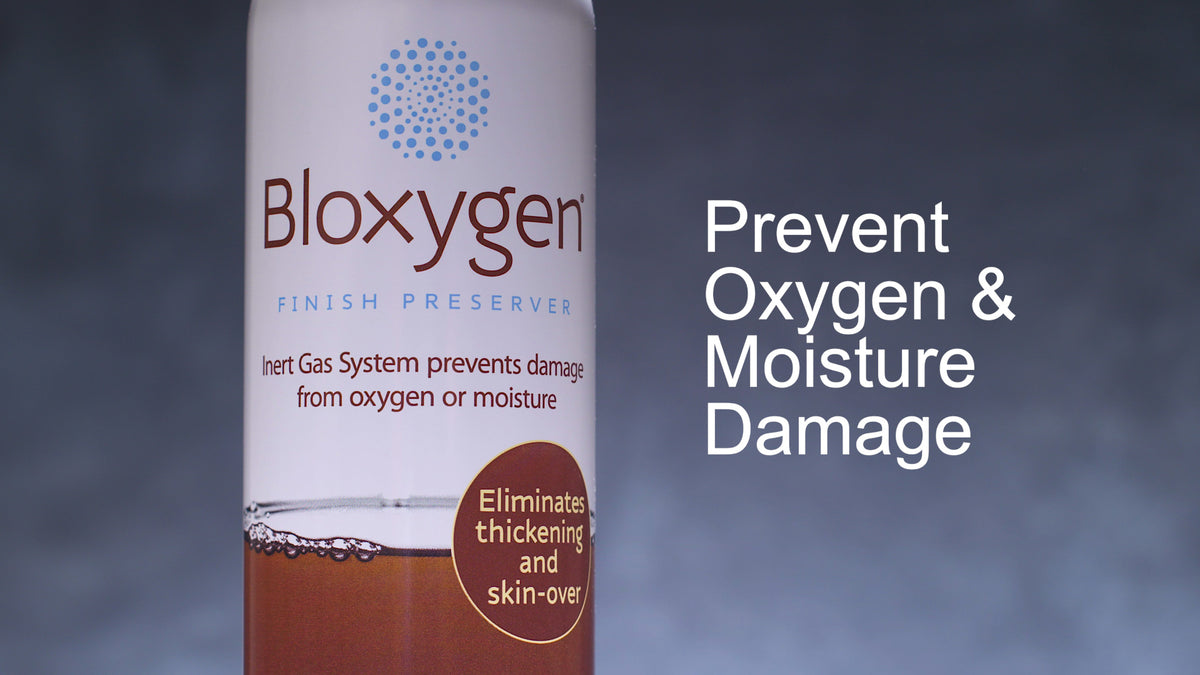
I've used several types of gas over the years but now stick with straight Argon. This is also the exact method used by the Bloxygen people - with no air touching the liquid surface most finish won't set up or even skim over. Seems better to prevent instead of trying to rescue, the topic of this thread:

I no longer have partially filled cans Watco danish oil or other finishes go bad on the shelf. A good test is with Birchwood Casey's TruOil gunstock finish, notoriously quick to set up once opened. (I wonder if that's one reason they offer TruOil in tiny bottles!) I've not once had TruOil set up since I started using the inert gas. One larger bottle in my shop, 1/2 used, is still like new after a bunch of years.

Hardware I use. Near my lathe I keep a compressed gas cylinder stolen from my little welding shop. Since most turners may not have a cylinder` there would a cost to buy a tank and a regulator. (It could be a small tank is cheaper than what I use.) But you only buy it once and you can use it from then on. The cylinder I use (size Q) will probably still be mostly unused when I'm gone! The gas itself is cheap.

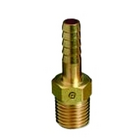
To supply the Argon to the finish contanerss I put a hose fitting such as shown below on the regulator and push on a length of plastic tubing.
1770168361906.png

Method of use Turn on the gas keeping the pressure very low and let gas flow through the tube gently into the container so it doesn't splash the liquid much! I usually add enough argon to displace all the air but all that's really needed is enough for a layer on top the finish. (Argon is heavier than air.) Then pull out the hose and quickly cap the container.

This method is probably not for everyone but works well for me. I like this far better than dealing with stop-loss bags, the marble method, etc. I can keep lots of different finishes in their original containers and even those I've opened but rarely use never go bad.

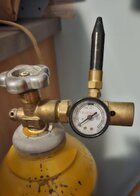
Possible options to lower the cost would be buy a smaller tank and use an inexpensive helium balloon filler instead of an industrial regulator. Bending the flexible filler nozzle controls the gas flow. (If anyone is interested I could try attaching tubing to one of my helium balloon tanks.)
1770168815078.jpeg

Or simply buy a can of Bloxygen. Based on their website, one can should last a long time with small containers - they claim one can of Bloxygen can preserve quart size cans of finish 75 times..

JKJ
 
Re: John K's comment about the Hard Wax oil with white pigment, if only we could get it in the US! I'm wondering if adding a little Mr. Cornwall's titanium white pigment to Odie's oil would work. Does Watco make something similar? I recently came into a pile of maple of unknown type that's very white with remarkably tight grain, seems a good candidate for such a finish. Thanks to John K for posting the videos, they will go on my list that I send out to students.
 
Jamie, I think there are several "hard wax" oils available, Osmo and Rubio Monocote being 2. The new thing now is what they are calling LED coatings which cure instantly under UV lights. Blacktail Studios in Portland sells some and various other top coating products. You can google it and a couple come up. No VOCs. They are intended for floors, but work great on other things, but I don't know if they are "food safe". I just bought some UV lights at the local big box store. Their "clear" coat is called "pure" for some reason....

robo hippy
 
The new thing now is what they are calling LED coatings which cure instantly under UV lights

Do you know what frequency and wattage of UV is recommended? I have both UV battery powered 365nm lights for fluorescence testing and a powerful germicidal 110v lamp you can't look at if you want to keep your vision. I wonder if the low powered ones will work.

JKJ
 
Jamie, I think there are several "hard wax" oils available, Osmo and Rubio Monocote being 2. The new thing now is what they are calling LED coatings which cure instantly under UV lights. Blacktail Studios in Portland sells some and various other top coating products. You can google it and a couple come up. No VOCs. They are intended for floors, but work great on other things, but I don't know if they are "food safe". I just bought some UV lights at the local big box store. Their "clear" coat is called "pure" for some reason....

robo hippy
I'm familiar with Watco, it was used extensively when our facility was built in 2017. Mainly curious about a pigment that would work to preserve a white color in wood. Guess an experiment with Odie's is in order.
 
This is the link to the video that I found out about this stuff from. I know they have an "Industrial grade" UV light. He does mention that having open windows, as in not screen/blind covered can cause problems. There is a link to the specific stuff he uses, and I think there are a couple on the market. I never color or tint anything. I did try Osmo, and the Rubio Monocote, and prefer the Rubio to Osmo. There are a bunch of comparisons on You Tube with these 2 finishes, and most prefer the Rubio Monocote, but as they guy below comments, "everyone puts on 2 coats of the Rubio". The Rubio seems to be pretty expensive, but a tiny bit of it goes a looooong way.

View: https://www.youtube.com/watch?v=wC5dO--NpnE&t=148s


robo hippy
 
Back
Top