• The forum upgrades have been completed. These were moderate security fixes from our software vendor and it looks like everything is working well. If you see any problems please post in the Forum Technical Support forum or email us at forum_moderator (at) aawforum.org. Thank you
  • It's time to cast your vote in the March 2026 Turning Challenge. (click here for details)
  • Congratulations to Chris Lawrence for "Dragon's Grip" being selected as Turning of the Week for March 30, 2026 (click here for details)
  • Welcome new registering member. Your username must be your real First and Last name (for example: John Doe). "Screen names" and "handles" are not allowed and your registration will be deleted if you don't use your real name. Also, do not use all caps nor all lower case.

Sealing the inside of vessels to hold water.

Joined
Jan 30, 2026
Messages
88
Likes
31
Location
Kula Maui, HI
I am wanting to turn vases, small ones, large ones, oddball ones, just functional vases.
Have seen folks use test tubes and 3D printed tubes to hold stems and water.
Have any of you all sealed the inside with resin so flowers and water can be placed directly into a wood form?
What possible drawbacks to this?
Should it be a twice turned totally dry form or can it be a once turned from green then left to sit a bit and dry piece. I know fresh turned from green would be bad, would definitely delam.
Was thinking something like laminating either a polyester laminating resin or west systems type epoxy, mostly because thats what im familiar with.
Just a curiousity, will most likely give it a try no matter what but was curious if anyone ever did this.
Mahalo
 
Possible drawbacks are a material that changes shape every season and covering that material a product that hardens and gets brittle over time. Cracks in the epoxy will create a disaster. Also cleaning out the vase after the water goes bad from having a natural material sitting in the water over time and it goes rank. That could require bleach and soap and water. Neither very good for the outside of the vase.
 
Possible drawbacks are a material that changes shape every season and covering that material a product that hardens and gets brittle over time. Cracks in the epoxy will create a disaster. Also cleaning out the vase after the water goes bad from having a natural material sitting in the water over time and it goes rank. That could require bleach and soap and water. Neither very good for the outside of the vase.
Might be better to just figure out inserts, i suppose a good excuse to get a 3D printer 🤫,
But at least the inserts can be removed and cleaned. On larger vases, originally had considered using PVC pipe with an end cap and a cut off coupling at the top to match size of the cap and turn the opening to fit the diameter of the coupling close but still loose enough to pull it out. The fittings can be kinda spendy, but i suppose still cheaper than buying borosilicate straight wall beakers and more flexible size wise. Can go long/short/wider pipe etc
 
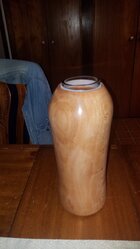
Another thought is seal the inside with epoxy, leave a drain hole in case of spills and use a glass insert to hold the water Example attached.
 

Attachments

  • 20201220_191009.jpg
    20201220_191009.jpg
    188.5 KB · Views: 5
Last edited:
Was thinking use pieces like these originally, faster, not cheap but IMHO better
The epox or resin was cheaper though.


Back
Top