• The forum upgrades have been completed. These were moderate security fixes from our software vendor and it looks like everything is working well. If you see any problems please post in the Forum Technical Support forum or email us at forum_moderator (at) aawforum.org. Thank you
  • Congratulations to Bernie Hyrtzak, People's Choice in the January 2026 Turning Challenge (click here for details)
  • Congratulations to Matt Carvalho for "Red Mallee Folded Form" being selected as Turning of the Week for February 9, 2026 (click here for details)
  • AAW Symposium demonstrators announced - If the 2026 AAW International Woodturning Symposium is not on your calendar, now is the time to register. And there are discounts available if you sign up early, by Feb. 28. Early Bird pricing gives you the best rate for our 40th Anniversary Symposium in Raleigh, North Carolina, June 4–7, 2026. (There are discounts for AAW chapter members too) For more information vist the discussion thread here or the AAW registration page
  • Welcome new registering member. Your username must be your real First and Last name (for example: John Doe). "Screen names" and "handles" are not allowed and your registration will be deleted if you don't use your real name. Also, do not use all caps nor all lower case.

Second bevel on old-style spindle gouge. John L.??

Joined
May 28, 2015
Messages
1,621
Likes
229
Location
Bainbridge Island, WA
This is a large, 1970's Rockwell spindle gouge, 3/4". It has a very long, low bevel factory ground (26 degrees). Sparked by John Lucas' suggestion, I tried my hand at putting a secondary bevel on it, hopefully to make it easier to use (it's very aggressive, at my skill level, impossible to use). So, the added small bevel at the tip is at 33 degrees (picture is deceptive, it measures out though).
Is this the generally the right idea?
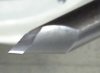
SecondBevel_Rockwell.jpg
 
Yes but I would also knock off the sharp corner at the bottom of the second bevel. The sharp edge increases the friction so it's harder to feel the cut. I can also leave a burnished mark on the bottom of bowls or long coves. You can't see these burnished marks while sanding. They only show up as discolored rings when you start to finish. The burnished area doesn't absorb the finish the same way as the rest of the wood. This usually happens when you don't have a really smooth continuous motion of the gouge. Any hesitation and you can get the burnish marks. Grinding off that sharp corner just takes a second and eliminates this. What I do is after I've sharpened the main bevel and secondary bevel in the Wolverine jig I pull the tool out of the jig and then just touch the bottom sharp edge to the wheel and hand rotate it to grind this away. It doesn't matter what it looks like, just that it's gone.
 
Back
Top