• The forum upgrades have been completed. These were moderate security fixes from our software vendor and it looks like everything is working well. If you see any problems please post in the Forum Technical Support forum or email us at forum_moderator (at) aawforum.org. Thank you
  • February 2026 Turning Challenge: Cookie Jar! (click here for details)
  • Congratulations to Chad Eames for "Red Tines" being selected as Turning of the Week for February 23, 2026 (click here for details)
  • AAW Symposium demonstrators announced - If the 2026 AAW International Woodturning Symposium is not on your calendar, now is the time to register. And there are discounts available if you sign up early, by Feb. 28. Early Bird pricing gives you the best rate for our 40th Anniversary Symposium in Raleigh, North Carolina, June 4–7, 2026. (There are discounts for AAW chapter members too) For more information vist the discussion thread here or the AAW registration page
  • Welcome new registering member. Your username must be your real First and Last name (for example: John Doe). "Screen names" and "handles" are not allowed and your registration will be deleted if you don't use your real name. Also, do not use all caps nor all lower case.

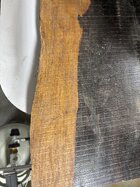
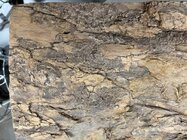
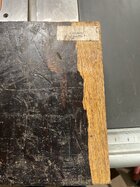
Species?

This could well be it!

No history, just part of a local find.

not a lot of good bark to go by, but images of Persimmon tree bark look close.
it is not a very thick piece. maybe local pen or knife guys will buy or trade. :)
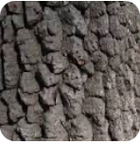
It’s absolutely not persimmon. Persimmon is cream colored with a little bit of black near the pith. Definitely not that dark. Persimmon bark is more deeply rowed.
Screenshot 2026-03-04 at 5.26.49 PM.png
 
Looks like a rosewood to me. At first I thought African Blackwood, but it looks a lot like this block of Cocobolo. I’ve never seen Cocobolo bark though, so that doesn’t help.image.jpg
 
Last edited:
images of Persimmon tree bark look close
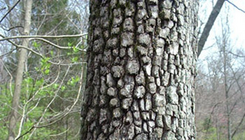
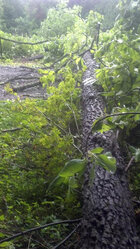
The bark of the persimmon tree varies considerably, especially with age. I've got many (probably 100s) on my property and most between say 8" and 12" diameter look much like this:

1772676132013.png

This one came down in a storm:
1772676358521.jpeg

I save all the persimmon wood I get, cut into blanks, and dry. Love to turn it!

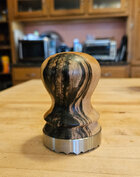
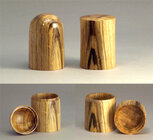
If the wood itself is in good shape, the sapwood will be large and white (darkens/yellows with age), the heartwood black and usually quite small, sometimes just the diameter of a pencil in smaller tree. It's fairly rare to find persimmon with a significant amount of black in the wood - that can be quite valuable. The meat tenderizer handle below from persimmon wood has some quite unusual black coloring. The two persimmon boxes are more typical of what I usually see.

1772676443132.jpeg 1772676508812.jpeg

If Persimmon is left on ground in warm weather it quickly gets full of grubs and the sapwood turns an ugly grey. Makes good firewood.

Persimmon in good shape is wonderful to turn - very hard, fine grain, heavy. Sands well. Sometimes I'll just buff the wood a little and apply some wax, no finish necessary.

BTW, Persimmon (Diospyros virginiana) is a Ebony - sometimes called American Ebony or White Ebony - widely found in the Eastern US. The female are irritating if growing next to a driveway or a parking space for a tractor or such since the fruit makes a big mess. I had to remove a bunch after paving our driveway which winds through the woods.

Speaking of knife guys - if you want to make an instant friend save scale-sized pieced of all kinds of special and exotic wood, flat pieces too small to turn, and give a box of them to a knifemaker at craft event. I've seen them get emotional. :) (best if pieces are wide enough to make bookmatched scales so one side of the handle can echo the other.)

JKJ
 
Back
Top