• The forum upgrades have been completed. These were moderate security fixes from our software vendor and it looks like everything is working well. If you see any problems please post in the Forum Technical Support forum or email us at forum_moderator (at) aawforum.org. Thank you
  • February 2026 Turning Challenge: Cookie Jar! (click here for details)
  • Congratulations to Chad Eames for "Red Tines" being selected as Turning of the Week for February 23, 2026 (click here for details)
  • AAW Symposium demonstrators announced - If the 2026 AAW International Woodturning Symposium is not on your calendar, now is the time to register. And there are discounts available if you sign up early, by Feb. 28. Early Bird pricing gives you the best rate for our 40th Anniversary Symposium in Raleigh, North Carolina, June 4–7, 2026. (There are discounts for AAW chapter members too) For more information vist the discussion thread here or the AAW registration page
  • Welcome new registering member. Your username must be your real First and Last name (for example: John Doe). "Screen names" and "handles" are not allowed and your registration will be deleted if you don't use your real name. Also, do not use all caps nor all lower case.

Turning between centers

Good suggestion, but how's he going to convey the aroma of turning bone? It's an essential part of the experience and one you'll not soon forget!
Yes, it smells like the Dentist office . ;-p Scraping the bone, there is not much smell. its sanding that puts it air born, and breathing can be hard.

C.A.G.
 

Attachments

  • Bone cutting01.JPG
    Bone cutting01.JPG
    1.1 MB · Views: 13
I found that the old dry bones turned with sharp tools so as to get less heat would make the smell a lot less, it is as with horse shoeing where the hot iron would make the most smell when fitting the iron.

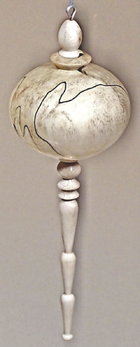
Here is another turning with bone, top and bottom finial are from an old dried beef bone.

Ornament with bone finials.jpg
 
Wow, very precise work. They look identical.
Thanks but if you look very closely you should be able to detect some differences then again if mounted in a balustrade it is almost impossible to detect the differences. VA likely has some historical mansions open for viewing built at a time when each baluster was turned individually so if you were to tour one you could look close at the stair case and likely detect slight differences.
 
Thanks but if you look very closely you should be able to detect some differences then again if mounted in a balustrade it is almost impossible to detect the differences. VA likely has some historical mansions open for viewing built at a time when each baluster was turned individually so if you were to tour one you could look close at the stair case and likely detect slight differences.
But that would spoil the magic :-D
 
Back
Top