

-
March 2026 Turning Challenge: Olla! (click here for details) -
Congratulations to David Wyke, People's Choice in the February 2026 Turning Challenge (click here for details) -
Congratulations to Dave Bell for "Torus Teapot" being selected as Turning of the Week for March 9, 2026 (click here for details) -
Welcome new registering member. Your username must be your real First and Last name (for example: John Doe). "Screen names" and "handles" are not allowed and your registration will be deleted if you don't use your real name. Also, do not use all caps nor all lower case.
You are using an out of date browser. It may not display this or other websites correctly.
You should upgrade or use an alternative browser.
You should upgrade or use an alternative browser.
Turning down air compressor pressure
- Thread starter Webb Willmott
- Start date
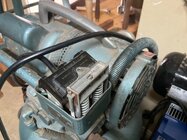

Decrease, and if you dont have a pressure gauge on the compressor, put one on it'l help with the setting up. I do it on the run, but this aint for everyone
found this
Clockwise rotation of the screw increases the pressure, while a counter-clockwise rotation decreases the pressure. Ensure the compressor is unplugged and the tank is empty before adjusting. Step 7: Turn on the compressor and verify if the compressor motor stops when the pressure reaches the cut-out point.
found this
Clockwise rotation of the screw increases the pressure, while a counter-clockwise rotation decreases the pressure. Ensure the compressor is unplugged and the tank is empty before adjusting. Step 7: Turn on the compressor and verify if the compressor motor stops when the pressure reaches the cut-out point.
Thanks. It does have a gauge. My issue was the first time I ran it was after changing to 220v, it kept on running and I was worried about how high it was getting. After a little clean up, I did see the adjustment arrow imprint that was under 50 years of crud.
It’s amazing how much stronger the compressor is after changing the wiring.
Now to get it adjusted just right.
It’s amazing how much stronger the compressor is after changing the wiring.
Now to get it adjusted just right.
Attachments
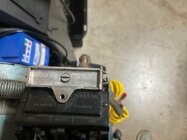

Operating voltage should not have made a difference, and certainly would not require cut-out pressure adjustment.
Tim
Tim
I agree. Perhaps years of non use may have been an issue. It still needed to be decreased because I don’t need a pressurized bomb in the shop.Operating voltage should not have made a difference, and certainly would not require cut-out pressure adjustment.
Tim

after changing to 220v, it kept on running
Another thing that can make a compressor run continuously is burned electrical contacts. That happened to me once on my 5hp 60gal Ingersol Rand shop compressor. It's made to run on 220v only, of course..
After 6-8 years of use the contacts got burned and stuck together causing the compressor to run continuously. Perhaps from arcing, perhaps from corrosion, perhaps defective. IR sent me a new pressure switch.
The compressor is in a sound-insulated closet along with the cyclone dust collector. I wired the compressor with a motor cutoff switch outside the closet and if I remembered I turned it off when I left the shop. But one day I forgot to turn it off and noticed it running continuously. Could have been a disaster= I know someone this happened to on a very old compressor and his shop burned to the ground. Not only that, but when visiting him once in PA we were walking back out to his (rebuilt) shop and the we heard the new compressor running! The cutoff switch had failed.
Moral of the story is somehow don't forget to turn off the power to the compressor. I put a flag on the switch I can see across the shop from the door and a note; "TURN OFF COMPRESSOR". (If I'd thought of it when building the shop I would have powered a relay from a switch right by the light switches at the door.)
I know some who say when they leave they cut off the power to the entire shop at the breaker box. I can't do that since I also have incubators and brooders for hatching peacock eggs and they need to be left on for the breeding season. And cameras and security system.
So you might take the switch apart and inspect the contacts, especially if adjusting the screw doesn't work. (And be very careful of over-pressuring a tank. I've read about compressor tanks "exploding". When I worked in industrial inspection a half century ago we pressure tested tanks two ways: hydro testing, safe since a failure instantly reduces the pressure, or if absolutely required, with air in an underground bunker. Also leak tested tanks and plumbed systems with an inert gas and a detector.)
JKJ
If your compressor is properly outfitted with a safety relief valve, then all the fear of exploding tanks from continuous running is not real. A continuously running compressor may burn up the motor or the pump if not appropriately rated for continuous duty, but you’re not going to over-pressure the tank beyond the setting of the pressure relief valve.
Tim
Tim
Great point Tim. It is fitted with a safety valve. My concern came from the pressure that was pegged on the dial and the compressor was still pumping away. Granted it was the first time it had been run in years abut I had just changed the wiring and thought the voltage change may have been the culprit but after thinking about it, you are right. After I adjusted the pressure cut off, it shut off too low at 60psi so I need to reverse some of what I changed.
John, good points. Dad always switched it off when not in use and I will do the same. And the screw does work.
Thanks for watching out for me.
John, good points. Dad always switched it off when not in use and I will do the same. And the screw does work.
Thanks for watching out for me.
If your compressor is properly outfitted with a safety relief valve, then all the fear of exploding tanks from continuous running is not real. A continuously running compressor may burn up the motor or the pump if not appropriately rated for continuous duty, but you’re not going to over-pressure the tank beyond the setting of the pressure relief valve.
Tim
Tim, I believe this is true in most cases. There have been reports of tank integrity compromised, not necessarily by over-pressure but by rust, perhaps not visible outside. How does a tank get rusty inside? I've heard rumors of people not draining the water from inside the tank. [gasp] It's surprising how rusty-looking the water can be.
I'm not good at remembering that and have to crawl down on the floor to open the valve. After this same discussion many years ago on another forum I found out about and bought a kit with an electronic timer and which periodically activates a replacement valve on the bottom of the tank.
I'm personally not comfortable with risk of burning down the shop or house from an overheated motor. A safety relief valve won't prevent a motor from running continuously if the switch contacts are stuck or shorted. But everything appears to be under control in the WW estate.
JKJ
Draining comprssor tanks, the auto matic type work just fine unless you have a lot of gunk in there due years of poor draining habits. It can be remote it doesnt have to be attached directly to the tank. I often set mine up on the wall for easy access. They can be mechanically operated or electrically and they are not expensive and most will have a overide type button for you to check the water level.
Attachments


If we’re going to morph topics, then the best way to prevent stuck (welded) points in the pressure switch is to run only control power through it, and make/break power to the motor with a magnetic starter.Tim, I believe this is true in most cases. There have been reports of tank integrity compromised, not necessarily by over-pressure but by rust, perhaps not visible outside. How does a tank get rusty inside? I've heard rumors of people not draining the water from inside the tank. [gasp] It's surprising how rusty-looking the water can be.
I'm not good at remembering that and have to crawl down on the floor to open the valve. After this same discussion many years ago on another forum I found out about and bought a kit with an electronic timer and which periodically activates a replacement valve on the bottom of the tank.
I'm personally not comfortable with risk of burning down the shop or house from an overheated motor. A safety relief valve won't prevent a motor from running continuously if the switch contacts are stuck or shorted. But everything appears to be under control in the WW estate.
JKJ
Proper overload protection will help mitigate motor fire, and pumps don’t fail in a mode to start fire.
Tim
the best way to prevent stuck (welded) points in the pressure switch is to run only control power through it, and make/break power to the motor with a magnetic starter.
My 5hp Clearvue motor uses a contactor, activated by 12v DC. The DC is usually turned on and runs continuously while working at bandsaw, lathe, drum sander, etc. The cyclone instructions say to limit starting the motor to a max of 6 times per hour to avoid overheating.
I understand a magnetic starter includes motor overload protection. Do you know if it's worth replacing the contactor with a magnetic starter?
JKJ
A contactor is one component of a typical motor starter assembly. A motor starter assembly often includes overload protection devices as well. But they are not the only type of overload protection, many motors have overload protection devices built into them, especially single phase motors, and external overload protection, can also be provided.My 5hp Clearvue motor uses a contactor, activated by 12v DC. The DC is usually turned on and runs continuously while working at bandsaw, lathe, drum sander, etc. The cyclone instructions say to limit starting the motor to a max of 6 times per hour to avoid overheating.
I understand a magnetic starter includes motor overload protection. Do you know if it's worth replacing the contactor with a magnetic starter?
JKJ
Your dust collector is likely single-phase and the manufacturer suggests limiting starting sequences to keep the start windings from overheating as they are only designed for very limited service time carrying current. Changing to a motor starter with over-current protection would only help reduce risk after the start winding fails and draws too much current.
Tim

Russ Braun
TOTW Team
Hmmm…draining my compressor….hmmm, when did I do that last….what are bad draining habits??? It is way down there for sure….i think, haha!!

Tom Gall
TOTW Team
Haha! We must be related, Russ.Hmmm…draining my compressor….hmmm, when did I do that last….what are bad draining habits??? It is way down there for sure….i think, haha!!
My little 38 yr. old 2hp-20 gallon Sears compressor has certainly been abused over the years. I rarely drained the tank (didn't remember to) even when I used it a lot. Not much use this past year except for the last several weeks. And, as I recall, I've only changed the oil and air filter once within the first year of operation ... because I think the manual said to do so. Not since! I've thought about (desired) getting one of those new "quiet" compressors but - this damn thing refuses to die !!!
