• The forum upgrades have been completed. These were moderate security fixes from our software vendor and it looks like everything is working well. If you see any problems please post in the Forum Technical Support forum or email us at forum_moderator (at) aawforum.org. Thank you
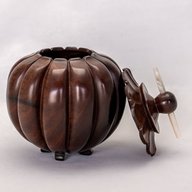
  • February 2026 Turning Challenge: Cookie Jar! (click here for details)
  • Congratulations to Chad Eames for "Red Tines" being selected as Turning of the Week for February 23, 2026 (click here for details)
  • AAW Symposium demonstrators announced - If the 2026 AAW International Woodturning Symposium is not on your calendar, now is the time to register. And there are discounts available if you sign up early, by Feb. 28. Early Bird pricing gives you the best rate for our 40th Anniversary Symposium in Raleigh, North Carolina, June 4–7, 2026. (There are discounts for AAW chapter members too) For more information vist the discussion thread here or the AAW registration page
  • Welcome new registering member. Your username must be your real First and Last name (for example: John Doe). "Screen names" and "handles" are not allowed and your registration will be deleted if you don't use your real name. Also, do not use all caps nor all lower case.

Used lathe vent

Joined
Dec 3, 2025
Messages
6
Likes
4
Location
vineland NJ
New on the forums and I just need to vent if that is okay. My wife does not care about these feelings nor can she validate them.

Your cabinet powermatic delta Craftsman's 12in swing 1/2hp lathe from 1995 is not worth 1500 even if it comes with gen1 carbide tools from Amazon and a duplication tool.

Your nova lathe from 2006 is not worth more then you paid for it two decades agos. That Laguna lathe with risers and a cabinet built into is not worth more now then it was brand new. Slight used jet pen lathe for $900 but comes with a handful boring blanks chuck and roughing gouge??

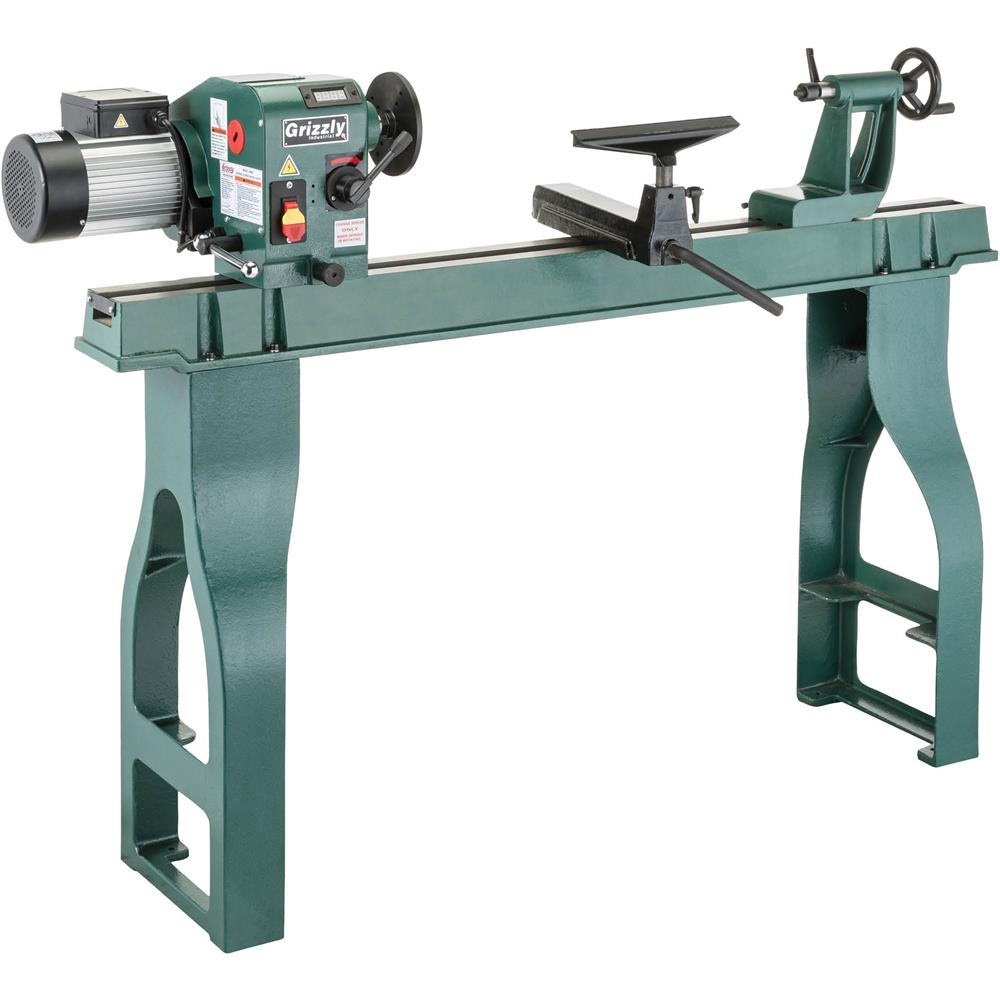
Maybe it's me I'm the problem here. I just am looking to spend less the $1500 on a 16in lathe with outboard turning, speeds under 750rpm(looking at you grizzly) and from this decade.

Sincerely a broke wood turner who has multiple 20in blanks he cannot turn.

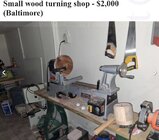
Ps this is not anything I've seen for sale here this is FB marketplace and craigslist
 

Attachments

  • IMG_4223.jpeg
    IMG_4223.jpeg
    206.4 KB · Views: 35
Keep an eye out for a used Jet 1642 - variable speed, reverse. If you really want to turn 20” diameter blanks the the headstock can be positioned off one end and buy or build an outboard tool rest. You can sometimes find them from $1000 to $1600. I had two spare 1642s and recently gave one to a friend and the other to a kids turning program. I kept one Jet Mini and my PM3520b.

HOWEVER, it sounds like you are new to woodturning. If so, forget the quest for a bigger lathe for now and start small and avoid a lot of frustration.

My advice: store the big blanks on the shelf for the future. A highly recommended way to start is to learn spindle turning first, then later move to bowls and platter turning. Spindle turning will teach you the fine tool control needed to turn anything. The lathe you have now is enough to learn on. Set your sights on the future but first master what you have.

I have no idea what gen1 carbide tools are but if they are flat-topped carbides used primarily as scrapers, don’t bother - get a few good HSS tools instead, a bench grinder and learn to sharpen. To get started with spindle turning a good 3/8” spindle gouge, a 3/4” skew chisel, a parting tool, a 1/2” round nose scraper, and a spindle roughing gouge are more than enough. I started over 20 years ago with the worst lathe ever made and a set of inexpensive HSS tools from Sears. (I still use them today.) I learned the basics and eventually moved to a better lathe. A little patience with what you have now can go a long way. (Don’t make the beginner mistake of thinking that a bigger and better lathe will make you a better woodturner1)

Buy a good scroll chuck. I start all students on spindle turning and the skew is the first tool in their hands.

If you don’t have one, a bandsaw is a perfect complement to a lathe.

I can’t teach a class in a message so find and join a good club, take advantage of the resources there, and find a mentor who is good with beginners. You can advance quite quickly. Buy and read two books “Fundamentals of Woodturning” by Mike Darlow and “Turning Wood” by Richard Raffan. Read every word, follow all their instructions and exercises, then read it all again and I promise you will become an expert. That’s how I got started. The actual lathe and the power doesn’t matter much when learning.

When transitioning to bowls and platters, before attempting to turn large things outboard start with smaller blanks and turn inboard - far easier to do many things this way. I’ve had students turn beautiful 8” bowls in the afternoon after a morning spindle turning lesson. The real key is finding the right teacher/mentor. And don’t try to do too much too fast. That’s a fast track to discouragement.

JKJ
 
JKL,

Thanks for the advice I'll keep an eye for the jet lathe that sounds inline with what I'm after. Also it will match my jet wet grinder and jet 14in bandsaw. Both tools have greatly sped up my turning process. I also now have 3 chainsaw saws. 2 for rip cuts and 1 for cross cuts. All purchases made to speed green wood processing times.

I have plenty of tooling(I want more, what's the tool rule, n+1 right?) and just picked up some Thomson bowl gouges. It funny you mentioned a 3/8 skew gouge as that is one of my favorites along with my diamond point. Right now I have 3 1/2 bowl gouges and 2 5/8 bowl gouges to keep me turning when hogging through green stock plus a 5/8 bottom bowl gouge 1 1/2 french curve scraper for finishing.. 2 chucks with different size jaws to not have to spend time swapping jaws. To compliment those I have the holdfast vacuum chuck system which I love but one more chuck with pen jaws would be cool too. And yes those carbide tools are the ones in question.

I have that Richard raffen book and one by David Ellsworth. I love them and big YouTube academy learner as well. Joined my local turning club and all things good. I have heard learning turn through spindle turning then move on but have also heard turn a lot twice turn bowls for good practice. My journey has landed me lots of green wood and I rough turn them before finishing. I have only spent money on wood once for a small present for my wife.

The quest for a new lathe is two fold. I want to turn BIG because I'm a caveman(I say jokingly but Im drawn to it) I regularly max my lathe capacity out. And the second main reason is it has become the bottle neck in my turning process. It bogs down on big cuts on big wet green blanks the torque is not enough. My poor lathe trys to run away when I put a 13x4 green blank on it no matter how round it is off the bandsaw. It gets me where I'm going but in no hurry.

All of my purchases have been to speed up the time to get me to the lathe now it's time to speed up how fast I can turn my clean workshop into a pool of shavings!
 
Last edited:
When your lathe tries "to run away" with a green blank on it, it's because it's not balanced. Always start between centers and take a few seconds to find the center of balance and establish your initial axis, then you can turn up the speed without the lathe taking a walk. It's an essential first step on a lighter machine or one without variable speed.
 
When your lathe tries "to run away" with a green blank on it, it's because it's not balanced. Always start between centers and take a few seconds to find the center of balance and establish your initial axis, then you can turn up the speed without the lathe taking a walk. It's an essential first step on a lighter machine or one without variable speed.
Darryl, you’re right. I do my best to get things centered, but once the blank is round there’s only a single center point to work from. Before cutting it round, it’s hard to tell whether more moisture (and weight) is on one side than the other. I’ve considered using wheel weights to help balance rough blanks.


I turn the lathe speed way down until it’s calm and happy, but I’d love to speed this part of the process up. A larger, heavier, more rigid lathe would make a big difference. As it stands, I can rough out six or more small bowls in the same time it takes to do one large bowl. With a more capable lathe, that ratio would feel a lot more balanced. It would also be great to core multiple bowls from larger blanks instead of turning most of the material into shavings.


I really enjoy optimizing my setup, prep, and production. Fine-tuning the turning process is going to be a lifelong (and not cheap) journey, but that’s part of the appeal.


I do have to laugh at some of the comically expensive used lathes I see. When the time comes and I upgrade, I’d like to sell my current Bauer lathe and some tools cheaply to help someone new get into the hobby. Hopefully, years from now, a new member will read one of my replies and see I joined 15 years ago. This hobby has been nothing but good to me, and I plan to stick around.
 
When you browse used listings, you necessarily see what hasn't sold. It will mostly be overpriced. The reasonable listings go fast. Set up some kind of alert and wait for the deal to come to you.
 
For your torque issues on bigger blanks, do you use the lower belt ratio? I think that is supposed to help.

I have the Bauer lathe too. Lately I have stalled the motor a couple times with some moderate sized hollow forms. I know I should change the belt but I'm getting too lazy to do it.
 
Before cutting it round, it’s hard to tell whether more moisture (and weight) is on one side than the other. I’ve considered using wheel weights to help balance rough blanks
TMD,

Imbalance not necessarily due to moisture on one side of a blank. It’s often a difference in the density of the wood within the blank. Solution with a smaller lathe us again turn smaller blanks. This is solved by turning smaller blanks at a speed that minimizes vibration while turning away excess wood. Often a particular blank or piece will spin with less vibration if the speed is changed. This is easy on a lathe with variable speed but can be frustrating if having to change belts.

Again, a mentor will teach you on their lathe where you can see and feel the difference. Sharp tools and proper use are the key. Trying to turn an out-of-balance without considerable experience can be a lesson in frustration.

Once again, turning spindles will eliminate much frustration and teach the control that will let you turn ANYTHING. Don't take my word for it - I can quote references.

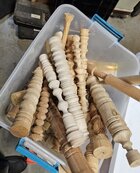
This tub has a few first-lesson practice spindle pieces from students. Some now have their own lathes and are now turning anything they can imagine.
1772121344739.jpeg

After learning the techniques in my shop (tool holding, presentation, body motion, etc.) I always send them home with new spindle blanks to practice. When they return and demonstrate expertise we move to other techniques.

In Kieth Rowley's book, in his book he states clearly that many who turn only bowls are unable to turn anything else. There bowl turners who couldn't turn a decent spindle if they had to. From my own experience I find turning bowls is easy. Yes, I've turned many bowls, but but I find they are not much challenge.

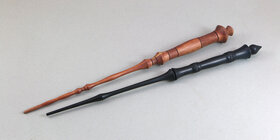
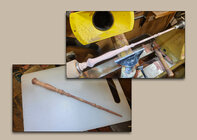
At one symposium I was asked by to expert turner friends for one of my thin spindles (wands) for them to give as presents to family. I'm sure one guy could have turned one but I think he just wanted one of mine. I don't think the other guy could have made one. These are not the ones I gave them but similar:

1772122440698.jpeg

I'm astounded at how many Harry Potter fans are out there. I made this recently as a gift for a surgeon - he plans to bring his kids so I can show them how it's done. Eastern Red Cedar from my farm.
1772124551272.jpeg


I've done demos at clubs in the south east and thin spindles is one demo often asked for. I have another one scheduled in NC in a couple of months- a demo then a workshop.

BTW, some people have said they like to turn bowls since they sell well at some craft shows.

But don't dismiss spindle turning as an unglamorous persuit. I can only say I've accidentaly made thousand$ by selling these and similar things with barely trying.

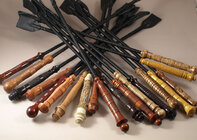
Want to make money? In the right market these HunterJumper horse riders crops can bring good money. The last one these brought $300 after someone twisted my arm. I sold over $2500 of these commissioned by a woman with a horse competition team - I didn't ask for they money, that's just what she gave me. But I don't turn with the goal of selling. I give away almost everythig I turn - I want the joy of turning, NOT a job. - come visit and I'll give you one. Or better, I'll teach you.

1772122725076.jpeg

If you don't want to buy Kieth's book to read what I mentioned earlier, I'd be glad to pull my copy off the shelf and quote the relevant passage:

JKJ
 
I guess you could say that "beauty is in the eye of the beholder"..... In sales, it is often easier to drop the price than to raise it....

robo hippy
 
I guess you could say that "beauty is in the eye of the beholder"..... In sales, it is often easier to drop the price than to raise it....

robo hippy
A family friend got pretty good at making custom cabinets. Turned into a pretty good business. Decided there was too much work for his liking as he was headed for retirement. He thought "If I raise my prices way up, the work will slow to a stop." Didn't work out. The demand and wait list got longer despite several major price increases. Be careful what you ask for... ;-)
 
Back
Top