• The forum upgrades have been completed. These were moderate security fixes from our software vendor and it looks like everything is working well. If you see any problems please post in the Forum Technical Support forum or email us at forum_moderator (at) aawforum.org. Thank you
  • February 2026 Turning Challenge: Cookie Jar! (click here for details)
  • Congratulations to Matt Carvalho for "Red Mallee Folded Form" being selected as Turning of the Week for February 9, 2026 (click here for details)
  • AAW Symposium demonstrators announced - If the 2026 AAW International Woodturning Symposium is not on your calendar, now is the time to register. And there are discounts available if you sign up early, by Feb. 28. Early Bird pricing gives you the best rate for our 40th Anniversary Symposium in Raleigh, North Carolina, June 4–7, 2026. (There are discounts for AAW chapter members too) For more information vist the discussion thread here or the AAW registration page
  • Welcome new registering member. Your username must be your real First and Last name (for example: John Doe). "Screen names" and "handles" are not allowed and your registration will be deleted if you don't use your real name. Also, do not use all caps nor all lower case.

What kind of wood is this?

Odie

Panning for Montana gold, with Betsy, the mule!
Joined
Dec 22, 2006
Messages
7,703
Likes
13,144
Location
Missoula, MT
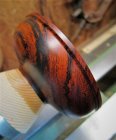
I purchased this piece of wood sight unseen from Woodcraft several years ago, and initially it was labeled as Bubinga. I don't think it's Bubinga.......so, what is it?

-----odie-----
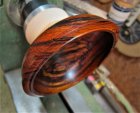
IMG_5464 (2).JPG IMG_5465 (2).JPG
 
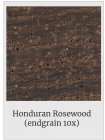
From the current Woodcraft site, I see this stock photo, and another that looks similar on the Wood Database online:
shopping

I also have two books on wood identification by Eric Meier and Terry Porter, and my conclusion is this is probably Cocobolo.

-----odie-----
 
Hmm, given the open pores on this wood, I would guess padouk or how ever you spell it.... Cocobolo is more closed grain. Found it, Padauk wood...

robo hippy
 
looks like waste block? ash?
 
The growth rings are a good indicator. Padauk and Honduran Rosewood grow in a wet tropical environment so the summer wood is always dominate and well defined. It’s normally two or three times bigger than the spring wood. Cocobolo grows in a dry upland savanna and the spring wood is bigger than or equal to the summer wood most years . It grows very slowly and the growth rings are subtle to barely visible.
There are more pores (spring vessels) in Padauk but as the photos (wood-database.com) show not many more
Padauk will fluoresce a faint yellow orange under a black light. Cocobolo is nonreactive.
If you cut that on the bandsaw before turning and the scraps haven’t been disposed of put one in a pail of water, Padauk will float, Cocobolo will sink.
4583D50C-4646-468B-B1A8-DB91E2E769FE.jpeg

View attachment 31933 View attachment 31934
 
Back
Top