Hello AAW friends. I wanted to see what the group's thoughts were on good woodturning schools, classes, seminars, etc. I'm in California but I figured I'd have to travel some for some education. I have seen week long intensive classes but I don't know which might be best for a self taught beginner/intermediate turner such as myself. Any input would be welcome!

-
April 2026 Turning Challenge: Salad Bowl! (click here for details) -
Congratulations to David Bartell, People's Choice in the March 2026 Turning Challenge (click here for details) -
Congratulations to Ted Pelfrey for "Cherry Blossoms on Cherry" being selected as Turning of the Week for April 27, 2026 (click here for details) -
Welcome new registering member. Your username must be your real First and Last name (for example: John Doe). "Screen names" and "handles" are not allowed and your registration will be deleted if you don't use your real name. Also, do not use all caps nor all lower case.
You are using an out of date browser. It may not display this or other websites correctly.
You should upgrade or use an alternative browser.
You should upgrade or use an alternative browser.
Woodturning Schools and Classes
- Thread starter Chris Roades
- Start date

- Joined
- Apr 27, 2004
- Messages
- 9,334
- Likes
- 6,163
- Location
- Lakeland, Florida
- Website
- www.hockenberywoodturning.com
Most week long classes have some central focus in the description. You might find one that focuses on object or techniques that moves you in a direction you want go.don't know which might be best for a self taught beginner/intermediate turner such as myself
A class with Trent Bosch in Ft Collins CO you can get individualized instruction. Fix what you don’t do well technique wise then Trent is a master of many directions carving, coloring, sand blasting hollowing, bowls, chain sawing, and much more.. Trent occasionally has other instructors in his shop.
Some local clubs set up classes
What do you turn now, what do you want to turn next year, what do you do well, what do you wish you could do better?
I did 5 days w Stu Batty and Mike Mahoney at Stu's shop in Colorado, well worth it!
The week i spent at our local club's "fundamentals" class was much more than i spent. We live 90+ minutes from the club, but i was able to stay with my son & DIL--really a bonus to have dinner with our grandkids each night!!. For me, the local club fundamentals class set me up well to invest in more specific schooling.
Odie
Panning for Montana gold, with Betsy, the mule!
For years, I wanted to go to a woodturning class.....but, things didn't work out that way. As a result, for years I struggled with my self-taught concepts until all the pieces of the puzzle began to fit together.
To this day, I haven't had one minute of instruction.....other than a few books and early VHS videos.
For those who want some individual instruction....great.....go for it!
All I'm saying is there is another way to consider......"self-taught" is what it's called.......and, it's the most likely way to produce something that is yours, and yours alone, in a world of woodturners whose turning skills are not distinguishable from one another!
=o=
To this day, I haven't had one minute of instruction.....other than a few books and early VHS videos.
For those who want some individual instruction....great.....go for it!
All I'm saying is there is another way to consider......"self-taught" is what it's called.......and, it's the most likely way to produce something that is yours, and yours alone, in a world of woodturners whose turning skills are not distinguishable from one another!
=o=
R
Richard Coers
Guest
To get your best bang for the buck, find a skilled local turner that will be willing to be your mentor. Emphasis on skilled!!!! You learn faster when you work together, practice by yourself for a few days, then have another meeting and spend time on your issues before moving on. Any kind of hands on with someone skilled will cut your learning time in half. You don’t waste money on housing and travel. Classes are mostly good for inspiration and learning a couple of skills to work on at home, If there are people with less skill than you in the class, they get all the attention. Seminars are inspirational as well. When us old timers learn 35 years ago, classes and seminars were invaluable. No internet, no local clubs, so seminars were invaluable. Now you can get all that sitting at home.
If you are aiming to get the most effective instruction at the lowest cost, Richard's approach has to be the best, and joining a local woodturning club, if there is one available, is in the same category and likely to lead you to a local instructor.
But there are lots of ways to do get instruction. An alternative that is expensive overall, but might appeal to some, is to incorporate the woodturning class in a trip. I have done this several times, and the two elements - the travel and the woodturning - somehow combined to make both better: great trips and great woodturning experiences. And the if there is a good vibe among the students and instructor(s), that can be a nice part of the experience even if being in a class means that you are not getting the densely-packed input of one-on-one instruction.
I cannot recommend highly enough Glenn Lucas's Woodturning Study Centre in Ireland, both for the superb instructional experience and the opportunity to the travel in Ireland. Expensive on all fronts, but very much worth it if it fits in your budget.
But there are lots of ways to do get instruction. An alternative that is expensive overall, but might appeal to some, is to incorporate the woodturning class in a trip. I have done this several times, and the two elements - the travel and the woodturning - somehow combined to make both better: great trips and great woodturning experiences. And the if there is a good vibe among the students and instructor(s), that can be a nice part of the experience even if being in a class means that you are not getting the densely-packed input of one-on-one instruction.
I cannot recommend highly enough Glenn Lucas's Woodturning Study Centre in Ireland, both for the superb instructional experience and the opportunity to the travel in Ireland. Expensive on all fronts, but very much worth it if it fits in your budget.
It's not simply how you start or how you may acquire skills, basic or otherwise. It's what you do with with your skills, and, perhaps even more important, what ideas you may decide to pursue and explore. I turned mostly bowls, hollow forms and such for some years, but began following my idiosyncratic interests, some inspired by folk turning traditions. This required developing skills and techniques since often there is little information available. Now at meetings my work is distinctive enough that people can recognize it at a distance. It's not because of embellishment (e.g., paint or carving) of any sort, since all of the work is done on the lathe with the piece spinning.For years, I wanted to go to a woodturning class.....but, things didn't work out that way. As a result, for years I struggled with my self-taught concepts until all the pieces of the puzzle began to fit together.
To this day, I haven't had one minute of instruction.....other than a few books and early VHS videos.
For those who want some individual instruction....great.....go for it!
All I'm saying is there is another way to consider......"self-taught" is what it's called.......and, it's the most likely way to produce something that is yours, and yours alone, in a world of woodturners whose turning skills are not distinguishable from one another!
Odie
Panning for Montana gold, with Betsy, the mule!
It's not simply how you start or how you may acquire skills, basic or otherwise. It's what you do with with your skills, and, perhaps even more important, what ideas you may decide to pursue and explore. I turned mostly bowls, hollow forms and such for some years, but began following my idiosyncratic interests, some inspired by folk turning traditions. This required developing skills and techniques since often there is little information available. Now at meetings my work is distinctive enough that people can recognize it at a distance. It's not because of embellishment (e.g., paint or carving) of any sort, since all of the work is done on the lathe with the piece spinning.
I fully understand your reasoning, R.....
All I'm saying is some people have another concept of what art is, and are not interested in technological advances that enable objects to be produced in a process where all the skills necessary are in the process of setup, and not applied to the finished product. In my experience, what they are looking for are things that are produced by the hands of the maker, and not some machine.
I say that with the notation that whatever motivates a prospective buyer to make a purchase, might not be the same across the board. As I said before, there is a reason why some people are not interested in laser produced art....and that is because of those who have a pre-conceived notion of what "hand-made" is.....and isn't.....
=o=
Experience is the best teacher. I did take a bowl turning class at Woodcraft, courtesy of the wife's Christmas present.For years, I wanted to go to a woodturning class.....but, things didn't work out that way. As a result, for years I struggled with my self-taught concepts until all the pieces of the puzzle began to fit together.
To this day, I haven't had one minute of instruction.....other than a few books and early VHS videos.
For those who want some individual instruction....great.....go for it!
All I'm saying is there is another way to consider......"self-taught" is what it's called.......and, it's the most likely way to produce something that is yours, and yours alone, in a world of woodturners whose turning skills are not distinguishable from one another!
=o=
R
Richard Coers
Guest
I have to somewhat disagree. There are plenty of turners, 10 years or so into the hobby, that carry a ton of bad techniques. I’ve taught many classes, at Woodcraft and at regional symposiums, and some techniques I’ve seen make me shudder. I spent a weekend with John Jordan. One guy was an industrial arts teacher, and he butted heads with John the whole class. He was not open to making changes, so John being John, he just spent a lot less time with that guy. He would speak loud enough to be heard across the shop, telling him to drop or raise the handle. I found women the easiest to teach. They are open to learn and won’t stick to their bad habits. Sharpening is one place where many turners struggle. They will butcher there tools for decades if no one steps in and shows them some techniques.Experience is the best teacher. I did take a bowl turning class at Woodcraft, courtesy of the wife's Christmas present.
In general, being a workshop mentor appeals to me as another way to stay busy in my not-soon-enough retirement (4ys 7mo!) as a way to pass on my learned knowledge, especially to younger generations. What does not appeal to me is the liability of having an invitee to my workshop getting hurt and suing my insurance company. Our letigious societal attitude sucks.
You are all very welcome to file this under "Shameless Plug" and get on with your day.
I learned yesterday evening, at our monthly meeting, that this class is full, but there is a waiting list.
The Chicago Woodturners (I am a member) engages professional woodturners to come and demonstrate at our Thursday night monthly meeting and then teach for 3 days (Friday, Saturday and Sunday). The next edition of this exercise features Pat Carroll, freshly relocated from Ireland to the USA, March 13 - 15. The cost is $30 for club membership plus $400 for the class. Obviously travel, meals, hotel, ... would come on top of that and would very likely be much more than the cost of the class.
I learned yesterday evening, at our monthly meeting, that this class is full, but there is a waiting list.
The Chicago Woodturners (I am a member) engages professional woodturners to come and demonstrate at our Thursday night monthly meeting and then teach for 3 days (Friday, Saturday and Sunday). The next edition of this exercise features Pat Carroll, freshly relocated from Ireland to the USA, March 13 - 15. The cost is $30 for club membership plus $400 for the class. Obviously travel, meals, hotel, ... would come on top of that and would very likely be much more than the cost of the class.
Last edited:
Many of us have spent hundreds and hundreds of dollars on tools (or event thousands of dollars) and can still struggle with techniques. However, some of us can take the oldest grungy rusted tools and make things that are spectacular. The difference? Knowledge and understanding what good looks like. If you have never experienced what a sharp hand saw is, you might think that impulse hardened hand saw from the local chain hardware store is the greatest. If you have never seen what a well sharpened gouge can do compared to a carbide scrape*, how would you know surface quality if you have only watched YouTube** videos or seen photographs? Screens and printed pages can hide a world of bad or even dangerous habits.
While you might find it hard to argue with Odie's spectacular bowls, he has taken a path that probably took years to get those fine results. Certainly, when he posts a new photo, you know instantly who made it. (Odie, I wonder where you would be now if that learning journey had that boost from the classes you wanted to take!)
I think a good instructor, mentor, turning buddy, or club/guild can make a world of difference. It did for me.
The BEST $$$$ I ever spent on woodturning:
1. My Lathe
2. A weekend techniques class with Stuart Batty
3. Membership and participation in my AAW Chapter Front Range Woodturners and Colorado Woodworker's Guild
4. They say time equals money... so I spent time at the lathe. Practice.
5. Getting to a point where you can teach others. You might think you understand it... until you need to explain or show it to someone else.
6. Yes, very expensive to attend for many of us... the AAW Symposium or your regional symposiums.
NOTE * I welcome steel, high speed steel (HSS), carbide, and sandpaper into my shop.
NOTE ** YouTube You gotta watch at least three... Gotta rule out the crazy guy that just ain't killed himself yet.
Oh. And YouTube unboxing videos and "first time did this" videos and "Biggest Baddest, Greatest EVER!" videos all get kicked to the curb.
While you might find it hard to argue with Odie's spectacular bowls, he has taken a path that probably took years to get those fine results. Certainly, when he posts a new photo, you know instantly who made it. (Odie, I wonder where you would be now if that learning journey had that boost from the classes you wanted to take!)
I think a good instructor, mentor, turning buddy, or club/guild can make a world of difference. It did for me.
The BEST $$$$ I ever spent on woodturning:
1. My Lathe
2. A weekend techniques class with Stuart Batty
3. Membership and participation in my AAW Chapter Front Range Woodturners and Colorado Woodworker's Guild
4. They say time equals money... so I spent time at the lathe. Practice.
5. Getting to a point where you can teach others. You might think you understand it... until you need to explain or show it to someone else.
6. Yes, very expensive to attend for many of us... the AAW Symposium or your regional symposiums.
NOTE * I welcome steel, high speed steel (HSS), carbide, and sandpaper into my shop.
NOTE ** YouTube You gotta watch at least three... Gotta rule out the crazy guy that just ain't killed himself yet.
Oh. And YouTube unboxing videos and "first time did this" videos and "Biggest Baddest, Greatest EVER!" videos all get kicked to the curb.
U&nfortunately there are lots of classes and videos on turning things but not necessarily how to turn, including body mechanics, vocabulary and concepts. Also unfortunately, good turners are not necessarily good teachers.

Jaramiah Severns
TOTW Team
Since you’re open to travel, the woodturning school at Craft Supplies in Provo, Utah is a good option. They have great local instructors and bring in top-tier guest instructors several times a year.
Sammy Long told me years ago that taking a class would take a year off your learning curve. I’ve taken four now , two embellishment and two turning. The best money I’ve ever spent , next to my lathe.
For me a bowl is a bowl. No matter how good it looks, how many holes it has in it, no matter how it is decorated, it is a bowl. Art for me is something that has no other use but for to look at and ponder and smile or wonder what was thought at its making. What art is to others is what they see in their eyes and can be very different to what you and I see. I have studied with some of the best turners in the world over the last 20 years and I have surely learned something from each of them. Can I tell you what from each I learned, NO! It's a little of this a little of that and it's all rolled into each thing I do. It's all there but it's just wrapped up into me. But every one of the classes has been worth every penny and I would do it all again. And I am as this summer I'll be doing a couple days hands on with Jason Breach A club, a mentor and classes are the best ways to learn. I myself wouldn't call symposiums the greatest learning experience but I have always enjoyed them for being entertained, meeting folks and for finding and touching the latest gear. One of the best and greatest things woodturning has given to me is friends who I would not know except for woodturning. I guess you can't ask for a bigger plus than that.
A club, a mentor and classes are the best ways to learn. I myself wouldn't call symposiums the greatest learning experience but I have always enjoyed them for being entertained, meeting folks and for finding and touching the latest gear. One of the best and greatest things woodturning has given to me is friends who I would not know except for woodturning. I guess you can't ask for a bigger plus than that.
@Chris Roades
I don't remember if you said earlier - are you a member of a local turning club?
Many clubs have free mentorship programs for members. You can go to the shop of an experience person, or they may come to yours.
I think this is the best way to get started, perhaps better than a class. A teacher in a class may have to provide a broad lesson and might not have much time for individual instruction. And a week-long class may have to move along at a pace to suit the class, not the individual. A class advertised as for beginners might be ok.
But an individual instructor/mentor can evaluate your level of experience and adjust the teaching to your pace.
That said, the well-known schools I have experience with in this area:
One advantage of a school is you can visit other areas, meet people, and be inspired by something you never imagined!
People travel from all over to attend - I met someone who traveled from Israel for a week-long class!
There may be other similar schools closer to you.
As someone mentioned, there are many videos out there but none of those can watch and correct how your tools are prepared, how hold and move a tool, your body motion, etc. (And some videos are horrible.)
One-on-one instruction can be so much better. For example, when I teach a beginner in my shop I always start with a skew chisel - I show them how to hold,, how to present the edge to the wood, how to learn to get a good continuous shaving, how to move the legs, etc. I turn the lathe by hand at first until I think they are ready for spinning wood. I watch everything and constantly correct and suggest. I move from planing cuts on a skew to v-grooves, coves with a spindle gouge, and more. Most quickly get the hang of things - I have never had a person get a catch!
My initial session is spindle based but I think that's important even if you really want to turn bowls in the long term - it's been said by many experts that spindle turning can teach you the fine tool control that will let you turn ANYTHING! I know some who can turn beautiful bowls but have trouble with other things which limits what they can do.
There are also pro turners that offer individual instruction!
JKJ
I don't remember if you said earlier - are you a member of a local turning club?
Many clubs have free mentorship programs for members. You can go to the shop of an experience person, or they may come to yours.
I think this is the best way to get started, perhaps better than a class. A teacher in a class may have to provide a broad lesson and might not have much time for individual instruction. And a week-long class may have to move along at a pace to suit the class, not the individual. A class advertised as for beginners might be ok.
But an individual instructor/mentor can evaluate your level of experience and adjust the teaching to your pace.
That said, the well-known schools I have experience with in this area:
- John C Campbell www.folkschool.org/ (click "Find a class")
- Arrowmont arrowmont.org/ (click "Find a workshop", "Medium")
- Appalachian Center for Craft www.tntech.edu/fine-arts/craftcenter/ (click "Workshops)
One advantage of a school is you can visit other areas, meet people, and be inspired by something you never imagined!
People travel from all over to attend - I met someone who traveled from Israel for a week-long class!
There may be other similar schools closer to you.
As someone mentioned, there are many videos out there but none of those can watch and correct how your tools are prepared, how hold and move a tool, your body motion, etc. (And some videos are horrible.)
One-on-one instruction can be so much better. For example, when I teach a beginner in my shop I always start with a skew chisel - I show them how to hold,, how to present the edge to the wood, how to learn to get a good continuous shaving, how to move the legs, etc. I turn the lathe by hand at first until I think they are ready for spinning wood. I watch everything and constantly correct and suggest. I move from planing cuts on a skew to v-grooves, coves with a spindle gouge, and more. Most quickly get the hang of things - I have never had a person get a catch!
My initial session is spindle based but I think that's important even if you really want to turn bowls in the long term - it's been said by many experts that spindle turning can teach you the fine tool control that will let you turn ANYTHING! I know some who can turn beautiful bowls but have trouble with other things which limits what they can do.
There are also pro turners that offer individual instruction!
JKJ
I’m going to answer from the prospective of when I was new to turning and then some.
The best thing I ever did was to take a class. I bought my second lathe at Highland Woodworking in Atlanta 25 years ago, and after having the lathe for a while and making a few more dog dishes I took a one day class from Phil Colson at Highland (great teacher). It made a big difference in my confidence and ability to turn a better piece, in my attitude towards safety, how to sharpen a tool and many other aspects of turning. Dale Larson, another great teacher, who I took a class from at Arrowmont some years ago made a big difference in my overall technique, and it was a great way to exchange ideas with others.
There are many great schools and individuals where you can take a class, but only you know what it is you want to accomplish. Ask yourself a few questions. Is there a specific area that you want to improve upon, I.e.the basics of turning, spindle work, hollow turning, bowl turning etc? What do you enjoy turning? Now go find an instructor who fits that need. Review their instagram, Facebook pages to see if you like their work. How long have they been teaching? Email or call the instructor to discuss what you want to accomplish. You may find out that you are on different tracks with your needs and their class. If they don’t have a few minutes to talk and understand your needs, go find another instructor.
As many have said, join a club. When I lived in the Atlanta there were several great clubs with many highly experienced turners and teachers. Having your work critiqued by more experienced and thoughtful turners can help you improve your techniques. There was nothing better than being able watch John Jordan and others do a demo, then ask questions.
The best thing I ever did was to take a class. I bought my second lathe at Highland Woodworking in Atlanta 25 years ago, and after having the lathe for a while and making a few more dog dishes I took a one day class from Phil Colson at Highland (great teacher). It made a big difference in my confidence and ability to turn a better piece, in my attitude towards safety, how to sharpen a tool and many other aspects of turning. Dale Larson, another great teacher, who I took a class from at Arrowmont some years ago made a big difference in my overall technique, and it was a great way to exchange ideas with others.
There are many great schools and individuals where you can take a class, but only you know what it is you want to accomplish. Ask yourself a few questions. Is there a specific area that you want to improve upon, I.e.the basics of turning, spindle work, hollow turning, bowl turning etc? What do you enjoy turning? Now go find an instructor who fits that need. Review their instagram, Facebook pages to see if you like their work. How long have they been teaching? Email or call the instructor to discuss what you want to accomplish. You may find out that you are on different tracks with your needs and their class. If they don’t have a few minutes to talk and understand your needs, go find another instructor.
As many have said, join a club. When I lived in the Atlanta there were several great clubs with many highly experienced turners and teachers. Having your work critiqued by more experienced and thoughtful turners can help you improve your techniques. There was nothing better than being able watch John Jordan and others do a demo, then ask questions.
Only taken the one class. The rest was learned OTJ and YT.
Laurent Niclot and his bride Kailee were always around when I took his class. We had a chance as a class and individually to set our course.A class with Trent Bosch in Ft Collins CO you can get individualized instruction. Fix what you don’t do well technique wise then Trent is a master of many directions carving, coloring, sand blasting hollowing, bowls, chain sawing, and much more.. Trent occasionally has other instructors in his shop.

I would be remiss if I didn't mention Arrowmont in Gatlinburg, TN. One-week classes at a reasonable price and, from what I hear, a really nice campus. You can stay on-site if you want. It's not individual instruction, but it's a smallish class size.
Thank you all for the perspectives. Being a turner in Southern California isn't always the easiest as clubs are few and far between. There are a couple in the area that I'll investigate before I would consider flying off to a weeklong school. Being self taught, I know I'm doing things incorrectly (especially sharpening) so I'd like to squash those bad habits asap. I also need to find more reliable sources of wood so ........

Dave Landers
Beta Tester
FWIW, a map - https://www.google.com/maps/d/edit?mid=1VWIp_LoekhF7N0MBHIhLE6m1mTdU33w&usp=sharing
Like my chapter map, this is only as good as the data on the AAW "Find a..." query (as of this morning)
Like my chapter map, this is only as good as the data on the AAW "Find a..." query (as of this morning)
Interesting to note that this map locates Marc Adams School of Woodworking somewhere in Tennessee. I wonder if the person making the map did not confuse Franklin IN with Franklin TN, as the pin is somewhere near where Franklin TN would be. I personally have not attended Marc Adams School of Woodworking, but I know a number of folks who have and speak highly of it. Personally, I have only ever been to David Ellsworth weekend when he was located in PA, obviously that is no longer available.FWIW, a map - https://www.google.com/maps/d/edit?mid=1VWIp_LoekhF7N0MBHIhLE6m1mTdU33w&usp=sharing
Like my chapter map, this is only as good as the data on the AAW "Find a..." query (as of this morning)
Dave Landers
Beta Tester
The data says Franklin, IN - dont know why google put the pin there. I poked at it and got it moved to IndianaInteresting to note that this map locates Marc Adams School of Woodworking somewhere in Tennessee. I wonder if the person making the map did not confuse Franklin IN with Franklin TN, as the pin is somewhere near where Franklin TN would be. I personally have not attended Marc Adams School of Woodworking, but I know a number of folks who have and speak highly of it. Personally, I have only ever been to David Ellsworth weekend when he was located in PA, obviously that is no longer available.
I would suggest that you look into "Arrowmont School of Arts and Crafts" in Gattlinburg, TN.
J.C. Cambell school, Craft Supply, etc.
If there is a Teacher that you think you would like to learn from......and they are teaching a class.......go take it.
I have gone a number of times and it is terrific fun. A week or two of nothing but woodturning.
Lots of instructors out there. Some are better teachers than others. Ask around your club and see what others have done.
I have mostly been to Arrowmont. You live right there. You eat right there. The shop is open after teaching hours.
I have loved all the classes I have taken. Learned a ton. Great fun.
Go do it. You will not regret it.
J.C. Cambell school, Craft Supply, etc.
If there is a Teacher that you think you would like to learn from......and they are teaching a class.......go take it.
I have gone a number of times and it is terrific fun. A week or two of nothing but woodturning.
Lots of instructors out there. Some are better teachers than others. Ask around your club and see what others have done.
I have mostly been to Arrowmont. You live right there. You eat right there. The shop is open after teaching hours.
I have loved all the classes I have taken. Learned a ton. Great fun.
Go do it. You will not regret it.
Being self taught, I know I'm doing things incorrectly
Ha! Reminds me of what my piano teacher always said - she spends a lot of time doing exactly what you said, un-teaching some who have taught themselves to play! She was far more for discipline and learning things the proven ways, learning it right the first time, building a foundation to grown from. She'd probably be disappointed in me now since I've moved somewhat away from classical music and more towards improvisation!
Sharpening is one thing many need help with, at least at first. The old saying is if you can't sharpen, you can't turn! (perhaps one reason some use carbide tools). One gentleman came to my shop once for a day and brought his tools for sharpening help. I couldn't believe his bowl gouge - it looked like it had been sharpened on the drive over by holding it out the car door against the pavement!!!
When I started turning, I had no idea how to sharpen. I paid a guy at the woodcraft store to sharpen my bowl gouge when it got dull! Wasn't long before I did some reading and learned to sharpen as well (or better). I've mentioned this before but forgot in this thread: as a beginner I learned a great deal from two books: Richard Raffan's "Turning Wood" and Mike Darlow's "Fundamentals of Turning". Read every word, worked through all the exercises. Do this and you'll have a jump start towards turning anything. I buy extra copies of the books when I can find them used or on sale, lend to friends and students. SO much more information can fit into a good book than into a bucket full of videos.
About the three locations in Tennessee, all a reasonable drive from me:
Arrowmont is wonderful but the town of Gatlinburg is awful (IMO). The Arrowmont campus is on a hill right off the main drag of a crowded touristy town, fortunately away from the congestion. In addition to the scheduled classes, Arrowmont will rent the space and lathes to private groups and teachers. Our club has done both - I had the privilege of teaching turning for a day. A couple of us also brought our sharpinging equipment - seemed to be a lot of interest in that.
The John C Campbel campus is quite an experience - on a beautiful rural spread nestled in a valley between tree-covered hills. When I get down that way I love to just walk around the place. (And the food they prepare for the students and staff is wonderful!)
And the other one I mentioned, Appalachian Center for Craft, sits on a wooded penisula surrounded by water - beautiful campus. All three have great classrooms and good equipment.
JKJ
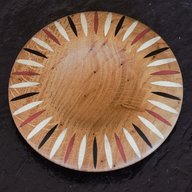
Jimmy Clewes is in Las Vegas. If I were looking to take a more individualized class, (especially out west) I'd be talking to him. Vegas is usually pretty cheap to fly into and has an abundance of rooms, and Jimmy and Mary are great people. Someday...
 jimmyclewes.com
Woodturning Class Dates and Information | Jimmy Clewes
jimmyclewes.com
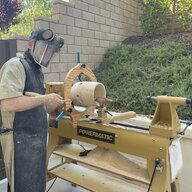
Our Orange County woodturning club has a list of great mentors. I’m sure other clubs do also. Maybe one lives near you even if the club isn’t close.Thank you all for the perspectives. Being a turner in Southern California isn't always the easiest. I also need to find more reliable sources of wood so ........
For wood, look at Street Tree Revival in Anaheim. Or befriend a local arborist with the gift of a piece you’ve turned.
Agree with Jimmy Clewes and Mary—been there twice. And Mike Jackofsky in Escondido.
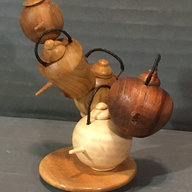
Other western US classes to consider would be in the Seattle area (Port Townsend is one, Pratt Fine Arts is another), and Snowmass if they're still operating. Craft Supplies has a pretty well developed program with experienced instructors. If you're not wanting to study under a particular famous turner or learn a particular skill, they'd be a pretty good choice. If you are, they also have some of those classes.

Roger Wiegand
Beta Tester
I’ve learned vastly more from opportunities for hands-on instruction than from any numbers of You tube videos. The real time feedback that no, you aren’t actually doing whet you just watched and what you thought you were doing is priceless. Where yo put your feet, how to hold your elbows, where to be watching while you make your cut, how to move your light so you can actually see, this is what actually sharp really feels like, and so on, ad infinitum.
My experiences range from quick session with a fellow club member to a weekend with Richard Raffin decades ago, to a week of Skew camp at Marc Adam’s with Alan Lacer and many more (just signed up for bowl turning with Glenn Lucas in Ireland) and every experience has been incredibly rewarding, not to mention a ton of fun. It’s an absolute favorite way to spend a vacation.
My experiences range from quick session with a fellow club member to a weekend with Richard Raffin decades ago, to a week of Skew camp at Marc Adam’s with Alan Lacer and many more (just signed up for bowl turning with Glenn Lucas in Ireland) and every experience has been incredibly rewarding, not to mention a ton of fun. It’s an absolute favorite way to spend a vacation.
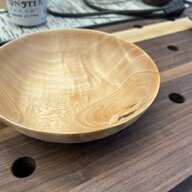
Im there,,,For years, I wanted to go to a woodturning class.....but, things didn't work out that way. As a result, for years I struggled with my self-taught concepts until all the pieces of the puzzle began to fit together.
To this day, I haven't had one minute of instruction.....other than a few books and early VHS videos.
For those who want some individual instruction....great.....go for it!
All I'm saying is there is another way to consider......"self-taught" is what it's called.......and, it's the most likely way to produce something that is yours, and yours alone, in a world of woodturners whose turning skills are not distinguishable from one another!
=o=
Have no choice but to watch video classes or free stuff on youtube then hit the lathe and just figure it out,
Can be frustrating but if i really pay attention to an online class or what im reading i gain the info i need and can then make advancements with my technique, some days are better than others and ALL these guys offering online classes or videos have slight variations, but eventually i have been finding what works for me. Pretty much thats all that matters, as soon as something clicks and i have that aha moment things move ahead, recently had that with a swept back bowl gouge and a class i was re reading, peeled out a natural edge bowl form in a matter of 20 minutes and couldnt be happier.
Odie, I totally get what you are saying and i have went down that road myself, the nearest turning club to where i lived when i got my 3520 was a little over 100 miles away and at that time there was not time or money to go to a turning class so I did what you did, I figured it out myself and i figured out what worked for me and over time I started turning out pieces that I could be proud of, I understand that if i had taken some classes it may have speeded up the learning curve.
I did watch some videos and i picked up alot from them, mainly, Lyle Jamieson, Robo Hippy, Richard Raffen, and Brian Havens and i do have a copy of Richard Raffens book on bowl turning
Tim Dunbar
I did watch some videos and i picked up alot from them, mainly, Lyle Jamieson, Robo Hippy, Richard Raffen, and Brian Havens and i do have a copy of Richard Raffens book on bowl turning
Tim Dunbar
I've been turning for awhile and although I have taken one-day classes with many well-known turners, I am well aware that I am set in my ways and in need of a jump start. I am planning to take a week-long class with Roberto Ferrer this summer.
I was chatting with Donna Zils Banfield a couple weeks ago about this, she has the experience of being an instructor at some of the well-known schools that have been previously mentioned. She mentioned something to me that I would never have thought of, but it struck me as something that could be important.
If you are planning to attend one of the schools, Donna said to find out if the school is for-profit or non-profit. In her experience she has found that the for-profit schools will sometimes put as many students as they can into a class, resulting in less attention from the instructor on each student.
I was chatting with Donna Zils Banfield a couple weeks ago about this, she has the experience of being an instructor at some of the well-known schools that have been previously mentioned. She mentioned something to me that I would never have thought of, but it struck me as something that could be important.
If you are planning to attend one of the schools, Donna said to find out if the school is for-profit or non-profit. In her experience she has found that the for-profit schools will sometimes put as many students as they can into a class, resulting in less attention from the instructor on each student.
Odie
Panning for Montana gold, with Betsy, the mule!
I understand that if i had taken some classes it may have speeded up the learning curve.
Yes, it most likely would have been a faster journey......but, the one thing that will always be different is without the instruction, YOU are the only one who will embed the skills you've learned into your psyche. That one little difference is what will make what you turn unique, but only if you continue to take your turning to "the next level". Thus, if your foundation is unique, your turning skills will also be unique......and, your finished product will show it.
=o=
Odie
Panning for Montana gold, with Betsy, the mule!
Im there,,,
Have no choice but to watch video classes or free stuff on youtube then hit the lathe and just figure it out,
Can be frustrating but if i really pay attention to an online class or what im reading i gain the info i need and can then make advancements with my technique, some days are better than others and ALL these guys offering online classes or videos have slight variations, but eventually i have been finding what works for me. Pretty much thats all that matters, as soon as something clicks and i have that aha moment things move ahead, recently had that with a swept back bowl gouge and a class i was re reading, peeled out a natural edge bowl form in a matter of 20 minutes and couldnt be happier.
Yes, you just might be "there".....!
Some of what you're saying here hits home with me.
Keep it up, friend!
=o=
For those that rely on Youtube for turning instruction, there's a lot of bad videos mixed in with the good. (some are dangerous) I've compiled a list of the preferred instructors. This was all just info taken from another thread on here. I collected the names, then looked up their links.
Attachments
There are things you can learn from an in-person demo that you just can't get online. Like, where does the demonstrator place her feet? Or, What is he doing with his right (invisible) hand? Or that they reposition they tool rest, sometimes by millimeters, all the time--way more often than we amateurs ever do. It's hard to describe, but once you're past the beginner stage of learning, there are many, many subtle things you notice in-person.Yes, you just might be "there".....!
Some of what you're saying here hits home with me.
Keep it up, friend!
=o=
Odie and Tim, if you go watch someone else turn in person, you'd undoubtedly be thinking to yourself, "Well, I can do that better with my grind", or "You've got way too much vibration". Much of what an advanced turner would see would not be new and useful, but there are always little nuggets in every demo. A new way of taking off the nub on the bottom of the bowl, how to use a bottom of the bowl gouge for something entirely different, or maybe Odie, you'd have seen an angled headstock for the first time 20 years ago and thought "Shazaam! That's what I need."
For some folks, it's too much time, effort, or expense to go to an away symposium, but most of us have clubs within tolerable driving distance. Club demos are probably not going to feature the wealth of expertise of the away symposium (unless your local club is in Loveland), but there will still be tidbits of novelty, as well as other having people's work stimulate an idea for a project you want to try.
The one thing you'll never get from any kind of demo is feedback. We can't watch ourselves turning and see problems with footwork, grip, posture, body mechanics. A coach or mentor watching us, from a different angle or perspective, might also notice how our cutting edge is not actually at the best shear angle, like we think. Or that our right hand is gripping the handle too far from the end for good control when we get to hanging out too far over the rest.
Yesterday one of the high school students kept having the gouge slip off the outside of a bowl blank. I sharpened her gouge and turned the speed up a little bit, but it kept happening. Then I recognized that towards the end of the cut, she was rotating away from the wood instead of moving straight sideways. She'd gotten off balance and had no clue. We'll fix it by making sure she's keeping a little flex in her knees and is positioned and balanced for the end of the cut. I might even tell her how Stuart Batty repeatedly checks that out before he starts his cut. If I hadn't gone to a symposium, I'd never have known that one of the most technically skillful turners in the world checks his body position before almost every cut.