I live in Arizona, home of high heat and low or non-existent humidity. Coming from a temperate climate many years ago, where the above advice/suggestions are valid, I had to relearn a few things when turning unseasoned wood here in the desert. I'll start off by saying that turning is always a collaboration between the maker and the material. What you do to the material when turning, and how the material responds is, one might say, the joy of woodturning. Except for native Mesquite, all of my wood is exotic, in the form of unseasoned logs from the Phoenix area urban forest, mainly comprised of introduced species from other parts of the world that do well here. These include D. Sissoo (East Indian Rosewood), Acacia, Eucalyptus, African Sumac, Chinese elm, Chilean and Argentine Mesquite, and a whole host of unknowns from semi-tropic areas that add mystery and challenges to the collaboration. Some facts: 1. Sealants like Anchorseal to not work well. 2. I can turn some species successfully through the pith, which may show very minor checking but no cracks. This helps when the logs are small and the pith is in the center of the log. 3. Candlewax melted on the log end grain blank plus keeping the blanks sealed in a thin (30mil) wastebasket liner before and after rough turning the form is my standard procedure. The liner is thin enough to slowly allow moisture to pass through, which helps immensely in controlling the drying process.
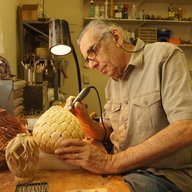
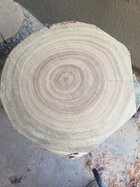
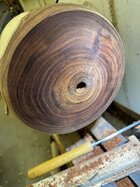
The first image is of a salvaged unknown species buried for years in landscape debris. The second is a recently cut down acacia log being turned through the pith. Some very minor checking controlled with super glue.