I have a 14" Jet with a 6" riser. This gives me an 11 depth. The 1 HP. motor barely gets it done with a fresh blade. I would suggest one with a larger motor.I'm planning on finally treating my self to a band saw specifically for cutting bowl blanks and resawing. The question is, what horsepower do I need? I'm looking at 14 inch band saws. Can I get away with 1 horsepower, or will I regret it. Trying to save some $$

-
April 2026 Turning Challenge: Salad Bowl! (click here for details) -
Congratulations to David Bartell, People's Choice in the March 2026 Turning Challenge (click here for details) -
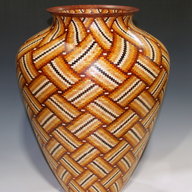
Congratulations to Ethan Hoff for "Basket Illusion Platter" being selected as Turning of the Week for April 13, 2026 (click here for details) -
Welcome new registering member. Your username must be your real First and Last name (for example: John Doe). "Screen names" and "handles" are not allowed and your registration will be deleted if you don't use your real name. Also, do not use all caps nor all lower case.
You are using an out of date browser. It may not display this or other websites correctly.
You should upgrade or use an alternative browser.
You should upgrade or use an alternative browser.
Band Saw Horsepower
- Thread starter Bryan Field
- Start date
I have a 14" Jet with a 6" riser. This gives me an 11 depth. The 1 HP. motor barely gets it done with a fresh blade. I would suggest one with a larger motor.
You might insure your saw is aligned and the tension is right. Those and the wrong blade can make sawing thick stock difficult or impossible. As I mentioned earlier, I used an ‘80s/‘90s era 14” Delta with a cast iron frame and a 6” riser for years to resaw boards and process green log sections into turning blanks. That saw could handle 12” wet or dry stock with ease. I learned a lot from Mark Duginske’s book and one by Lonnie Bird, as well as the Itura Design docs.
To make the saw work I had to 1) align the saw, 2) replace a weak tension bracket, and 3) install a stronger tension It took me several years to sort this out. The low saw HP limited only the sawing speed.
I quickly learned that, assuming a sharp-sharp-sharp blade appropriate for the wood thickness, insufficient tension could be the biggest problem. And tension marks and indicator needles on EVERY bandsaw I’ve checked were way off, according to my tension gauge. (I use a Starrett but many have rigged up accurate gauges using digital calipers, a couple of small clamps, and some pieces of wood. It’s not rocket science, just measurement and math.) I’ve used my Starrett to “recalibrate” the tension indicators on friend’s lathes. I think every woodturning club should buy one to loan to members. They are easy to use.
I now use a larger saw with more HP, but still, the saw alignment, blade, sharpness, and tension have to be right.
JKJ
Is 7.5hp enough? And the blade is 19' long. Rockler probably doesn't stock those blades...

Other bandsaws at this site, catering to industrial users. That said, some prices are on par with prices some turners here pay for lathes.
$4500 will get you 3hp with a 20" wheel. And this is the small model from this manufacturer.

 www.alpinetechco.com
Want to spend some serious cash on a serious bandsaw? Look up Northfield brand bandsaws, built in Northfield, MN.
Used Sold Tannewitz 36" GH Band Saw, 1984, 7.5HP, 3PH, 19' 5" Blade, Foot Brake, Auxiliary Table at John G Weber Co Inc
Tannewitz 36" GH Band Saw, 1984, 7.5HP, 3PH, 19' 5" Blade, Foot Brake, Auxiliary Table 7.5HP, 3PH 230/460V motor 35.5” throat capacity, balanced wheels 1/8”-1 ¼” blade width. 19.5’ blade length, 7.5 Hp direct drive. 36’ x 37’ cast iron table, Tabl...
www.johngweber.com
Other bandsaws at this site, catering to industrial users. That said, some prices are on par with prices some turners here pay for lathes.
$4500 will get you 3hp with a 20" wheel. And this is the small model from this manufacturer.
AlpineTech Co
Choose from a range of premium woodworking and metalworking tools for your business. Our selection is tailored to fit any job, from small projects to large-scale industrial operations. Get the best quality craftsmanship and performance at an unbeatable price.
www.alpinetechco.com
Want to spend some serious cash on a serious bandsaw? Look up Northfield brand bandsaws, built in Northfield, MN.
Last edited:
In the college woodworking shop in the late '60s I used a bandsaw with a 20' blade. The machine was massive. All their biggest machines used 3-phase motors. It can be a effort to set up to use 3-phase motors without 3-phase coming into the shop.
There are Lennox bandsaw blade shops all over the country. I use a local one to make all my blades. Just take in an old blade if needed for him to measure. Sometimes he'll make blades as I wait. Sometimes I order a 100' length of blade stock and he makes it all into blades for me. My saw uses 11'10" blades. For most of my use, 1/2" 3tpi blades are perfect.
There are Lennox bandsaw blade shops all over the country. I use a local one to make all my blades. Just take in an old blade if needed for him to measure. Sometimes he'll make blades as I wait. Sometimes I order a 100' length of blade stock and he makes it all into blades for me. My saw uses 11'10" blades. For most of my use, 1/2" 3tpi blades are perfect.

I have the jwbs-18 3hp 220v...I have a Jet 18" with a 1 1/2 hp motor. Not powerful enough. I intend to put a 3 hp or possibly a 5 hp motor on it. If 2" was the thickest material I cut it would be fine as is. It will do up to 12" thick.
I resawed and crosscut a 15.5" mesquite log. It was amazing. I got 7 blanks out of it.
3hp is plenty, I wouldn't say no to 5hp from 1.75, but I wouldn't upgrade my 3hp.

Is 7.5hp enough? And the blade is 19' long. Rockler probably doesn't stock those blades...
Used Sold Tannewitz 36" GH Band Saw, 1984, 7.5HP, 3PH, 19' 5" Blade, Foot Brake, Auxiliary Table at John G Weber Co Inc
Tannewitz 36" GH Band Saw, 1984, 7.5HP, 3PH, 19' 5" Blade, Foot Brake, Auxiliary Table 7.5HP, 3PH 230/460V motor 35.5” throat capacity, balanced wheels 1/8”-1 ¼” blade width. 19.5’ blade length, 7.5 Hp direct drive. 36’ x 37’ cast iron table, Tabl...www.johngweber.com
Other bandsaws at this site, catering to industrial users. That said, some prices are on par with prices some turners here pay for lathes.
$4500 will get you 3hp with a 20" wheel. And this is the small model from this manufacturer.
AlpineTech Co
Choose from a range of premium woodworking and metalworking tools for your business. Our selection is tailored to fit any job, from small projects to large-scale industrial operations. Get the best quality craftsmanship and performance at an unbeatable price.
Want to spend some serious cash on a serious bandsaw? Look up Northfield brand bandsaws, built in Northfield, MN.
If I were in the market, I would find this one hard to pass on.
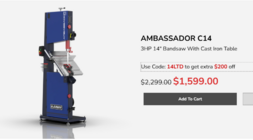
I had one of these for many years, they are really great saws! I did a lot of resawing with it, but with the 880rpm direct drive motor, the blade was really going way too fast, blades didn't last long, especially in rosewood or ebony, around 9000 fpm. When I first got the saw, the Lenox field rep came by to advise me, and said 3000 fpm would be a more appropriate speed. Now I'm using a 20" Powermatic 81, 5hp. Works just fine, but I have a lot of rosewood to resaw and I'm going to fit it with a vfd to enable slowing it down.Is 7.5hp enough? And the blade is 19' long. Rockler probably doesn't stock those blades...
Used Sold Tannewitz 36" GH Band Saw, 1984, 7.5HP, 3PH, 19' 5" Blade, Foot Brake, Auxiliary Table at John G Weber Co Inc
Tannewitz 36" GH Band Saw, 1984, 7.5HP, 3PH, 19' 5" Blade, Foot Brake, Auxiliary Table 7.5HP, 3PH 230/460V motor 35.5” throat capacity, balanced wheels 1/8”-1 ¼” blade width. 19.5’ blade length, 7.5 Hp direct drive. 36’ x 37’ cast iron table, Tabl...www.johngweber.com
Also, if anyone wants a 36" Tanny, they go much cheaper at auction, often under $1K

Do you have any specific recommendations that you could recommend on sharpening bandsaw blades?With any saw, priority #1 is the blade. Followed by the blade. Then the blade. Then the motor.
Buy high quality blades and if possible, keep them sharp. I've got a 1hp Leeson on a 14" Delta and with a good blade I can do whatever I want within the frame limitations of the saw.

Do you have any specific recommendations that you could recommend on sharpening bandsaw blades?
I sharpen blades with a Dremel tool, with one of two approaches. Either using a small round chainsaw bit (3/16" or so) and sharpen into the gullets, or with a larger flat disc and sharpen the top of the teeth using the flat side of the disc. I find the chainsaw bit easier, but a lot depends on the number of teeth etc. The fewer the teeth, the easier it is. My saw takes 115" bands, but soup to nuts, probably only requires 10 mins to sharpen.
Start by unplugging saw. Then either find the weld, or mark the blade with a sharpie. Raise the guard as high as possible and work each tooth. Rotate band, and repeat until the entire blade is done.
Usually will get 2-3 sharpenings this way before the set is gone, at which point, I buy a new blade.
I've seen other folks who sharpen off of the saw, using a vice or something to hold the blade.

I recently bought a knockoff of the Oregon 420 chain grinder to maintain my saw chains. It should work for steel bandsaw blades as well, with better consistency than a handheld tool.
Do you have any specific recommendations that you could recommend on sharpening bandsaw blades?
Todd,
I mentioned this in post #14 in this thread but didn't provide any details.
I sharpen on the saw, using a Dremel with small metal-cutting disk. These disks are intended to cut a narrow slot with the edge and not with the side but it works fine. Barely any pressure is needed but still should wear safety glasses, of course. Good light. Dust mask to prevent breathing metal dust. Sharpening the blade is also a good time to check for defects in the steel, such as cracks at the weld.
I sharpen what might be called the front or outside of the tooth, the part that faces me. I know some say it's best to sharping the curved gullet but that's more effort without making a sharpening jig and sharpening the front works for me. I never take the blade off the bandsaw to sharpen.
I know others who sharpen this way. Too bad the amazing Steven Russell's website is no longer up - he had good instructions and sharpens much like I do. I downloaded his web site from the Wayback Machine (internet archive) and have it all on my computers but not sure how to share the info.
I've been sharpening this way for years, usually at least 3 sharpenings before I change the blade, sometimes 4 or 5. The blades I use are 1/2"x3tpi and with my saw that's over 420 teeth so it does take a bit of time but not too bad.
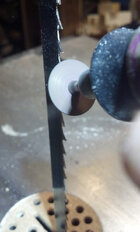
I mark the starting point on the flat blade sides and the fronts of maybe three teeth with a red sharpie. Can also attach a bit of tape as a marker.
I rest my hand on the table and hold the Dremel so the flat of the little cutting disk is aligned with the shop of a tooth. I grind near the top of the disk so the grind marks are horizontal. Touch the disk to the tooth for maybe 1/2 second. Make sure it's cutting all the way to the sharp edge - the sharpened spot will be shiny and easy to see. It doesn't need to be large, just a tiny spot at the tip. Pull down the blade with my left hand to position the next tooth. Repeat.
Some blade teeth are set left-right. My Lenox blades have the teeth set to the left, center, and right. I've experimented with swinging the sharpening disk so it's aligned with the the original three angles and compared to just sharpening each tooth straight across - I can't tell any difference in the resulting cut.
One thing - the last time I checked I was not a machine so there are small variations on the teeth. The result can be a rougher saw marks on the sides of the kerf. This doesn't affect what I mostly do - cut up log sections to make turning blanks to dry, cut away defects, cut dry blanks to size for turning. I'm faster now than when I first started this. takes maybe a second per tooth.
One think I tell others is how to know when the teeth are getting dull (besides a noticeable difference in the cut). Even dull teeth will feel sharp when lightly running the skin of a finger up the teeth. But run the flat of a finger nail or thumb nail up a few teeth - dull teeth will slide on the nail while sharp teeth will catch on the nail.
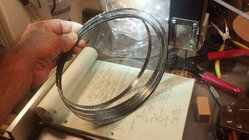
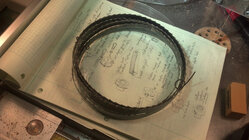
Another thing people usually asked in my bandsaw classes is how to coil a blade. Harder to explain in words than in person. I could try to write a description if anyone wants it. There are probably videos. A big, thick blade like those for my Woodmizer sawmill are difficult and can be dangerous. But even small thin blades can be tricky if you don't know how. Once you master making three loops, try 5 loops. Then if adventurous, try 7 coils!
JKJ
Thanks, I was not aware of the 3/16 Dremel chainsaw bit. Very helpful.I sharpen blades with a Dremel tool, with one of two approaches. Either using a small round chainsaw bit (3/16" or so) and sharpen into the gullets, or with a larger flat disc and sharpen the top of the teeth using the flat side of the disc. I find the chainsaw bit easier, but a lot depends on the number of teeth etc. The fewer the teeth, the easier it is. My saw takes 115" bands, but soup to nuts, probably only requires 10 mins to sharpen.
Start by unplugging saw. Then either find the weld, or mark the blade with a sharpie. Raise the guard as high as possible and work each tooth. Rotate band, and repeat until the entire blade is done.
Usually will get 2-3 sharpenings this way before the set is gone, at which point, I buy a new blade.
I've seen other folks who sharpen off of the saw, using a vice or something to hold the blade.
- Joined
- May 12, 2004
- Messages
- 37
- Likes
- 26
In 1985 I bought a 1982 Delta 14" with a 1/2hp motor from a fellow who had used it to cut parts for a boat interior, almost all very small items. When I got involved in turning, I added the 6-inch riser and moved up to 3/4 hp -- not enough, I soon enough realized, for bowl blanks. I now have a 1-1/2 hp 3750 rpm motor (had to change pulleys to get proper blade speed), an Iturra tension spring, the Carter quick-release tension device, and this year I added the under-table dust collector from www.ety.com/thatboxmaker which works very well. I use 3/8-3 blades and still use Olson Cool Blocks guide setup that were original equipment. This has cut hundreds of bowl blanks for me, many sizes. I replaced the bearings all around in 2024, quite a chore but worthwhile. There are probably other improvements available but this has worked very well for me for 15 years now, any further improvement would require buying a larger saw for much more money. (I did have to replace tires twice.)
Sounds like you have an old friend there that you just wont let die. I could do the same, but I think I would just like to go to perhaps a 3hp saw. I currently have the delta running a 3/8 3tpi. It does fine for the 5 inch material. So I may just sit and wait on something used to come my way. Thanks for your input.In 1985 I bought a 1982 Delta 14" with a 1/2hp motor from a fellow who had used it to cut parts for a boat interior, almost all very small items. When I got involved in turning, I added the 6-inch riser and moved up to 3/4 hp -- not enough, I soon enough realized, for bowl blanks. I now have a 1-1/2 hp 3750 rpm motor (had to change pulleys to get proper blade speed), an Iturra tension spring, the Carter quick-release tension device, and this year I added the under-table dust collector from www.ety.com/thatboxmaker which works very well. I use 3/8-3 blades and still use Olson Cool Blocks guide setup that were original equipment. This has cut hundreds of bowl blanks for me, many sizes. I replaced the bearings all around in 2024, quite a chore but worthwhile. There are probably other improvements available but this has worked very well for me for 15 years now, any further improvement would require buying a larger saw for much more money. (I did have to replace tires twice.)
Corrected the link. Thanks for the info.added the under-table dust collector from www.ety.com/thatboxmaker which works very well
Go as big as you can afford. You won't regret it later when prices go up, and you start cutting some huge blanks.I'm planning on finally treating my self to a band saw specifically for cutting bowl blanks and resawing. The question is, what horsepower do I need? I'm looking at 14 inch band saws. Can I get away with 1 horsepower, or will I regret it. Trying to save some $$
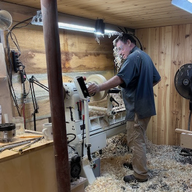
This is sort of an old thread that came back to life but on bandsaws I think it is helpful to match resaw capacity to lathe swing.
I'm on the 2436 as well, making do with the Delta 14-inch band-saw. I'm in a smallish shop (single bay garage). What would you recommend for a bandsaw? I'm thinking 3hp, 15-inch by Harvey. Most specifically, how much horsepower would you suggest a 8-inch blank? And beyond that, do you have any specific bandsaw recommendations? Spend once, cry once.This is sort of an old thread that came back to life, but on bandsaws, I think it is helpful to match resaw capacity to the lathe swing.
I haven't shopped for bandsaws in a long time but I would start by looking for something made by Centauro, Agazanni or Hammer Felder. I currently use a Centauro-made Minimax 16 that was a good match for my 16" lathe but is a bit undersized for the 2436. I prefer the used tool market, but if you have money to spend and no patience for the used market then maybe look at the SCM s 640p as a bandsaw with resaw to match the 2436. That's overkill if you aren't making anything larger than 8", but eventually you will want to use the max swing of your lathe. I'm surprised the 14" Delta isn't satisfactory for making 8" blanks.I'm on the 2436 as well, making do with the Delta 14-inch band-saw. I'm in a smallish shop (single bay garage). What would you recommend for a bandsaw? I'm thinking 3hp, 15-inch by Harvey. Most specifically, how much horsepower would you suggest a 8-inch blank? And beyond that, do you have any specific bandsaw recommendations? Spend once, cry once.
Kevin Jenness would have more up to date and in-depth knowledge to answer your questions and I think he also uses a 2436.
Last edited:
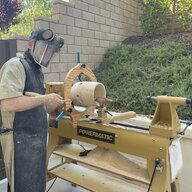
When my 2 hp 10-340 18 inch Rikon motor died, the replacement motor was 3 hp.
Thanks, I do believe the delta could handle the 8" deep blank if I added the riser block and moved beyond the 3/4 horse motor. Then, of course, sometimes I would want a better rip fence than the factory fence. Just doesn't make sense to put that much money into the Delta. Thanks for your thoughts.I haven't shopped for bandsaws in a long time but I would start by looking for something made by Centauro, Agazanni or Hammer Felder. I currently use a Centauro-made Minimax 16 that was a good match for my 16" lathe but is a bit undersized for the 2436. I prefer the used tool market, but if you have money to spend and no patience for the used market then maybe look at the SCM s 640p as a bandsaw with resaw to match the 2436. That's overkill if you aren't making anything larger than 8", but eventually you will want to use the max swing of your lathe. I'm surprised the 14" Delta isn't satisfactory for making 8" blanks.
Kevin Jenness would have more up to date and in-depth knowledge to answer your questions and I think he also uses a 2436.
Those old Deltas are fine machines when set up for the job. IF the size fits your needs. It should go through 8" wood like butter.
Here's mine, late 80s-early 90s. Riser block, 1hp Leeson motor. Craft Supplies used to sell them with this spec. With a fresh blade, I've ripped 11+" maple logs with it. It isn't a speed demon, but it wasn't bogged down, either.
(Edit- Mark Duginski's "Bandsaw Handbook", and Louis Iturra/Iturra Design go far to help these saw sing their best tune.)
I'd agree with a larger saw with greater power if going new. I really can't speak to any brands or models of new saws available today, though. If I were shopping, I might be looking at the larger Rikon offerings.
If upgrading a Delta or Jet 14", here's the motor I'd use. 1.5hp Leeson "farm duty". Capacitor start/capacitor run. Cap run provides a more efficient operation, and this motor is more tolerant to lots of power on-off cycles. I installed one this summer on a 72" belt grinder for knifemaking. That motor doesn't even know when its chewing steel apart. I really thought of installing the 1.5hp on the bandsaw. Reeeeally thought... The 1hp would be fine on my belt grinder. Bought mine here-

 electricmotorwarehouse.com
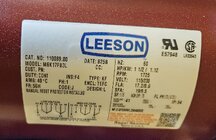
Here are the data plates off my 2 motors. Red on the grinder, blue on the bandsaw.
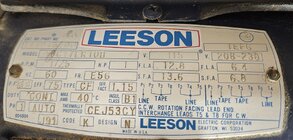
Here's mine, late 80s-early 90s. Riser block, 1hp Leeson motor. Craft Supplies used to sell them with this spec. With a fresh blade, I've ripped 11+" maple logs with it. It isn't a speed demon, but it wasn't bogged down, either.
(Edit- Mark Duginski's "Bandsaw Handbook", and Louis Iturra/Iturra Design go far to help these saw sing their best tune.)
I'd agree with a larger saw with greater power if going new. I really can't speak to any brands or models of new saws available today, though. If I were shopping, I might be looking at the larger Rikon offerings.
If upgrading a Delta or Jet 14", here's the motor I'd use. 1.5hp Leeson "farm duty". Capacitor start/capacitor run. Cap run provides a more efficient operation, and this motor is more tolerant to lots of power on-off cycles. I installed one this summer on a 72" belt grinder for knifemaking. That motor doesn't even know when its chewing steel apart. I really thought of installing the 1.5hp on the bandsaw. Reeeeally thought... The 1hp would be fine on my belt grinder. Bought mine here-
110089.00 Leeson | 1.5 hp 1725 RPM 56 Frame TEFC (Farm Duty) 115/208-230 volts
110089 1.5 hp 1725 RPM, 17.2/8.6 amps, 115/208-230 volts 60hz TEFC - Totally Enclosed Fan cooled Electrically Reversible Manual Overload Protection Service Factor 1.15 NEMA 56H Frame Flat Rigid base mount 5/8" Diameter shaft x 1 7/8" Class F Insulated Ball Bearings w/low temp grease Single Phase...
electricmotorwarehouse.com
Here are the data plates off my 2 motors. Red on the grinder, blue on the bandsaw.
Last edited:
Thanks, I do believe the delta could handle the 8" deep blank if I added the riser block and moved beyond the 3/4 horse motor. Then, of course, sometimes I would want a better rip fence than the factory fence. Just doesn't make sense to put that much money into the Delta. Thanks for your thoughts.
On Delta bandsaw.
I can only comment based on years of preparing turning blanks with an old (cast iron) 14" Delta bandsaw with a 6" riser block as mentioned in posts #7 and #42 in this thread. I can't remember the HP. Can easily cut 12" thick wood, the capacity of the saw.
I processed many, many turning blanks with it starting with green wood log sections, either 12" long standing on end, or ripping longer logs 12" or less in diameter. I had no trouble cutting 12" thick wood with a 1/2"x3tpi Lenox spring steel blade. Never stalled the saw or even slowed it down cutting logs cedar to osage orange. There is no limitation on the diameter of a log standing on end other than what can be manhandled.
Some basic points, what I can think of at the moment. (I cover must of these in my long video and my bandsaw classes.
Setup
- The blade needs to be sharp.
- The bandsaw tension needs to be right.
- The saw should be properly aligned. (Mark Duginski's book is good for that)
- The guides should be perfectly adjusted.
- Good tires.
- Use good dust collection and an internal brush to keep buildup off the sides of the blade.
- Method 1: A straight ripping cut down the middle, a round log section should be stabilized with two or more wooden wedges. I draw a line down the length with a sharpie and straight edge. If the bark is too bumpy to draw a line I might trim the high spots with a small hatchet.
- Method 2: A cut on a vertically standing log or a previous cut flat on the table should be stabilized if needed with at least one wedge.
- Make the first cut on a vertically standing log such that the cut is through both piths. I draw a line on the end with a sharpie. Flat and perpendicular chainsaw cuts are a big help.
- Don't use the fence on the initial sectioning cuts - just push free-hand.
- Clean the blade as needed to remove buildup of gummy, sticky sawdust and resins.
- Cut slowly, with any size electric motor.
- For a long log (e.g., over 24" long) get a helper to support the far end - don't let them "help" by pulling on the log.
- Wear safety glasses
- Use good lighting.
- Minimize distractions
- NEVER make an unsupported cut - one where the blade is not supported by the wood all the way to the table.
- Be carefully aware of wood containing cracks or defects which might come apart during the cut.
- Cut through the wood, not the fingers.
All this is easier and quicker with a larger saw with more HP. I've got some fresh walnut logs on the ground I hope to cut into blanks in a few days. I always seal and dry the blanks before turning.
JKJ

Nobody has mentioned blade speed. 14" bandsaws are designed for cutting curvy stuff, not too thick. Band speed is in the pokey 3,000 SFPM range. With that in mind, a 1/2 to 3/4 HP motor works fine. Put in a riser $$'s and a bigger motor $$'s and now we can saw the thick stuff easier. Still, we have that pokey band speed, so a few more $$'s for a pulley and we can get that higher, more efficient band speed. But now we are running the band wheels at a much higher speed, and tire problems start to emerge. I went down this rabbit hole with a 14" Delta and did not find it rewarding.
20" + or - bandsaws come with 12" capacity and band speeds in the 4,500 SFPM range. Heavier weight and larger tables are much better suited for heavy chunks of turning wood. The really big bandsaws are running close to 10,000 SFPM. I'm pretty happy with my old 20" stock Delta.
Something I find interesting. Five years ago, I went to David Ellsworth's house for a turning class. In his shop, he had a newer 20" Powermatic bandsaw covered with dust. I asked him if he ever used it, and his reply was every few years. In his class he normally had five students turning 3 items each and David demonstrated 3 times so 18 turnings. All were cut a few minutes before they were turned with a chainsaw......no bandsaw required. I know a few other pros do the same.
20" + or - bandsaws come with 12" capacity and band speeds in the 4,500 SFPM range. Heavier weight and larger tables are much better suited for heavy chunks of turning wood. The really big bandsaws are running close to 10,000 SFPM. I'm pretty happy with my old 20" stock Delta.
Something I find interesting. Five years ago, I went to David Ellsworth's house for a turning class. In his shop, he had a newer 20" Powermatic bandsaw covered with dust. I asked him if he ever used it, and his reply was every few years. In his class he normally had five students turning 3 items each and David demonstrated 3 times so 18 turnings. All were cut a few minutes before they were turned with a chainsaw......no bandsaw required. I know a few other pros do the same.
You put some effort into this post. Thanks so much. So, I looked at the pricing $480 for the motor, $290 for the riser block, plus shipping ( and don't forget my labor). It is cheap. So, roughly $800, and most modern bandsaws come with a larger work surface, toolless guide adjustments, an instant brake, and lever-action blade changing. I have an offer of $400 for my current bandsaw. If I combine the offer with the $800 in upgrades, I could get a newer saw for $ 1,200. At least that is the way I am thinking at the moment. However, the newer saw would not have this good of a motor. I guess I have just talked myself into finding something for my $1200. I have seen many used 18-inch jets with 12.8-amp (220) motors for $1200. May look at Rikon, and the splurge would be the Harvey. Thank You.Those old Deltas are fine machines when set up for the job. IF the size fits your needs. It should go through 8" wood like butter.
Here's mine, late 80s-early 90s. Riser block, 1hp Leeson motor. Craft Supplies used to sell them with this spec. Withba fresh blade, I've ripped 11+" maple ligs with it. It isn't a speed demon, but it wasn't bogged down, either.
I'd agree with a larger saw with greater power if going new. I really can't speak to any brands or models of new saws available today, though. If I were shopping, I might be looking at the larger Rikon offerings.
If upgrading a Delta or Jet 14", here's the motor I'd use. 1.5hp Leeson "farm duty". Capacitor start/capacitor run. Cap run provides a more efficient operation, and this motor is more tolerant to lots of power on-off cycles. I installed one this summer on a 72" belt grinder for knifemaking. That motor doesn't even know when its chewing steel apart. I really thought of installing the 1.5hp on the bandsaw. Reeeeally thought... The 1hp would be fine on my belt grinder. Bought mine here-
110089.00 Leeson | 1.5 hp 1725 RPM 56 Frame TEFC (Farm Duty) 115/208-230 volts
110089 1.5 hp 1725 RPM, 17.2/8.6 amps, 115/208-230 volts 60hz TEFC - Totally Enclosed Fan cooled Electrically Reversible Manual Overload Protection Service Factor 1.15 NEMA 56H Frame Flat Rigid base mount 5/8" Diameter shaft x 1 7/8" Class F Insulated Ball Bearings w/low temp grease Single Phase...
Here are the data plates off my 2 motors. Red on the grinder, blue on the bandsaw.
View attachment 82779
View attachment 82780
I have not seen. a 20" Delta, every. I have been watching facebook in the Denver area for over a year. I'm sure it is a nice machine.Nobody has mentioned blade speed. 14" bandsaws are designed for cutting curvy stuff, not too thick. Band speed is in the pokey 3,000 SFPM range. With that in mind, a 1/2 to 3/4 HP motor works fine. Put in a riser $$'s and a bigger motor $$'s and now we can saw the thick stuff easier. Still, we have that pokey band speed, so a few more $$'s for a pulley and we can get that higher, more efficient band speed. But now we are running the band wheels at a much higher speed, and tire problems start to emerge. I went down this rabbit hole with a 14" Delta and did not find it rewarding.
20" + or - bandsaws come with 12" capacity and band speeds in the 4,500 SFPM range. Heavier weight and larger tables are much better suited for heavy chunks of turning wood. The really big bandsaws are running close to 10,000 SFPM. I'm pretty happy with my old 20" stock Delta.
Something I find interesting. Five years ago, I went to David Ellsworth's house for a turning class. In his shop, he had a newer 20" Powermatic bandsaw covered with dust. I asked him if he ever used it, and his reply was every few years. In his class he normally had five students turning 3 items each and David demonstrated 3 times so 18 turnings. All were cut a few minutes before they were turned with a chainsaw......no bandsaw required. I know a few other pros do the same.
Hi Todd, I'd bet a majority of the old 20" Delta saws out in the wild (same for Powermatic and General) are found east of the Mississippi in the industrial zones, and along the west coast. Likely a rarer breed in the intermountain west.I have not seen. a 20" Delta, every. I have been watching facebook in the Denver area for over a year. I'm sure it is a nice machine.
I edited my message above to mention Mark Duginski's "Bandsaw Handbook", and Iturra Design, as sources to fine tune the 14" Delta and Jet saws, and Iturra sells tons of replacement and upgraded parts. Louis Iturra has no website, but he'll sell you his incredible catalog (it's half catalog, half textbook on these bandsaws). Having the upper and lower wheel in the same plane is 9/10ths of the story for good saw performace, seconded by sharp blades, then motor power.
Reading between the lines, a new saw sounds like it would put a smile on your face. I think Rikon has the better customer service experience vs. brands like Laguna. Laguna was king when it was still Italian made 30 years ago. I can't speak to Harvey.
I've chatted with @John K Jordan regarding the Rikon he's used for many years, a 2.5hp, 18" Rikon, model 10-345. I don't think that model is still in production, here's the modern 2hp version at $2500. https://rikontools.com/product/model-10-342-18-deluxe-bandsaw/ Of the saws available out there now, that is probably the direction I'd look if needing a bigger saw. They seem to have a good presence in the USA. I'm out of the business of really big lumps of wood (16" and 12" lathes), so I'll stick with the ol' Delta. And a chain saw.
Thanks for your thoughts. Your reading between the lines is accurate. I am jonesing for more bandsaw than I had in the past and do currently have. . Thanks for the recommendation on the Rikon 18 inch. There’s two available in the local market for 1200 and $1900. I may go take a look at them.
Bryan, with all this input, did you pull the trigger yet??? Just curious.
I heard a rumor that Iturra Design was no longer in business. Does anyone know?
Anytime I needed something I always just called his number. If I get time I'll try calling.
I wish I'd taken notes of exactly what I did to tune up my old Delta. To align the wheels I remember shimming with several thin washers. I also added brushes inside to help clean sawdust off the blade before it got compacted and badly gummed up the side of the blade, really messing with the cut. That would still happen occasionally, especially when cutting wood with high resin content, so I devised a way to clean any gunk off the sides that I still use on my Rikon bandsaw (and Woodmizer).
JKJ
Anytime I needed something I always just called his number. If I get time I'll try calling.
I wish I'd taken notes of exactly what I did to tune up my old Delta. To align the wheels I remember shimming with several thin washers. I also added brushes inside to help clean sawdust off the blade before it got compacted and badly gummed up the side of the blade, really messing with the cut. That would still happen occasionally, especially when cutting wood with high resin content, so I devised a way to clean any gunk off the sides that I still use on my Rikon bandsaw (and Woodmizer).
JKJ
I don't know if someone already posted this, but I found this info for Iturra Design
904-642-2802
or send an email to iturradesign@gmail.com.
904-642-2802
or send an email to iturradesign@gmail.com.

- Joined
- Jul 18, 2018
- Messages
- 1,389
- Likes
- 3,081
- Location
- Baltimore, MD
- Website
- loujacobswoodturning.com
Thanks for inspiring me to try this John! I was processing a batch of large walnut blanks a few days ago when the saw progressively had a harder and harder time getting through the wood. (Minerals in the Walnut seems to do that to both the chainsaw and the bandsaw.) I didn’t have a backup sharp band, but I remembered your post John, and said to myself “what have you got to lose?” I only had a 1/4” cylindrical grinding burr for the Dremel, so I thought I’d give it a try. Just touched the outside of each tooth. It took 10 or 15 minutes. The saw wound up cutting like it was new. Amazing! When I’ve got a few minutes of free time, I’ll break out all my old bands and give them a touch up. Great New Year project.I sharpen on the saw, using a Dremel with small metal-cutting disk. These disks are intended to cut a narrow slot with the edge and not with the side but it works fine. Barely any pressure is needed but still should wear safety glasses, of course. Good light. Dust mask to prevent breathing metal dust. Sharpening the blade is also a good time to check for defects in the steel, such as cracks at the weld.
I sharpen what might be called the front or outside of the tooth, the part that faces me. I know some say it's best to sharping the curved gullet but that's more effort without making a sharpening jig and sharpening the front works for me. I never take the blade off the bandsaw to sharpen.
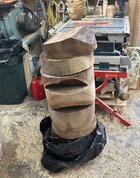
...(Minerals in the Walnut seems to do that to both the chainsaw and the bandsaw.) ... I only had a 1/4” cylindrical grinding burr for the Dremel, so I thought I’d give it a try. Just touched the outside of each tooth. It took 10 or 15 minutes. The saw wound up cutting like it was new. Amazing!
Happy turning! I have a dozen or more blades saved to sharpen if I ever get bored or desperate.
I've noticed that some walnut seems like "normal" wood and some is horribly abrasive, I understand with tiny silica particles. (It's not just walnut, silica can be in many species) Apparently the concentration of silica depends on the soils and growing conditions. Can google "tool wear silica in wood."
However, the worst I've seen was also in walnut. Someone gave me a wide, maybe 3" thick board of walnut from an old house, said it was a mantle over a fireplace for at least 100 years. (I don't think the age or fireplace location was the problem.) That wood was SO abrasive I dulled a ridiculously expensive Starrett bimetal bandsaw blade just cutting maybe 18" or so. I still have the rest of the board if anyone feels like dulling their bandsaw blade!
JKJ
For me it comes down to budget. If you can swing it go 5hp or better then with the proper blade you can cut pretty much anything you want. Again, just my 2 cents.I'm planning on finally treating my self to a band saw specifically for cutting bowl blanks and resawing. The question is, what horsepower do I need? I'm looking at 14 inch band saws. Can I get away with 1 horsepower, or will I regret it. Trying to save some $$
Russ Braun
TOTW Team
I just purchased a barely used Harvey C-14 and really appreciate the 3HP motor. Being a one person shop, it was short work extending the 220V, 20amp circuit from the lathe to power it, the foot brake is a nice add and I’ve discovered the 36” high table to be an interesting change (liking it more than less) from the PM. I cut a lot thick of exotic hardwoods and love powering through with little issue.I'm on the 2436 as well, making do with the Delta 14-inch band-saw. I'm in a smallish shop (single bay garage). What would you recommend for a bandsaw? I'm thinking 3hp, 15-inch by Harvey. Most specifically, how much horsepower would you suggest a 8-inch blank? And beyond that, do you have any specific bandsaw recommendations? Spend once, cry once.