• The forum upgrades have been completed. These were moderate security fixes from our software vendor and it looks like everything is working well. If you see any problems please post in the Forum Technical Support forum or email us at forum_moderator (at) aawforum.org. Thank you
  • February 2026 Turning Challenge: Cookie Jar! (click here for details)
  • Congratulations to Matt Carvalho for "Red Mallee Folded Form" being selected as Turning of the Week for February 9, 2026 (click here for details)
  • AAW Symposium demonstrators announced - If the 2026 AAW International Woodturning Symposium is not on your calendar, now is the time to register. And there are discounts available if you sign up early, by Feb. 28. Early Bird pricing gives you the best rate for our 40th Anniversary Symposium in Raleigh, North Carolina, June 4–7, 2026. (There are discounts for AAW chapter members too) For more information vist the discussion thread here or the AAW registration page
  • Welcome new registering member. Your username must be your real First and Last name (for example: John Doe). "Screen names" and "handles" are not allowed and your registration will be deleted if you don't use your real name. Also, do not use all caps nor all lower case.

Beeswax?

Joined
Jan 24, 2010
Messages
3,192
Likes
970
Location
Cleveland, Tennessee
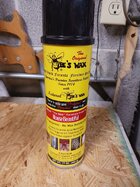
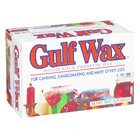
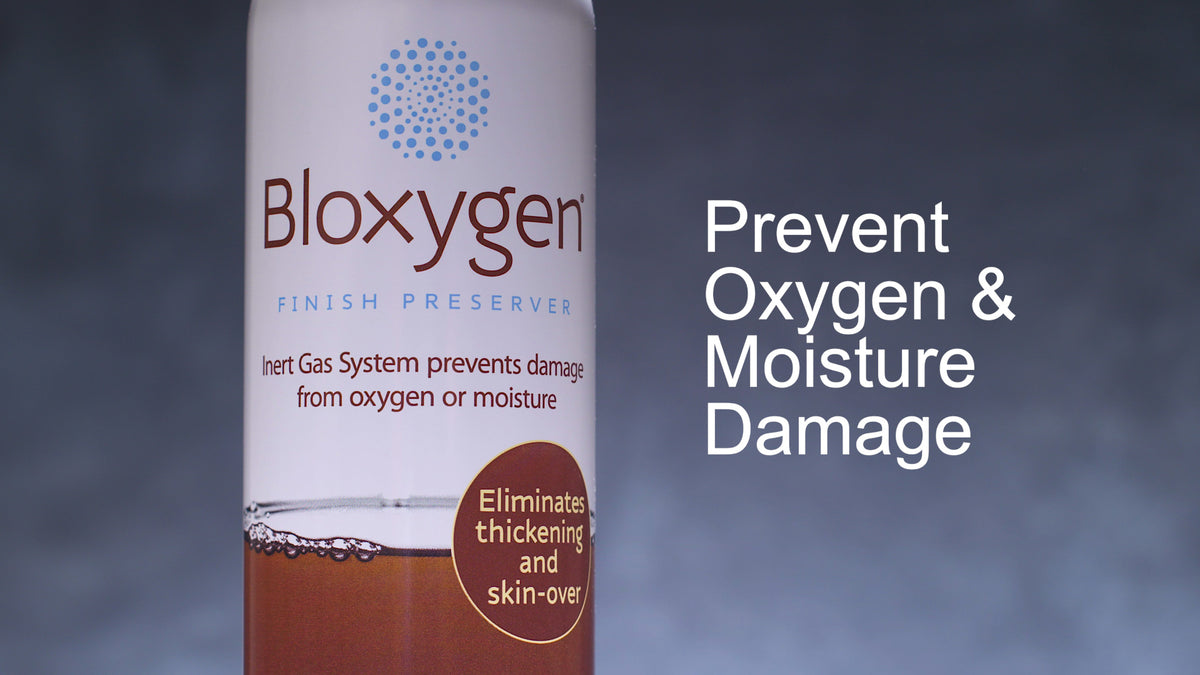
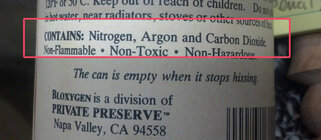
I just finished a Richard Raffan video where he used a piece of beeswax to finish an end Bee's Wax.jpggrain turning. Checking Amazon for beeswax, this came up. Realized I had a can that got pushed in the back, wondered if anyone has used this before. Photo attached.
 
Huh, never heard of that one. Here's the MSDS, looks like it may be between 12-40% solvents and propellants, and not stating anything else, so probably 60-88% beeswax.

I bet it should work fine, but you'll be putting wax aerosols in the air of your shop to settle everywhere, and also get drawn into air filters and dust collection systems. Maybe spray it directly on the rag, shorts spray bursts with the nozzle an inch from the rag surrounding it.
 
Huh, never heard of that one. Here's the MSDS, looks like it may be between 12-40% solvents and propellants, and not stating anything else, so probably 60-88% beeswax.

I bet it should work fine, but you'll be putting wax aerosols in the air of your shop to settle everywhere, and also get drawn into air filters and dust collection systems. Maybe spray it directly on the rag, shorts spray bursts with the nozzle an inch from the rag surrounding it.
Good idea. Anything aerosol has its negative points.
 
Well, don't know about this particular stuff, but beeswax to me offers almost no water protection. Carnauba wax generally requires heat and/or friction to melt it so it will spread. It can also work with solvents, like Kiwi neutral shoe polish which is carnauba with turpentine.

robo hippy
 
robo hippy, this was video by Kent at turnawoodbowl. He stated the final application on the bowl was beeswax.
Not aware of the shoe polish. Use it for wood turnings?
 
For paste waxes, I didn't care for Johnson's so much, but I do use both Lundmark paste wax and Trewax paste wax, both are carnuba waxes, and easy on the nose, also the wallet.

30 years ago I got a Dixie cup full of beeswax at a farmer's market, and it has never touched a turning. But, I do use Tried & True Original, which is linseed oil and beeswax.
 
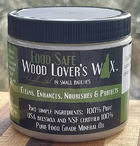
I've been using Wood Lover's Wax. It's Beeswax and mineral oil. I buff it on my bowls with the lathe running about 1200 or so. Leaves a nice smooth finish with a soft luster to it. I can't say what it does for protection, not sure - time will tell. I have it on 2 working salad bowls, so will be able to tell over time. But, I normally do 2 coats (with a home-made abrasive paste in between). (Yes, I'm partial to products made in NH, although I think the son which has taken over the business is actually in RI now. It has a silhouette of NH in "Wax", so that's good enough for me! :cool:)
Wood-Lover's-Wax.png
 
I've been using Wood Lover's Wax. It's Beeswax and mineral oil. I buff it on my bowls with the lathe running about 1200 or so. Leaves a nice smooth finish with a soft luster to it. I can't say what it does for protection, not sure - time will tell. I have it on 2 working salad bowls, so will be able to tell over time. But, I normally do 2 coats (with a home-made abrasive paste in between). (Yes, I'm partial to products made in NH, although I think the son which has taken over the business is actually in RI now. It has a silhouette of NH in "Wax", so that's good enough for me! :cool:)
View attachment 85158
Hi Joel- I bet it makes the wood look great, but on working pieces that see food contact and washing, it's going to disappear. Soaps and detergents will pull the non-curing mineral oil out of the wood just like it will pull veg oil from food out of the wood. And the surface wax will disappear from the surface as well. Any wax product will disappear with use and cleaning.

A penetrating curing oil (linseed, tung, walnut), allowed a solid 30 days to cure in the wood fibers, will survive and likely look better than short-lived mineral oils.

Wax is wax- it will just take regular reapplications if you want to maintain a waxed surface.

Experimentation with finishes is half the fun!
 
I would give this a pass and, if I wanted a wax topcoat (for me it would be over a more permanent finish like a drying oil), use microcrystalline wax (e.g. Renaissance wax and the like).

Beeswax is a relatively soft wax, so it is at the low end of the spectrum for protection and longevity. It is popular because its relative softness makes it easy to apply quickly and to spread evenly, and it is more miscible with the oils and solvents used to make it even easier to apply. It does not buff to as reflective a shine as harder waxes, which can be a negative or a plus depending on your objective, though if you want the lower shine, it is at the cost of greater susceptibility to fingerprints. Beeswax is sometimes blended with harder (more protective and longer lasting) waxes to make them easier to apply.

Through some molecular magic, microcrystalline wax is soft enough to be easy to apply and yet it buffs to a good and relatively durable (and fingerprint resistant) shine, so it is the preferred wax for many woodturners (and museums and conservationists). It is more expensive, but in the scheme of things, it is pennies a bowl. If you want a good oil and wax blend, Doctors has a blended walnut oil and microcrystalline wax liquid finish; the walnut oil will make this finish more durable than any wax alone.
 
I do have some "Butcher's Wax". They made 2, and both are carnauba with some turpentine in them, so I don't need the Kiwi polish. One of the Butcher's waxes was made for bowling alleys. I would for sure consider it for a top coating for some thing that gets a lot of handling. Another thing I am experimenting with is there are several "ceramic" top coats that are from the auto industry. A work in progress. I would doubt the auto top coat is suitable for eating. I would consider the other waxes to be for things that get handled a lot like drawer pulls. I would expect that after the turpentine has evaporated off, it "should" be safe, but no clue really.

robo hippy
 
I use bees wax for many things.
A component of black powder bullet lube being it's main use for me.
You can dissolve bees wax in turpentine
Varying the amounts will vary the consistency.
You can then rub it on with a rag or paint it on with a brush.
The turpentine evaporates and leaves the wax behind.
Muzzleloader guys use it a lot on their stocks.
Hope this helps.
 
For paste waxes, I didn't care for Johnson's so much, but I do use both Lundmark paste wax and Trewax paste wax, both are carnuba waxes, and easy on the nose, also the wallet.

30 years ago I got a Dixie cup full of beeswax at a farmer's market, and it has never touched a turning. But, I do use Tried & True Original, which is linseed oil and beeswax.
Sounds familiar I bought 3 kilos about the same time, still in the wrapper😁
 
Not endorsing for working turned items, but I recently re-dove in to the world of waxes, bought some raw materials, I do a lot of other woodworking besides turning. I already had a big block of beeswax), and made up a bunch of my own. Once upon a time I worked in a museum furniture conservation lab and we always tinkered with our own wax. BTW I would think that any aerosol wax product would be filled with nasty solvents and that's what I was trying to stay away from. All of mine were made with odourless mineral spirits. Some people use citrus solvent, but I didn't want to wait for it.

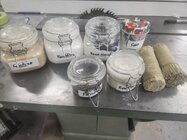
I bought a block of microcrystalline wax, and about a pound each of polyethylene wax, carnauba, candelilla, and stearic acid (makes waxes harder). And some lemon and orange essential oils. I used the stuff off the bottom of a can of oil stain to make a tinted wax (because I found my artists pigments right after I used the other stuff). This is what I made:

Rennaissance wax is microcrystalline wax + polyethelene wax + mineral spirits. Lost of recipes online. I made some of that, plus some that I added boiled linseed oil (BLO) to, for old cast iron and steel tools. I think I added some stearic acid to that...... I have a lot to learn stearic acid, I mostly ought it for a future experiment making the recipe of an old-time finisher named George Frank, in Paris. I still have one ingredient to get for that before I proceed.

I mixed up a cheap paraffin wax for use around the shop.... couldn't find blocks of paraffin, so a couple of cheap candles + solvent.I use this for vise screws, underside of sleds etc.

Big batch of what I call furniture wax: 3 parts beeswax +1 part carnauba + 1 part candelilla + solvent. That is an old standby recipe, many versions online. Took a small pot of that and tinted it.

In the picture, is also a small pot of soap finish; this is used in Scandinavia and Japan as a furniture and even floor finish. Just natural soap flakes and water. Still just started a learning curve with that.

Cooked these all up over a couple of weekends, while doing other things. The basic process is melt the component with the highest melting point first, add any other waxes over heat ( I finally arrived at a water bath in a cast iron skillet on an induction hot plate), then add the solvent (some recipes say to add the wax to the solvent, some the other way around). When it has cooled, you can add more solvent to adjust the consistency (but heat speeds that up). There also two polissoirs in the picture; these are made from corn straw, and are used to polish and buff wax finishes; based on 18th C info from Roubo, google Don Willams and apolissoir for more info. Don makes a polissoir for turners. https://donsbarn.com/pollisoirs/

The advantages of making your own include cost (Renaissance wax especially is very expensive), plus you know what is going in to it, and you can adjust to how you like.

1771157105246.jpeg
 
@Adrian Wilson, interesting stuff, thanks for posting.

More in-depth information, recipes, and experience with soap finishes, "Soft Wax", polissoirs, "Shop Finish", and similar, can be found by google searching "Lost Art Press ______ (your search phrase)". Their website does not have its own search button. Here is one such list of search results, but there will be other posting with similar/more info-

And if you want to learn more about milk paint, hit the rest room, then pour a fresh cup of brew, and then search "Lost Art Press milk paint".
 
@Adrian Wilson, interesting stuff, thanks for posting.

More in-depth information, recipes, and experience with soap finishes, "Soft Wax", polissoirs, "Shop Finish", and similar, can be found by google searching "Lost Art Press ______ (your search phrase)". Their website does not have its own search button. Here is one such list of search results, but there will be other posting with similar/more info-

And if you want to learn more about milk paint, hit the rest room, then pour a fresh cup of brew, and then search "Lost Art Press milk paint".

Yes, they have good stuff. They do have a search button, maybe only inside the blog. For soap, I used this article as one jumping off point. https://blog.lostartpress.com/page/2/?s=soap

Wax and traditional finishes is a deep topic. I tried to keep my post short,but there are good resources out there. Right now I am reading up on 'Mel's Wax', on Don Williams interesting website. Don (and colleague Mel), worked in the conservation department at the Smithsonian, and Me;s Wax is the end result of a long research project into developing the 'perfect' wax. Here's a blog entry (scroll down) about problems with one batch of the wax (he is emulsifying the wax, which is a level beyond what I was talking about in my post).... may not be of much interest to most people, but who knows. https://donsbarn.com/2021/08/
 
From Don's Barn, I just bought a 4oz block of beeswax/shellac wax blend to use as a friction wax right against the spinning wood. Thanks @Adrian Wilson for showing this site.
 
Back
Top