Not endorsing for working turned items, but I recently re-dove in to the world of waxes, bought some raw materials, I do a lot of other woodworking besides turning. I already had a big block of beeswax), and made up a bunch of my own. Once upon a time I worked in a museum furniture conservation lab and we always tinkered with our own wax. BTW I would think that any aerosol wax product would be filled with nasty solvents and that's what I was trying to stay away from. All of mine were made with odourless mineral spirits. Some people use citrus solvent, but I didn't want to wait for it.
I bought a block of microcrystalline wax, and about a pound each of polyethylene wax, carnauba, candelilla, and stearic acid (makes waxes harder). And some lemon and orange essential oils. I used the stuff off the bottom of a can of oil stain to make a tinted wax (because I found my artists pigments right after I used the other stuff). This is what I made:
Rennaissance wax is microcrystalline wax + polyethelene wax + mineral spirits. Lost of recipes online. I made some of that, plus some that I added boiled linseed oil (BLO) to, for old cast iron and steel tools. I think I added some stearic acid to that...... I have a lot to learn stearic acid, I mostly ought it for a future experiment making the recipe of an old-time finisher named George Frank, in Paris. I still have one ingredient to get for that before I proceed.
I mixed up a cheap paraffin wax for use around the shop.... couldn't find blocks of paraffin, so a couple of cheap candles + solvent.I use this for vise screws, underside of sleds etc.
Big batch of what I call furniture wax: 3 parts beeswax +1 part carnauba + 1 part candelilla + solvent. That is an old standby recipe, many versions online. Took a small pot of that and tinted it.
In the picture, is also a small pot of soap finish; this is used in Scandinavia and Japan as a furniture and even floor finish. Just natural soap flakes and water. Still just started a learning curve with that.
Cooked these all up over a couple of weekends, while doing other things. The basic process is melt the component with the highest melting point first, add any other waxes over heat ( I finally arrived at a water bath in a cast iron skillet on an induction hot plate), then add the solvent (some recipes say to add the wax to the solvent, some the other way around). When it has cooled, you can add more solvent to adjust the consistency (but heat speeds that up). There also two polissoirs in the picture; these are made from corn straw, and are used to polish and buff wax finishes; based on 18th C info from Roubo, google Don Willams and apolissoir for more info. Don makes a polissoir for turners.
https://donsbarn.com/pollisoirs/
The advantages of making your own include cost (Renaissance wax especially is very expensive), plus you know what is going in to it, and you can adjust to how you like.
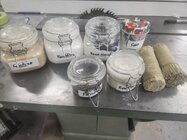

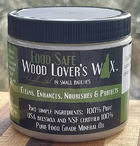
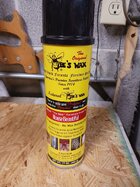 grain turning. Checking Amazon for beeswax, this came up. Realized I had a can that got pushed in the back, wondered if anyone has used this before. Photo attached.
 )
)