• The forum upgrades have been completed. These were moderate security fixes from our software vendor and it looks like everything is working well. If you see any problems please post in the Forum Technical Support forum or email us at forum_moderator (at) aawforum.org. Thank you
  • February 2026 Turning Challenge: Cookie Jar! (click here for details)
  • Congratulations to Matt Carvalho for "Red Mallee Folded Form" being selected as Turning of the Week for February 9, 2026 (click here for details)
  • AAW Symposium demonstrators announced - If the 2026 AAW International Woodturning Symposium is not on your calendar, now is the time to register. And there are discounts available if you sign up early, by Feb. 28. Early Bird pricing gives you the best rate for our 40th Anniversary Symposium in Raleigh, North Carolina, June 4–7, 2026. (There are discounts for AAW chapter members too) For more information vist the discussion thread here or the AAW registration page
  • Welcome new registering member. Your username must be your real First and Last name (for example: John Doe). "Screen names" and "handles" are not allowed and your registration will be deleted if you don't use your real name. Also, do not use all caps nor all lower case.

Finishing Rims of Natural Edge Bowls

Joined
Jul 7, 2018
Messages
1
Likes
1
Location
Red Deer, Alberta
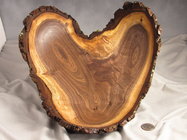
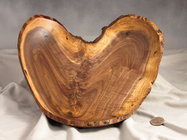
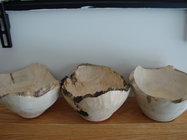
I have been turning burls recently, and would like to know about options to finish the natural edges. In my case I have been turning Maple, from which the bark has fallen off. I expect options would include brushing, burning, dying, etc. How should I approach "blackening" or ebonizing the rims, particularly using some form of ink and avoid it seeping into the wood and running over the edges? For example, could I brush on wood sealer around the edges first? If I spray lacquer on the sides before applying ink, would I need to cover the rim to protect from overspray? I would appreciate any recommendations.

Don O'Neill, Red Deer, Central Alberta, Canada
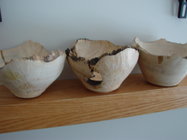
 

Attachments

  • DSC08433.JPG
    DSC08433.JPG
    257 KB · Views: 31
  • DSC08434.JPG
    DSC08434.JPG
    261.1 KB · Views: 31
The treatments are pretty much endless.
I just color the rims with sharpies and prisms pens. They don’t bleed on solid wood.
Punky wood might be an issue.

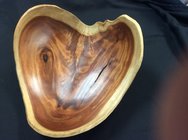
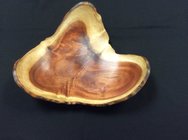
These are few
Sanded with a small drum 09C0124E-09DD-4441-8276-7B03DE2F942F.jpeg


Lightly sanded colored with multiple prisma pens to give a bark illusion 1D84F522-A5F5-4BA2-9211-18AA648F043A.jpeg
4A636E70-0CC5-4F3D-8240-26EB052633E5.jpeg

Black sharpie. EAEE7B1A-31A3-4814-A069-1BDF5C87B2CC.jpeg

Nothing AB6B9459-00B4-4296-BABF-67F418C10686.jpeg
 
Last edited:
Like Doug, if the bark comes off, I usually use a wire brush to get down to the sapwood, below the cambium layer (that stuff between the bark and the wood). I start with a brass brush, move to steel if that isn't doing the job, and a dremel with a small wire brush for more stubborn stuff.

Normally I leave it at that.

If I want to accent the rim, I usually burn it with a small kitchen (brûlée) torch. Then a little brushing with a toothbrush or soft (brass) wire brush to get rid of the soot.

If you're concerned about controlling the flame/burn (or you only have a bigger plumbers torch) then burn it before you take your final cuts, so if there's any "over-burn" you can turn it away.
 
Like Dave I will sometimes use a small handheld torch with a point flame to go around the rim. I go around several times doing a little each pass to get to the tone I want. Then brush off the soot. I don't burn until I'm ready to sand and do all of the burning before sanding so if any gets burned over the edge of the rim it will sand away. I use walnut oil finish and will also rub oil on the edge to help seal in the burnt wood. I've never tried colored pens but seeing the pics I might give it a try.
 
I have been turning burls recently, and would like to know about options to finish the natural edges. In my case I have been turning Maple, from which the bark has fallen off. I expect options would include brushing, burning, dying, etc. How should I approach "blackening" or ebonizing the rims, particularly using some form of ink and avoid it seeping into the wood and running over the edges? For example, could I brush on wood sealer around the edges first? If I spray lacquer on the sides before applying ink, would I need to cover the rim to protect from overspray? I would appreciate any recommendations.

Don O'Neill, Red Deer, Central Alberta, Canada
Well I can't believe my eyes. Don O'Neil finishing bowls. Looking very nice too. Good to see.
 
Back
Top