• December 2025 Turning Challenge: Single Tree! (click here for details)
  • Congratulations to Bob Henrickson, People's Choice in the November 2025 Turning Challenge (click here for details)
  • Congratulations to Steven Gordon for "Dropped Ice Cream Cone" being selected as Turning of the Week for December 9, 2025 (click here for details)
  • Welcome new registering member. Your username must be your real First and Last name (for example: John Doe). "Screen names" and "handles" are not allowed and your registration will be deleted if you don't use your real name. Also, do not use all caps nor all lower case.

Grinder bit the dust

Joined
Nov 22, 2023
Messages
763
Likes
5,426
Location
Morganton, NC
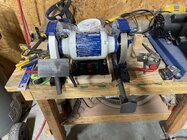
I went out to turn a couple of green bowls so I could get back on a few I still needed to finish turn. I flipped the switch on my grinder to touch up a bowl gouge and about two seconds in it stopped. I checked a few things out, light on it worked but no power to the motor. Check some wires, pulled the switch off and couldn’t see anything obvious.
It is a Delta 8” variable speed that I’ve had for several years. I didn’t have time to do a lot of trouble shooting and the Rikon low speed was on sale for $127.00. So I turned the two green bowls and headed to Klingspor and bought it.
I had to plane a hard maple board to get the height correct and just about completed the setup yesterday. I had to stop to go pick up my granddaughter from Prek but will finish today.
I think the Delta is a switch problem and will check it out as soon as I get caught up on turnings. I need two grinders so hopefully this will be a easy fix.
1764685939250.jpeg

1764685893030.jpeg
 
Last edited:
The Rikon grinders do go on sale from time to time. I have 2 of the 1 hp models. They have enough power to run metal wheels. The 1/2 hp model just seemed too whimpy to me. They do run on for a while after you switch them off. The lights that come on them are worthless!

robo hippy
 
Easy to check the switch. Take off that panel, and put a jumper around the switch. If it ran a couple of seconds, it’s likely to be the potentiometer. You can get a generic pot on Amazon for just a few bucks. Maybe you can take that new one back, or spend that little bit of money and have a second grinder.
 
The Rikon grinders do go on sale from time to time. I have 2 of the 1 hp models. They have enough power to run metal wheels. The 1/2 hp model just seemed too whimpy to me. They do run on for a while after you switch them off. The lights that come on them are worthless!

robo hippy
Well this one is the 1/2 hp model but I did sharpen a couple of 5/8 gouges yesterday and it seem to do fine. If I have issues I’ll sell a couple more bowls and buy the 1 hp model. Guess I should have researched it a little more.
 
Last edited:
I had same issue with my cheap Harbor Freight grinder—it died—and bought the 1 hp Rikon. I’m very happy. Needed 1 hp to turn that heavy D-way wheel. Good luck.
This one is 1/2 hp but seemed to turn the wheel fine and I sharpened a couple of gouges with it. May need to switch to the 1 hp if I start having issues.
 
Easy to check the switch. Take off that panel, and put a jumper around the switch. If it ran a couple of seconds, it’s likely to be the potentiometer. You can get a generic pot on Amazon for just a few bucks. Maybe you can take that new one back, or spend that little bit of money and have a second grinder.
Plan to jump the switch in a couple weeks to see if that’s the issue.
 
Well this one is the 1/2 hp model but I did sharpen a couple of 5/8 gouges yesterday and it seem to do fine. If I have issues I’ll sell a couple more bowls and buy the 1 hp model. Guess I should have researched it a little more.
I have a old Baldor 8" slow speed grinder which has a 1 phase 1/2 HP induction motor with start winding and centrifugal switch that disconnects the start winding when the motor reaches run speed. The Baldor never slows down no matter how hard you try to grin on it, but it has 3/4" shafts so rather then buy specially made CBN wheels I bought the Rikon 1/2 HP grinder, which also has enough power for the task. The only problem with the Rikon is it does not have start windings and therefore takes forever to reach speed.
 
I have a 1/2 hp Rikon with two steel CBN wheels. It just takes 10+ seconds to come up to speed. Once at speed with the pressure we use you wouldn’t know if it was a 1 hp or a 1/2hp. I just don’t see the need for me to invest in a 1 hp for grinding gouges.
 
That 1/2HP Rikon was and is the best pure running grinder I have ever had. I had 2 1" steel CBN wheels on it and yes it took 9 or 10 seconds to turn up but when I shut it off it ran for about 13 minutes before coming to a stop. It did that before I put CBN on it also. Its just the best balanced grinder I ever had.
 
I have the Delta variable speed grinder. Shop used to be unheated and I had the experience when turning in very cold weather with two heavy CBN wheels that it would be slow to start up and then fail. There is a fuse in the base of the grinder. After several times disassembling the base to get to the fuse, I wound up replacing it with a slightly higher amperage fuse and no more problem. (Ive since put a mini-split in the shop and now don’t generally turn in such cold conditions).
 
(Ive since put a mini-split in the shop and now don’t generally turn in such cold conditions).

Good - non-arctic shop is a huge blessing! I used to run kerosene heaters in three previous shops, fire them up an hour or so before I wanted to play.

The best thing I did for my forever shop was install a heat pump with five ducts/diffusers to distribute the air. In the winter I keep it about 68 or 69. Stabilizes the humidity in the summer too and helps wet blanks dry a lot quicker.

JKJ
 
I went out to turn a couple of green bowls so I could get back on a few I still needed to finish turn. I flipped the switch on my grinder to touch up a bowl gouge and about two seconds in it stopped. I checked a few things out, light on it worked but no power to the motor. Check some wires, pulled the switch off and couldn’t see anything obvious.
It is a Delta 8” variable speed that I’ve had for several years. I didn’t have time to do a lot of trouble shooting and the Rikon low speed was on sale for $127.00. So I turned the two green bowls and headed to Klingspor and bought it.
I had to plane a hard maple board to get the height correct and just about completed the setup yesterday. I had to stop to go pick up my granddaughter from Prek but will finish today.
I think the Delta is a switch problem and will check it out as soon as I get caught up on turnings. I need two grinders so hopefully this will be a easy fix.
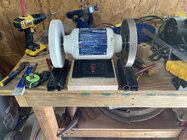
View attachment 82206

View attachment 82205
I did exactly the same thing and discovered my Delta had melted the insides. The switch and potentiometer were both fine. The variable speed Delta 8" grinders are a bit frail after a few years of use. My Rikon 1 HP slow speed is now 5 years old and going strong. Good Choice.
 
Ya know, that is a good deal. And there really is no absolute need to change those 8" 60 and 120 grit alum. oxide wheels. It will take a lot of years to grind those down to 7" diameter. A 120 grit white wheel provides a very good, very sharp edge. If I needed a new grinder today, given the price to replace my 7" Baldor with another, I'd be looking at that Rikon really hard.
 
Ya know, that is a good deal. And there really is no absolute need to change those 8" 60 and 120 grit alum. oxide wheels. It will take a lot of years to grind those down to 7" diameter. A 120 grit white wheel provides a very good, very sharp edge. If I needed a new grinder today, given the price to replace my 7" Baldor with another, I'd be looking at that Rikon really hard.
Steve that is very true but there is a huge difference between oxide and CBN. Now I used oxide for a number of years with my 5/8V Thompson tool. I used that one 5/8" tool solely no matter how many I had in the drawer as it was my first and my go to tool. In those years I became pretty adept with grinding that tool, only used about an inch and a quarter of it. Since getting my CBN wheels up till about 3 years ago where that tool disappeared I had only used another 5/8 inch of it (that was about 8 or 9 years of sharpening with CBN. Now no flattening of the oxide, no dust in the amount from oxide and I never have to move my base to compensate for wear. I do keep a white oxide for shaping. I myself recommend CBN over white oxide all the time.
 
Steve that is very true but there is a huge difference between oxide and CBN. Now I used oxide for a number of years with my 5/8V Thompson tool. I used that one 5/8" tool solely no matter how many I had in the drawer as it was my first and my go to tool. In those years I became pretty adept with grinding that tool, only used about an inch and a quarter of it. Since getting my CBN wheels up till about 3 years ago where that tool disappeared I had only used another 5/8 inch of it (that was about 8 or 9 years of sharpening with CBN. Now no flattening of the oxide, no dust in the amount from oxide and I never have to move my base to compensate for wear. I do keep a white oxide for shaping. I myself recommend CBN over white oxide all the time.
No argument there, Bill. But I woudn't toss those aluminum oxide wheels on day one. Nearly all new turners have a huge layout of cash to get up and running, between saw(s) to prep wood for the lathe, the lathe, a basic selection of 6 or 7 cutting tools, etc. Diverting the couple-few hundred dollars from CBN wheels allows the investment in a couple high quality gouges, or a top-shelf grinding jig, or a reputable chucking system, etc.

And if a turner is a hobbiest spending Tuesday evenings and Saturday afternoons in the shop, tools and stone wheels will wear away so slowly as to be hardly measurable. (Hmmm, that describes me, as I'm still a working guy.) For that turner, on a budget, I say stick with the aluminum oxide wheels until your budget recovers, and then, if they feel it a worthwhile investment, upgrade to the optional CBN wheel(s). I used al-ox for 25 years before buying a 180g CBN about 5 years ago. Good upgrade? Sure was. Life changing? Not really. But I needed a new wheel, so I invested in the change.

Or, keep the 60g al-ox for initial tool shaping and other non-turning tool use (like the lawn mower blade), and upgrade the 120g al-ox to CBN (single CBN wheel, 180g is a good choice) for regular turning tool edge maintenance as the budget allows.
 
No argument there, Bill. But I woudn't toss those aluminum oxide wheels on day one

Ha! I have a stack of new or almost new aluminum oxide wheels removed from grinders, some on day 1. I still use the conventional wheels in my weld shop and for grinding mild steel in the main shop.

Note that some conventional wheels will be inherently a bit of out of balance due to internal uneven density variation. If using them for sharpening tools, drill bits, etc, I like to add the Oneway Balancing wheel system, available from Craft Supply and elsewhere. It's amazing how well the balancers work. I've only had one set of wheels out-of-balance enough to need these -and they were the good Norton Blue Fire wheels (ceramic/zirconia/alumina). Go figure.


JKJ
 
Ha! I have a stack of new or almost new aluminum oxide wheels removed from grinders, some on day 1. I still use the conventional wheels in my weld shop and for grinding mild steel in the main shop.

Note that some conventional wheels will be inherently a bit of out of balance due to internal uneven density variation. If using them for sharpening tools, drill bits, etc, I like to add the Oneway Balancing wheel system, available from Craft Supply and elsewhere. It's amazing how well the balancers work. I've only had one set of wheels out-of-balance enough to need these -and they were the good Norton Blue Fire wheels (ceramic/zirconia/alumina). Go figure.


JKJ
Well, I aimed my comment to someone who may not have deep(er) pockets to get involved with turning, to keep it simple until your budget allows. Young craftspeople who have other financial stresses, retirees on fixed incomes, middle income blue collar folks feeding a family and paying a mortgage. People without multiple lathes and multiple grinders and dozens or hundred of turning tools. Many people here, I'm going to boldly assume, have to plan carefully for the purchase of tools and equipment. And one more assumption- the cost of entry is flat out too high for masses of people hidden in the shadows who may never get to be part of this. $$$

There are people around the globe turning out incredible lathe-based art with gear that should be humbling to us. Skews chisels and scrapers made from leaf springs. Repurposed machine parts cobbled together as lathes. Sharpening their tools with single grit hand-held stones. We all give ooo's and ahh's when someone posts a youtube video of a turner in India or the like. Aluminum oxide grinding wheels vs. CBN- a definite first-world conundrum.
 
It is a much bigger investment today to buy a grinder. When I and many of you started there was no CBN that we knew of but we could get a slow speed grinder with oxide wheels at Woodcraft for $89.95 that had plenty of power. That type with the same sort of power is now $250+. The oxide wheels were and are very capable units to sharpen your tools. With practice and a light touch you can save a lot of steel. My first CBN wheel cost me $325 (I still use this wheel) from Austria. Now couple that with the Vector Grind Fixture that I never have to move the base on the grinder and the tool setup repeats within a thou a super light touch should only take a couple thou off the tool. That would not work as good with oxide as the wheel size gets smaller. CBN is a lot less expensive today. We as a group when asked a question like what lathe to buy no one tells them to buy a cheap lathe and that should be the same for grinding as to why I say get a CBN wheel.
Steve I understand where you are coming from and over the years I have tried to help every new turner in some way shape or form. I remember the guy in the middle east who turned with his feet. Not every turner has the opportunities that are had by those in great economies. But here it is different. One thing I am careful with is young folks with new and growing families as I've seen too many because of the pressure of life have to stop.
 
Before I went to CBN wheels, I did look at the Oneway balancing system. I didn't go for it. I did find that I could use a platform, and by easing it into the wheel could nibble off the high spots, and by applying it to the sides, could true it up that way, again, just nibbling away until the sides were even. I have heard since that you should never apply side pressure to standard grinding wheels, but by easing it into the wheel as it spins, I never had any problems. I would NEVER try to ride the waves of the sides or fronts of the wheels. This also eliminated the need for some of the other wheel truing jigs. I just figured out how to do it without them. This may have been before those other things came out, but I can't remember....

robo hippy
 
...Oneway balancing system. I didn't go for it. I did find that I could use a platform, and by easing it into the wheel could nibble off the high spots, and by applying it to the sides, could true it up that way, again, just nibbling away until the sides were even.

Just to be clear, the wheels I used the balancers on were exactly true, both sides, and around the circumference once I trued it. But it still caused detectable vibration. The Oneway balancing system made it all good. These were the only wheels that were ever a problem. I saved the balancers in case I ever used those wheels again.

JKJ
 
Back
Top