• The forum upgrades have been completed. These were moderate security fixes from our software vendor and it looks like everything is working well. If you see any problems please post in the Forum Technical Support forum or email us at forum_moderator (at) aawforum.org. Thank you
  • February 2026 Turning Challenge: Cookie Jar! (click here for details)
  • Congratulations to Chad Eames for "Red Tines" being selected as Turning of the Week for February 23, 2026 (click here for details)
  • AAW Symposium demonstrators announced - If the 2026 AAW International Woodturning Symposium is not on your calendar, now is the time to register. And there are discounts available if you sign up early, by Feb. 28. Early Bird pricing gives you the best rate for our 40th Anniversary Symposium in Raleigh, North Carolina, June 4–7, 2026. (There are discounts for AAW chapter members too) For more information vist the discussion thread here or the AAW registration page
  • Welcome new registering member. Your username must be your real First and Last name (for example: John Doe). "Screen names" and "handles" are not allowed and your registration will be deleted if you don't use your real name. Also, do not use all caps nor all lower case.

Preserving wood

Joined
Jan 8, 2026
Messages
45
Likes
22
Location
Van Alstyne, TX
Good morning all!

Had the fortune to acquire some wood for future projects.

I am seeking advice on how to care for one of the larger pieces, as it will be some time before I can use them.
It is quite punky in the center.

And at some time, I would like to try the stabilizing process.
With that in mind, I don’t know about using wax on the piece.

Thanks very much,
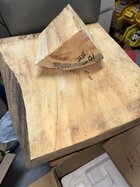
Pic. Box elder. (Most of my wood haul is box elder)
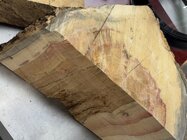
IMG_0638.jpeg
 
From your other posts, it looks like you're doing mostly spindle projects (game calls etc). So I'd cut this up into blanks appropriate for those projects. Get the size down to 2"x2" or whatever, avoiding the current cracks in the log. Treat the ends (lots of options but anchor seal or paraffin dip are probably best) and store it where air can circulate (stickers in between).

(hard to tell the size of this piece, so maybe this is bogus advice)
 
From your other posts, it looks like you're doing mostly spindle projects (game calls etc). So I'd cut this up into blanks appropriate for those projects. Get the size down to 2"x2" or whatever, avoiding the current cracks in the log

I'd do the same, cut it up on the bandsaw into useful sizes. Cut away any cracks, cut away the rot. Better to have small good pieces that large chunks of junk. (my personal philosophy)

I often cut along major cracks to allow better use of the remaining wood. After cutting into useful squares, coat the end grain with anchorseal and perhaps coat side grain that is figured. Weigh a typical blank or two and write the weight (in grams) and the date (month/year) on a piece of tape. Weigh again after a month or two and repeat weighing until the weight no longer drops or even goes up (due to seasonal humidity changes in your shop/storage area). At that point the wood is dry.

I never use any of the stabilizing methods, resin, etc. I prefer the look of natural wood.

Remember that regardless of what you do, over time all the red color in Box Elder will probably fade to brown. If you want to keep red in the final pieces, best use a small soft brush and paint it with pink/red dye.

Box elder is a soft maple, easy to turn, finishes nicely (where the wood is good.)

JKJ
 
I have found over the years that it is generally best to process it as soon as possible. If nothing else, cut it into smaller pieces. Sealing helps, but doesn't last forever. For cylinders, I round them down, round over the ends, and then add some wood glue to the end grain. .You can sink it in the old mill pond, but it will pick up color from what ever else lives in the pond.

robo hippy
 
You can sink it in the old mill pond, but it will pick up color from what ever else lives in the pond.

"Ponding" is a respected temporary preservation technique but best done in a SS 55-gal drum, changing the water as needed. Freezing is another method of saving wood for later use but few have big enough freezers. I did a test on a relatively small piece and it was like newly fresh wood after years. (I wrapped it in plastic before chucking it into the freezer.)
 
Back
Top