
• The forum upgrades have been completed. These were moderate security fixes from our software vendor and it looks like everything is working well. If you see any problems please post in the Forum Technical Support forum or email us at forum_moderator (at) aawforum.org. Thank you
  • February 2026 Turning Challenge: Cookie Jar! (click here for details)
  • Congratulations to Matt Carvalho for "Red Mallee Folded Form" being selected as Turning of the Week for February 9, 2026 (click here for details)
  • AAW Symposium demonstrators announced - If the 2026 AAW International Woodturning Symposium is not on your calendar, now is the time to register. And there are discounts available if you sign up early, by Feb. 28. Early Bird pricing gives you the best rate for our 40th Anniversary Symposium in Raleigh, North Carolina, June 4–7, 2026. (There are discounts for AAW chapter members too) For more information vist the discussion thread here or the AAW registration page
  • Welcome new registering member. Your username must be your real First and Last name (for example: John Doe). "Screen names" and "handles" are not allowed and your registration will be deleted if you don't use your real name. Also, do not use all caps nor all lower case.

Savannah turning tool qualty

Joined
Sep 12, 2017
Messages
998
Likes
1,545
Location
Marietta, Georgia
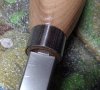
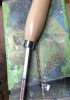
image.jpeg image.jpeg I have a beef about a tool I bought a the wood show a few years back. Its a carbide tipped hook nosed hollowing tool with the Savannah brand on it. On the surface a nice looking tool with a 3/4 inch flat bar. A week ago I got it out to work on a greenwood red oak hollow form and the bar started to deform in a bad way, wasn't even putting a lot of torque on it. A closer look revealed the 3/4 inch bar was necked down to 1/4 inch at the handle and the shaft bent at that weakend point. Poor design or material or both.


 
Never heard of that brand and I bet that nobody in Savannah has either. :D

Stresses always concentrate at a discontinuity ... meaning a sharp corner. That sharp inside corner is an open invitation to problems ... small tang as John said and sharp corners. Look at a quality tool and you will see rounded inside corners where there is a possibility of bending stresses.
 
Back
Top