• The forum upgrades have been completed. These were moderate security fixes from our software vendor and it looks like everything is working well. If you see any problems please post in the Forum Technical Support forum or email us at forum_moderator (at) aawforum.org. Thank you
  • February 2026 Turning Challenge: Cookie Jar! (click here for details)
  • Congratulations to Matt Carvalho for "Red Mallee Folded Form" being selected as Turning of the Week for February 9, 2026 (click here for details)
  • AAW Symposium demonstrators announced - If the 2026 AAW International Woodturning Symposium is not on your calendar, now is the time to register. And there are discounts available if you sign up early, by Feb. 28. Early Bird pricing gives you the best rate for our 40th Anniversary Symposium in Raleigh, North Carolina, June 4–7, 2026. (There are discounts for AAW chapter members too) For more information vist the discussion thread here or the AAW registration page
  • Welcome new registering member. Your username must be your real First and Last name (for example: John Doe). "Screen names" and "handles" are not allowed and your registration will be deleted if you don't use your real name. Also, do not use all caps nor all lower case.

Ted Wetherill

Joined
Feb 12, 2026
Messages
5
Likes
2
Location
Barrington, RI
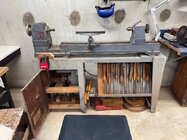
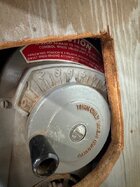
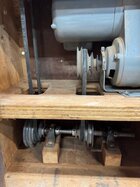
I have worked with wood my whole life but have never turned. I just acquired an old Delta 46-200 lathe with an interesting manual variable speed mechanism. I haven't turned yet but have tried to learn proper sharpening before I start. I'm sure I will need lots of advice and look forward to learning. I am also new to forums, so learning that also.
IMG_7048.jpeg
IMG_7047.jpeg
 
Ted, welcome to the AAW forums! There is a crazy wealth of information here and if you are not already a member of a local AAW chapter, take a look at that as well as nothing replaces hands on learning. One of our members Dave Landers created an interactive map to find chapters. https://www.aawforum.org/community/threads/map-of-aaw-chapters.25224/. If you need any help with the forums please reach out. Looking forward to seeing you around here.
 
Welcome. Sharp tools are a must for quality turning. There is a saying- If you think the tool needs sharpening, you're overdue.
 
Good idea to learn to sharpen. At first, I paid someone at Woodcraft to sharpen my gouge. Then I decided I could do it better.

There is a saying- If you think the tool needs sharpening, you're overdue.
Another saying: if you can't sharpen you can't turn.
(An exception is with Hunter carbide tools with round, cupped tips - razor sharp, used lie gouges, rotate to expose sharp edge. Replace when work. I can sharpen fine but prefer the Hunter tools for somethings anyway.)

Delta 46-200 lathe with an interesting manual variable speed mechanism.
Is that a Reeves drive, belt with variable width pulleys? Many, many people use them. Not as nice as electronic variable speed but will do job.

JKJ
 
Welcome Ted, in the beginning speed numbers seem important. But as experience grows not so much.
 
I assume that you want to round off bowl blanks with a band saw as much as possible before turning, correct?

Getting the blank round before starting and as well balanced as possible can be a real help, especially for a lighter-weight lathe or one without an excess of power. Bandsaw, chainsaw, axe, trained termites, etc. But note that some blanks may have denser areas and be out of balance even if perfectly round - a hard knot opposite a void may always be out of balance and may need to have the speed reduced. A large and very heavy lathe is a bit more forgiving.

A friend of mine had a very similar lathe, perhaps the same model, and turned lots of large bowls on it outboard. He had a portable tool rest. To keep the lathe from walking across the floor he used long pipe clamps to fasten it to the studs on the inside of his mother's garage! Some people add a shelf underneath (if there's room) and load it up with sandbags and such. Many newer lathes have brackets built into the legs to hold a shelf or box for weight. Some have even fastened the legs to the floor, but even then turning out-of-balance can stress the lathe.

BTW, if you want to know the speed you can get an optical tachometer - stick a piece of reflective tape on the lathe spindle and point the thing and press a button. I have this one in my case of diagnostic instruments - I've used it for various things (but not woodturning):


But as mentioned, once you turn a while you never pay any attention to speed. A common question at demos is "what speed are you using?" and that answer is "Oh, I'll check." You learn to adjust the speed by sound, by feel, and the cut.

I like to turn as fast as safe and practical for the blank in question. It's all a judgement call. Smaller things can be turned at high speed. For example, I often turn thin and relatively thin spindles wide open - about 3000 rpm on my lathes. A bowl or platter blank or questionable piece of wood that could smash you if it came apart?- not so much!! Once common technique is turn up the speed until you feel vibration then back off until it goes away. (Sometimes you can actually increase the speed and "go through" the imbalance but not recommended without experience.) As the piece is turned round and the mass reduced and the balance improved, the speed can be increased.

Regardless, wear appropriate face protection!

JKJ

 
Getting the blank round before starting and as well balanced as possible can be a real help, especially for a lighter-weight lathe or one without an excess of power. Bandsaw, chainsaw, axe, trained termites, etc. But note that some blanks may have denser areas and be out of balance even if perfectly round - a hard knot opposite a void may always be out of balance and may need to have the speed reduced. A large and very heavy lathe is a bit more forgiving.

A friend of mine had a very similar lathe, perhaps the same model, and turned lots of large bowls on it outboard. He had a portable tool rest. To keep the lathe from walking across the floor he used long pipe clamps to fasten it to the studs on the inside of his mother's garage! Some people add a shelf underneath (if there's room) and load it up with sandbags and such. Many newer lathes have brackets built into the legs to hold a shelf or box for weight. Some have even fastened the legs to the floor, but even then turning out-of-balance can stress the lathe.

BTW, if you want to know the speed you can get an optical tachometer - stick a piece of reflective tape on the lathe spindle and point the thing and press a button. I have this one in my case of diagnostic instruments - I've used it for various things (but not woodturning):


But as mentioned, once you turn a while you never pay any attention to speed. A common question at demos is "what speed are you using?" and that answer is "Oh, I'll check." You learn to adjust the speed by sound, by feel, and the cut.

I like to turn as fast as safe and practical for the blank in question. It's all a judgement call. Smaller things can be turned at high speed. For example, I often turn thin and relatively thin spindles wide open - about 3000 rpm on my lathes. A bowl or platter blank or questionable piece of wood that could smash you if it came apart?- not so much!! Once common technique is turn up the speed until you feel vibration then back off until it goes away. (Sometimes you can actually increase the speed and "go through" the imbalance but not recommended without experience.) As the piece is turned round and the mass reduced and the balance improved, the speed can be increased.

Regardless, wear appropriate face protection!

JKJ
Thanks so much John. Very helpful.
 
Back
Top