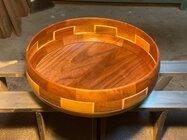
Odie, you sure have some beautiful pieces of wood! I generally don't turn that kind of stuff though. I think you have shared where you get it from, but can't remember.
robo hippy
robo hippy

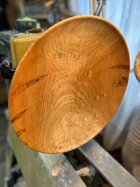 This 13 1/2” ambrosia maple platter (shallow bowl?) was originally about 15” in diameter. I turned it five years ago and was never very happy with the form. This morning I decided to put it back on the lathe and see what I could do with it. Turned it down and made a simpler, more graceful curve both inside and out. I’m very happy with the decision to go back and do it over.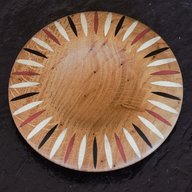
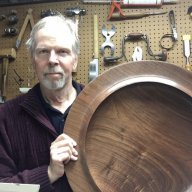
Hi Jay. What brand of steady rest is that?Very wet freshly cut piece of Monterey Cypress. It has amazing grain patterns.
View attachment 80427


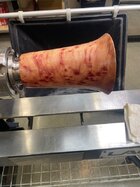
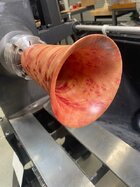
Looks like a cup of strawberry swirl ice cream.
Pete,
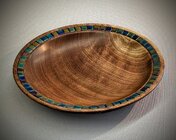
How are you adhering the tiles? Do you think the seasonal movement of the wood might present issues?
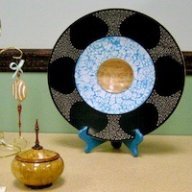
Would a flexible adhesive like E6000 work for you? Of course, if you need to fill the cracks you will have to use another material (i.e., modeling paste, spackle, etc.) which is easier to remove/clean from the tiles.I'm still trying to work out the best methods. The groove is never perfect and usually has a half tile width space at the end, so I try to spread that out and space all the tiles slightly. Hopefully that gives a little breathing room. I used CA on these for the initial set, then painted on a UV cure epoxy over the whole piece, making sure it got down into the cracks between. I wiped off the tops of the tiles pretty thoroughly before hitting it with the light. I did another one with a 2 part epoxy, but it's hard not to make a mess doing it that way.
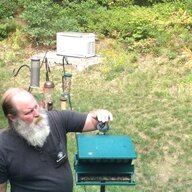


Chat GPT took a shotDave,
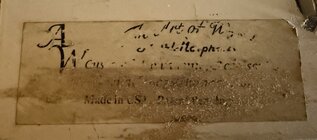
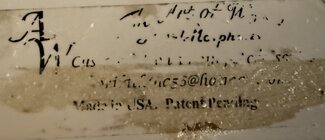
Since you have taken up the search, went out to the garage and cleaned off the label to see if I could "enhance" the visual clues. Partial email and maybe a few more letters. I will follow you down the rabbit hole and do a couple of searches myself. As a last resort I will contact George who is in the hospital at this time getting a new pacemaker and see what he remembers about the manufacture of the steady rest. However, that is sort of cheating.
View attachment 82906


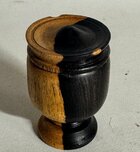

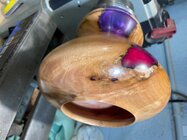
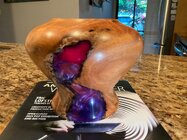
Very smooth interior and smart to use a wider opening so you can “learn” how the tools work with the new rig.My second attempt at using my new Lyle Jamieson hollowing rig. A piece of Bottle Brush that I cut out the rot and filled with Epoxy resin. I’m just happy it’s still in one piece! Very happy with the Jamieson rig. Very smooth and stable
Thanks Alan, Yes, the hole will get smaller as I progress. I’m happy it made it off the latheVery smooth interior and smart to use a wider opening so you can “learn” how the tools work with the new rig.

Thanks Alan, Yes, the hole will get smaller as I progress. I’m happy it made it off the lathe

 .
.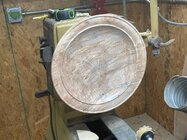
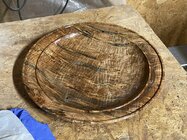
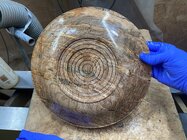
I love the rim beads and the bottom rings!Decided to finish turn a 12” maple platter today instead of working on the HF. I wanted to see what the grain looked like on the platter and decided to do a bead instead of my standard platter rim. The bottom is about as fancy as I’ll ever get
Had to turn the lights at the lathe off for the second picture, the walnut oil made it too reflective.
View attachment 83007
View attachment 83006
View attachment 83005

Now you’re just showing off! Lol! That thing is stunning!Decided to finish turn a 12” maple platter today instead of working on the HF. I wanted to see what the grain looked like on the platter and decided to do a bead instead of my standard platter rim. The bottom is about as fancy as I’ll ever get
Had to turn the lights at the lathe off for the second picture, the walnut oil made it too reflective.
View attachment 83007
View attachment 83006
View attachment 83005
Don’t make me sign your name on the bottom of one of my hollow forms, your status among Woodturners will plummetNow you’re just showing off! Lol! That thing is stunning!
!


What a beautiful piece of wood!!Using my Trent Bosch hollowing rig laser mated to my McNaughton coring system to ensure that I don’t screw up taking cores from a large spalted maple burl I was gifted by a friend back in October. All went well, and the largest bowl wound up at 15” with additional bowls at 10 1/2” and 7 1/2”. Still a couple of pieces of this burl yet to turn.
View attachment 83040View attachment 83041
I’d like to say thank you, but I can’t take any responsibility for the inherent beauty in the wood.What a beautiful piece of wood!!
I’m not sure I have a status but the way you’ve been turning HFs it could only help! Keep up the amazing work brother!Don’t make me sign your name on the bottom of one of my hollow forms, your status among Woodturners will plummet
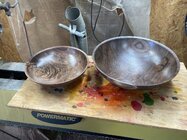

Beautiful piece of wood, and very nice design.Decided to finish turn a 12” maple platter today instead of working on the HF. I wanted to see what the grain looked like on the platter and decided to do a bead instead of my standard platter rim. The bottom is about as fancy as I’ll ever get

Here is your solution: Just add an apostrophe-- babies'. Present it as an heirloom rattle for this baby and all future generations!Oh Oh! Good catch. Don't think I can fix it though. Laser cuts pretty deep.
Guess I'll pray for twins!
Will that make it worth more like a misprint coin?
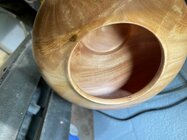
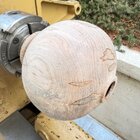
I've got a ways to go before I try one of those. It looks good!Maple ambrosia. End grain. Very dry wood.
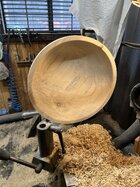
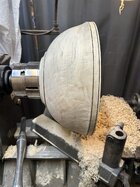
Almost Double the volume increase between a 14 and 17 inch bowl (79% increase). Looks great.17” x 7” poplar. This is by far the biggest bowl I’ve turned. I think I’ll stick to the 14” range. Now to sand.
View attachment 83120View attachment 83121
I like that foot!!!17” x 7” poplar. This is by far the biggest bowl I’ve turned. I think I’ll stick to the 14” range. Now to sand.
View attachment 83120View attachment 83121
Alan, yes Sir! I’m very acquainted with the mathematics but you just have to experience it first hand to drive the point home!Almost Double the volume increase between a 14 and 17 inch bowl (79% increase). Looks great.
Thank you David. That foot shape started as a happy accident a few years back and have used it ever since.I like that foot!!!