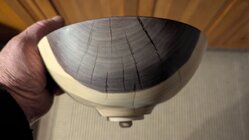
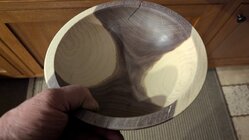
I like to start my work between centers. It doesn't lock me in to any particular axis like a faceplate or screw chuck does. I can change based on balance, grain, features, etc.
I'm assuming the way you describe working here is with a possibly uneven chunk of wood. I sometimes work and have taught that way when turning green wood or dry burl.
I think the method of starting and holding may depend somewhat on the starting blank. For example, turning a dry wood blank with top and bottom already flattened and the outline already cut round or to some shape on the bandsaw may work better by starting with a firm holding method in a fixed position. The axis is already "locked", er, determined. (And though the blanks are usually well balanced, wearing good face protection and working at a safe speed is, of course, advised - could be a hidden defect.)
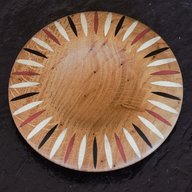
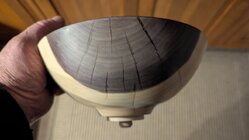
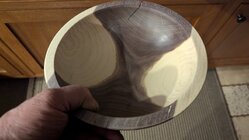
For example, dry, defect-free blanks like these are flattened and balanced and have only one practical starting center point - I'd have no reason to move the center unless I deliberately wanted to turn one off-axis.
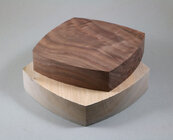
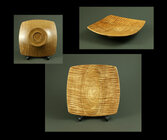
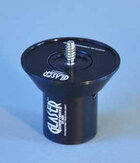
For this type of turning, I find a screw chuck the most practical and efficient way to hold although I have used faceplates and scroll chucks and occasionally started between centers.
For me, turning bowls, platters and more from start to finish from dry wood has many advantages.
The huge disadvantage, of course, is having suitable wood to start with, perhaps difficult or expensive for some to obtain. I cut many blanks from free green wood but it takes some effort and patience to end up with good dry blanks, and can benefit from access to machines such as a bandsaw, sanders, and even a sawmill.
One thing I love about this hobby is the incredibly huge variety of ways to work and the finished pieces possible starting with pieces of wood from trees!

Might be boring if we all worked the same way.
JKJ