• The forum upgrades have been completed. These were moderate security fixes from our software vendor and it looks like everything is working well. If you see any problems please post in the Forum Technical Support forum or email us at forum_moderator (at) aawforum.org. Thank you
  • Congratulations to David Bartell, People's Choice in the March 2026 Turning Challenge (click here for details)
  • Congratulations to Steve Gray for "White Oak Handled Bowl" being selected as Turning of the Week for April 6, 2026 (click here for details)
  • Welcome new registering member. Your username must be your real First and Last name (for example: John Doe). "Screen names" and "handles" are not allowed and your registration will be deleted if you don't use your real name. Also, do not use all caps nor all lower case.

Lighting at the lathe....

Odie

Panning for Montana gold, with Betsy, the mule!
Joined
Dec 22, 2006
Messages
7,758
Likes
13,273
Location
Missoula, MT
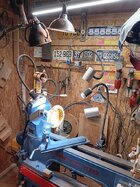
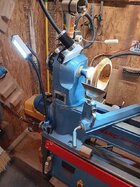
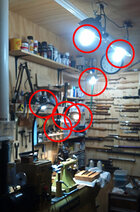
I keep adding lamps, and better lighting sure does help. Since getting my new Vicmarc VL240 lathe last year, I now have 10 lamps at the lathe....and keep adding more as I go! I've never had this good of lighting before, and now seeing the quality of my cuts is easier than ever before!

=o=
20260402_082037.jpg
 
Last edited:
One of the most difficult places to get good lighting is outside of the rim at about the 9 o'clock position.....right where I'm cutting on the outermost portion of the rim.

I bought another lamp specifically for this location but was having a very hard time putting the lamp anywhere where it wasn't a problem during other phases of the bowl evolution.

This lamp was installed in several places where it became a problem, because it was always in the way and had to be moved.

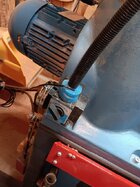
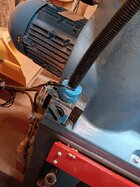
The solution came when I stacked a bunch of magnets together to increase the hold. This allows me to place the lamp in a spot where it's never in the way, but the lamp easily swings into place when it's needed.....
20260402_081747.jpg
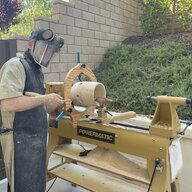
When the lamp is needed, it swings into place where it's between myself and my work piece. This gives me the best lighting I've ever had for this particular need. Like so:
20260402_081738.jpg
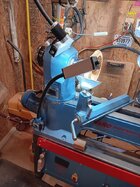
When the lamp isn't needed, it simply swings out of the way........problem solved!
20260402_081809.jpg

=o=
 
Last edited:
10 lights is sure a lot of lighting.
That includes the two incandescent lamps that I used when I had the old Woodfast lathe. I use them, because I have them, and even though anything helps....these two aren't absolutely necessary.

The new LED lamps aren't used for all applications. Two are facing the back side of a mounted bowl, and three are pointing towards the interior of the bowl.....then there is the new "swing away" lamp that I just explained in the previous post....

The lamps are used as they are needed, but there isn't really any condition where all of them are needed at the same time.

All of the lamps are strategically placed in positions that require the least amount of adjustment during the course of making an average sized bowl.

=o=
 
More light at the lathe is just like more cowbell... give me more! 😃

The downside to more lighting on your woodturning is that you can more easily see your mistakes.
The upside to more lighting on your woodturning is that you can more easily see your mistakes.
 
I'm a big fan of numerous small-diameter lights - "point source" sized lights reveal scratches and things far better then broad, diffuse lights, such as rows of long lights mounted high on a ceiling - these tend to provide more diffuse lighting and will hide scratches rather then highlight them. For me, small dia lights positioned at a glancing angle to the work are the best.

My usual lighting. The four in the cluster are all easily movable on swing arms or flexible shafts. All are constructed or shielded to keep light out of my eyes.

The two near the ceiling and the one far past then end of the lathe provide wide, general lighting, but not as bright as what appears here. All of these come on with a single wall switch (the switch activates multiple 110v receptacles)

Most of the receptacles and wires are hidden behind a thin plywood "skirt" on the front of a narrow shelf to eliminate a lot of wire and plug clutter. Wires are guided and secured by short lengths of soft, flexible iron wire fastened up inside the space behind the small shelf skirt with small screws.

A second switch turns on the ceiling-mounted 8' T5 if I'm working in that area but not turning.

When turning the main room lights on the ceiling are all off.

1775166553681.jpeg

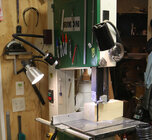
I have a similar arrangement at the bandsaw with three lights activated by a single wall switch.

1775167533111.jpeg

This lighting design was planned at the beginning but evolved a little over time. Works for me.

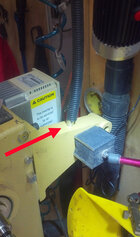
BTW, for a WTW SuperNova I found a good mounting place on one of the included brackets behind the lathe. I removed bulky magnet and drilled and tapped a hole in the cast iron to fit the threaded end of the flexible shaft. (Cast iron is very easy to drill and tap.)

1775167583487.jpeg

JKJ
 
I'm curious about what you said about stacking magnets to increase the hold. Can you give more details on that?

I only this past year became aware of "stacking" magnets in order to strengthen their pull. I believe it may have been a question I asked AI, and this is the answer I got.

Anyway, that was for another application that worked quite well on a much smaller scale than what you're seeing in my photo here. For this application, I initially tried without any extra magnets. I wasn't satisfied with how well it was holding and began adding magnets. Seems to have increased the magnetic grip well enough for now.....we'll see about that in the long run! I'm feeling fairly confident this magnet configuration will hold....

=o=
20260402_081747.jpg
 
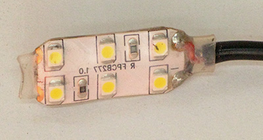
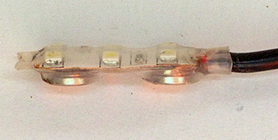
Odie, one idea on lighting that you might want to consider is a little light that sticks to the tool rest by magnets. I bought one from Cindy Drozda several years ago to use making boxes and it works quite well, even though it's not something you can really aim. The intensity of the light isn't blinding, but it's so close to the work that it doesn't need to be. Pix below. (You'll have to imagine it stuck to the wood side of the tool rest, just under the edge) I think it was $15 when I bought it, but the price is higher today. Other people may sell them as well--I really like and appreciate Cindy.
1775179014292.png1775179037841.png
 
Odie, one idea on lighting that you might want to consider is a little light that sticks to the tool rest by magnets. I bought one from Cindy Drozda several years ago to use making boxes and it works quite well, even though it's not something you can really aim. The intensity of the light isn't blinding, but it's so close to the work that it doesn't need to be. Pix below. (You'll have to imagine it stuck to the wood side of the tool rest, just under the edge) I think it was $15 when I bought it, but the price is higher today. Other people may sell them as well--I really like and appreciate Cindy.
View attachment 86784View attachment 86785

That looks like a pretty good idea Dean.

Off hand, it does seem like the light would be better if it's above the tool, rather than below it.

The light I'm using right now seems to be working as planned.....but, this gadget of yours is definitely something to keep in mind!

Thanks :)

=o=
 
Odie, one idea on lighting that you might want to consider is a little light that sticks to the tool rest by magnets.

For years I've thought of making a "belly light", something I wear to light what the overhead lights don't. Maybe I'll try making a toolrest light instead. Would have to be very thing (tiny length of tape strip LEDs) since I keep the toolrest close to the work.
 
I went to several demos by Eric Lofstrom at Totally Turning last weekend and picked up a remarkable amount of useful information from him. One of the things he talked about was lighting, which has me reconsidering my strategy. I currently have a track with a half dozen spotlights and two gooseneck lamps that I reposition as needed. It's all extremely bright! At the demo Eric showed us the difference between multiple diffuse lights and using a single light source with a single LED-- the single LED illumination made ripples in the piece he was turning stand out like night and day allowing him to get to perfectly smooth curve by knocking back the high spots. Lamps with multiple leds or multiple lamps create a different shadow for each point light source, completely washing out the ability to see the very small ripples.

Now I'm considering the value of being able to switch between my Times Square illumination and a single point source. I think I generally need more light than the single point provides, but am interested in having it as an option. He said he works in a dark room with a single point light source, my eyes aren't up to that!
 
Odie, one idea on lighting that you might want to consider is a little light that sticks to the tool rest by magnets. I bought one from Cindy Drozda several years ago to use making boxes and it works quite well, even though it's not something you can really aim. The intensity of the light isn't blinding, but it's so close to the work that it doesn't need to be. Pix below. (You'll have to imagine it stuck to the wood side of the tool rest, just under the edge) I think it was $15 when I bought it, but the price is higher today. Other people may sell them as well--I really like and appreciate Cindy.
View attachment 86784View attachment 86785
I have one of these and find it extreme useful.
 
Now I'm considering the value of being able to switch between my Times Square illumination and a single point source. I think I generally need more light than the single point provides, but am interested in having it as an option. He said he works in a dark room with a single point light source, my eyes aren't up to that!

I agree - too much broad, diffuse light is bad. I often switch off some light when I get down to the final refinements and use one or two bright point-source lights to highlight any problems. A small, bright flashlight often helps.
Two things I always do:
  1. To make rogue scratches visible, I coat the surface with Naphtha. As it dries, some liquid stays in a scratch after that on the surface evaporates. For maybe 2 seconds, any remaining scratches are highlighted. (As a bonus, the naptha makes the wood pop and shows what it might look like with finish apply. Warms the heart, especially with olive and figured wood.
  2. For ripples and even very shallow bulges or depressions nothing works better then using the finger to feel for them. Any I mark any irregularities with a pence and turn, scrape, or removed them with a curved NRS. Often you can see irregularities, especially in the bottoms of bowls or platters, especially when finish was applied - just turn the piece in a good "non diffuse" light and look. But you can ALWAYS feel them with a light touch, especially with some practice.
I have some pieces I made a decade ago I was happy with until I looked at them later in the right light. I'm ashamed to show them now. They are 16" and 19" platters from Sapele. Both have some very shallow rings near the center. I'm thinking of fixing them and refinishing.

It amazes me that otherwise amazing turners sometimes don't inspect their pieces carefully. At a symposium a well known demonstrator displayed some of his work on a stand off to the side. One small "dish" caught my eye from across the room because of the outstanding figure. Then when I looked closely there was a wide bulge in the middle, ruined the piece IMO. It was nothing that 5 minutes with a hand scraper wouldn't fix. Another guy looking at the same piece commented on how wonderful that one was. When I pointed out and he felt that bulge he was shocked. Unfortunately I lost respect for that demonstrator and I have since never attended any of his presentations. Am I too picky?

Point is: if you strive for quality and perfection, use your eyes in good light AND use your fingers. If getting by is good enough, don't bother!

I never offer unsolicited advice. Once a gentleman at a club meeting asked me to critique, not the form, but the workmanship of a bowl he was particularly proud of. I asked if he wanted me to say "oh, how wonderful" or give him my honest opinion. "Give it to me straight".

One light stroke of my finger down the inside wall revealed two shallow circular bulges. Nothing that couldn't be fixed in a few seconds with shear scraping or NRS. I told him you might be satisfied with these but I wouldn't be. He couldn't feel them. I had him try again and again with a lighter touch and he finally felt them. He got a upset and stormed off.

Much later a mutual friend said he took that to heart and the quality of his work started improving! Success! He even honored me by begging to buy one of the rare bowls I made. I refused to sell it since I usually sell things. So I just gave it to him.

JKJ
 
Last edited:
My approach to lighting has taken a different direction, and here’s why.

Our eyes are amazing optical devices. Amazing lens, iris and sensor. So, thinking about the, as such. Optical lenses are sharpest at apertures one or two stops from wide open. They get a bit soft at max aperture and suffer diffusion at small apertures. So, maxing out lumens may not be a helpful as you think. Reducing your pupils to pinholes worsens your sharpness and perception of depth.

Many of these light sources produce tons of glare. If you are able to see the light source itself—the underside of those incandescent lamp shades, and the led lights with the leds nearly at the surface with no shade—your eyes will experience lens flare. Off axis light hits your eye. It doesn't enter your iris, but scatters across the lens causing the flare causing diffusion and reducing contrast. It’s also uncomfortable and is fatiguing to your eyes.

You may want to consider putting shades, barndoors or snoots on your lamps. Thinking of those high powered led lights with the cylindrical lamp heads, with harsh light, in your face. I added a snoot to mine. A short black tube of rubber or poster board added to the output end of the lamp heads will narrow the beam, and prevent the light from hitting your eyes. The difference is quite dramatic. With the incandescent lamps be sure that you cannot see the underside of the shade, only the black topside. The result will be less eye fatigue, better contrast and sharpness. (Note. Keep the cooling fins clear)

How many sources?
In nature, there are two kinds of light. A point source (main light or key light) which is the sun. Bright, unidirectional, a small point. Only one source as we only have one sun. The light is hard and the shadows black (think of the dark side of the moon). Shadows on earth generally aren’t completely black due to reflected light. More reflection gives lighter shadows. This is called fill light.

On an overcast day there are very few shadows, or shadows are nearly filled. The clouds diffuse the light making the sky a giant soft box. (Soft lights are used in photography, especially portraits due to their ability to make wrinkles vanish). Multiple lamps tend to act light a cloudy day and obliterate scratches.

What then, is most helpful to us at the lathe?
My solution is to use two lights. The first, the main light is a studio fresnel with barn doors. A fresnel is a single point light behind a fresnel lens to widen or narrow the beam of light. The barn doors control the light not need/wanted, the light that would hit my eyes. I can position and aim the light from most anywhere around the lathe. This is my sunlight.

The second light is a Laguna lathe mounted lamp. Two led tubes. Being a larger source (approx 3 x 12 inches) the light is soft. Let’s call that the fill light (it fills in shadows). Even that light gave glare! It has a diffuser. The edges of which are very bright! So I added simple barn doors. One inch wide poster board around three sides, extending an inch downward. Fixed!
Both lights are adjustable in brightness.
I prefer to work with ONLY these two. Truly. No overhead lights.

I position my main light, the studio light wherever makes the most sense, puts light where I need. I narrow or widen the beam for best results, and adjust the barn doors to bloke unwanted/unneeded light. Then adjust my fill light for comfort and best view of the piece. More fill = more overall light. Less fill= enhanced perception of surface quality, ability to easily see torn fibers and scratches.

I’ve been using my “system” for several years. I enjoy elimination of glare and eye fatigue, the enhanced sharpness and contrast, and that I’m much better able to judge the form, since beyond my piece is very dark.

It’s quality, not just quantity.

 
Back
Top