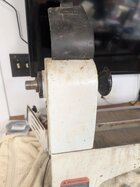
Any machine shop could make up an adapter for a salvaged motor from scratch. You may be able to start with a shaft adapter from McmasterCarr.


I've done that already and not happy with the results.You don’t need a powered solution at all. Instead, glue a portion of a wide sanding belt to a flat substrate to make a sanding slab, then turn your partial vessel upside-down and move it around by hand. A few swipes will even out high spots quickly.
Tim

HE DOESN'T WANT A LATHE!Think vertical lathe. Build a potters wheel. Small motor to keep weight down, pulleys to step speed down, and a shaft that will accept a chuck.
Or find a cheap used lathe and pull the headstock to create the potters wheel.

It’s no longer a lathe when just the headstock is used and oriented vertically. It’s a potters wheel.HE DOESN'T WANT A LATHE!
Then put a circular platen on a vertical-shaft gear motor similar to my sharpening machine shown here:I've done that already and not happy with the results.

Where did you have it made? A general Machine shop? How did you describe it?I like this idea! I had a special handwheel made for my mini lathe that had a thread on it so I could turn outboard. It would do just what Jim is looking for.
View attachment 84371
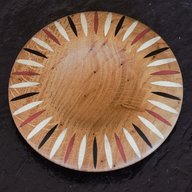
Another lathe could easily be the most simple solution.


I just sketched it up, pencil and ruler technology and had a local machine shop make it.Where did you have it made? A general Machine shop? How did you describe it?
Thx
I have an old Jet 1221 collecting dust, so I thought I'd give this a try since it is small. I can't even find a machine shop close to me that is still open. Everyone closed down!I just sketched it up, pencil and ruler technology and had a local machine shop make it.
I just looked at an old Jet 1221 that’s sitting in my garage. It looks like it would be possible to unbolt the headstock and turn it around. Don’t know if the pulleys would line up or if that would be easy to fix. Also would have to reverse one set of pulleys to maintain the ability to change speeds.I have an old Jet 1221 collecting dust, so I thought I'd give this a try since it is small. I can't even find a machine shop close to me that is still open. Everyone closed down!
Did your handwheel have an internal reversed thread or just slide on?
Yea I saw that also. However the holes for the shaft / spindle are different sizes for the handwheel and spindle.I just looked at an old Jet 1221 that’s sitting in my garage. It looks like it would be possible to unbolt the headstock and turn it around. Don’t know if the pulleys would line up or if that would be easy to fix. Also would have to reverse one set of pulleys to maintain the ability to change speeds.
Figure out how to get the handwheel off and go from there. Most likely it is threaded or is secured with a grubscrew bearing on a key.Yea I saw that also. However the holes for the shaft / spindle are different sizes for the handwheel and spindle.
I stopped looking after that.
It does have an internal reverse thread and a couple of grub screws to lock it on. It actually sets the shaft endplay on this lathe too - it's a delta lathe.I have an old Jet 1221 collecting dust, so I thought I'd give this a try since it is small. I can't even find a machine shop close to me that is still open. Everyone closed down!
Did your handwheel have an internal reversed thread or just slide on?
I already have it apart which is why I know the holes are differentFigure out how to get the handwheel off and go from there. Most likely it is threaded or is secured with a grubscrew bearing on a key.
You should have enough info to generate a drawing for a machine shop to make a faceplate.I already have it apart which is why I know the holes are different
Seems like you should be able at this point to generate a drawing a machine shop could use to make a spindle adapter for your faceplate.I already have it apart which is why I know the holes are different
Not sure what holes you are talking about. Once you turn the headstock around the spindle is on the outboard side. Just mount your faceplate (with a grub screw!) and Bob’s your uncle.Yea I saw that also. However the holes for the shaft / spindle are different sizes for the handwheel and spindle.
I stopped looking after that.
Thought you were talking about just turning the spindle around.Not sure what holes you are talking about. Once you turn the headstock around the spindle is on the outboard side. Just mount your faceplate (with a grub screw!) and Bob’s your uncle.
I can't even find a machine shop close to me that is still open. Everyone closed down!
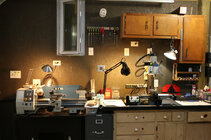
Uncle Bob says hi!Not sure what holes you are talking about. Once you turn the headstock around the spindle is on the outboard side. Just mount your faceplate (with a grub screw!) and Bob’s your uncle.

!You really did want a lathe.

Doesn’t make sense to me either.Looking back at the original post, Jim said he didn't want another lathe. The spare he had was what he wanted.
The better alternative would be to look into the motor and see if it could be reversed or another possibility would be to reverse mechanically by crossing the belt.Not sure what holes you are talking about. Once you turn the headstock around the spindle is on the outboard side. Just mount your faceplate (with a grub screw!) and Bob’s your uncle.
It would if you actually read my post and commentsDoesn’t make sense to me either.
Tim
Wrong againLooking back at the original post, Jim said he didn't want another lathe. The spare he had was what he wanted.
I may well be wrong, and if you have come up with a solution that is doubleplusgood. I thought I understood that you have an " old Jet 1221 collecting dust" and that you are reversing the headstock in order to spin your workpiece outboard. Apologies for misunderstanding.Wrong again