
I would like to give it a try at threaded boxes. What would be your preferred thread size?

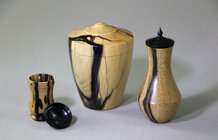



Alan Batty’s video is a good resource
One thing you can do, well should ALWAYS do is rough turn them first and let them sit for a month or six before you finish turn them. All woods "adjust" to having bulk removed....
Sometimes a little CA is used on the threads near completion on softer woods. Curiosity has me asking if using some thin on the area to be threaded before starting the chasing would be a good idea.
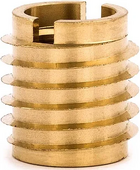
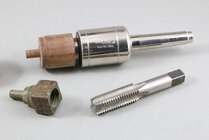

Eyeballing peanut butter jars, it seems they are in the 4-6 tpi range. I find them near optimum for ease of use.When I built my threading jig years ago I found a very coarse thread like 4 tpi was a favorite with users. Just a turn or two to remove the top. Coarse threads can have a great deal more looseness to accommodate seasonal changes in fit.
Grain matching between base and lid was something I didn't care much about. Too much trouble having to be careful getting the lid just at the right tightness or looseness to grain match. Better IMO to use different woods or embellishment at the contact area to avoid the mismatched grain appearance.
I don't know why commercially made threading jigs only offer finer threads. Unscrewing a fine thread with many turns can drive you crazy although somebody told me it can increase the anticipation of what treasure might be in the box once the lid is off.
I agree with Michael. There's no reason other than tradition to use standard 60 degree vee threads.Eyeballing peanut butter jars, it seems they are in the 4-6 tpi range. I find them near optimum for ease of use.
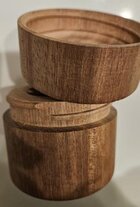
For soft woods I usually start using CA. Hard woods I use it as I am threading. Are you going to do hand chasing or use a jig?Sometimes a little CA is used on the threads near completion on softer woods. Curiosity has me asking if using some thin on the area to be threaded before starting the chasing would be a good idea.

On really soft woods like this urn made from eastern white pine I first put a liberal coat of thin CA on the bore, then when there is still a flat on the thead I apply more CA and finish cutting the thread. Often I will put a coat of CA on the finished thread and without changing the depth run the router bit through for a smoother thread.Sometimes a little CA is used on the threads near completion on softer woods. Curiosity has me asking if using some thin on the area to be threaded before starting the chasing would be a good idea.
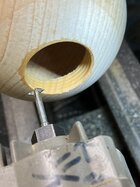
What is the pitch and what cutter are you using?I agree with Michael. There's no reason other than tradition to use standard 60 degree vee threads.
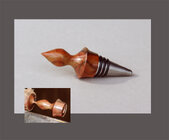
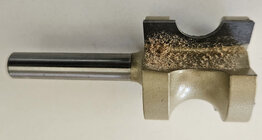
Here's one of my bottle threads. They're the ultimate in threads IMO. This one is single turn. Use a cutter as shown the get the thread profile.
View attachment 83665
View attachment 83666