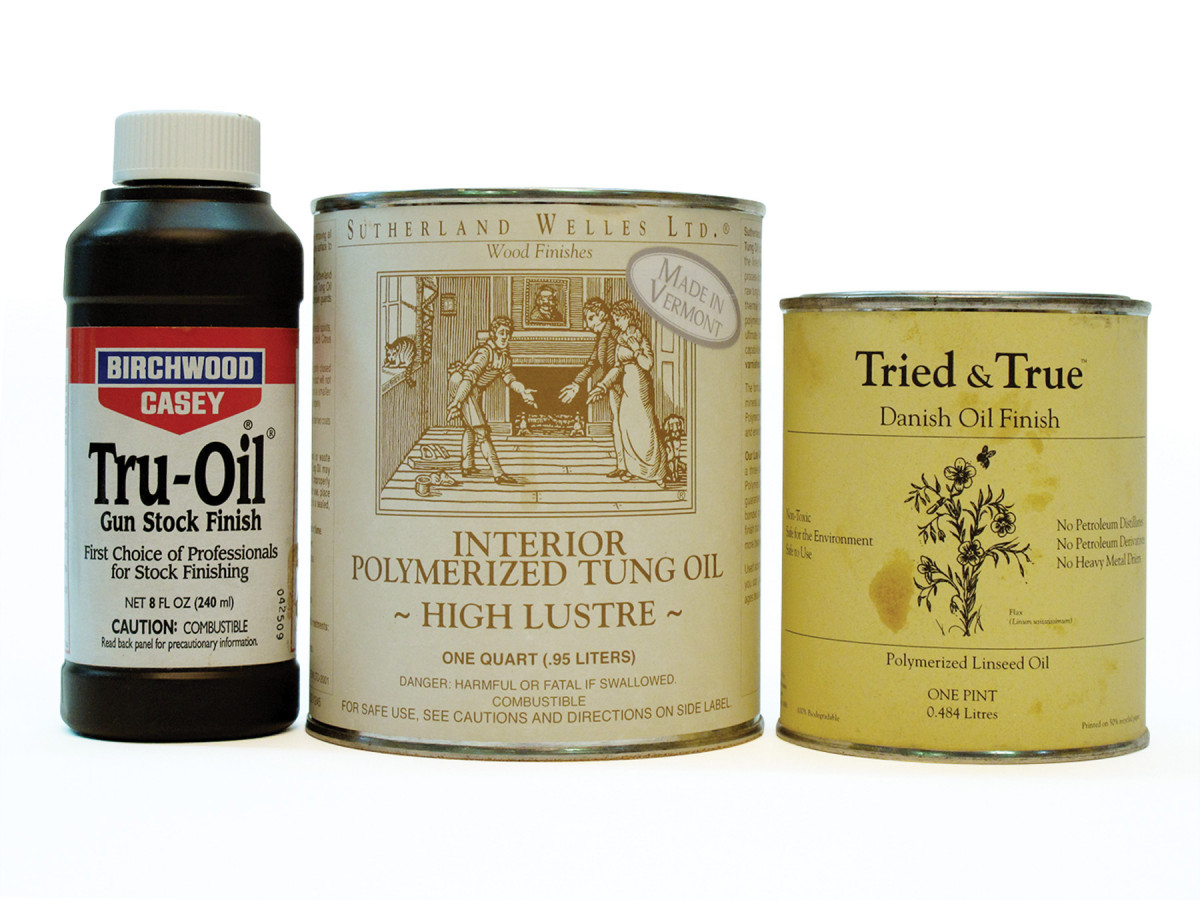
Steve, while it is doubtless true that, as you say, it takes a number of coats of tung oil to create a film finish, it is certainly possible to do so, and indeed it used to be quite a common method of putting a film finish on fine furniture. If I were aiming to build a film finish I would likely use a tung oil - varnish blend, to save time and get the extra durability of the resin in the varnish, but I have often created a film finish (with a decent sheen) with just tung oil. It is a common misperception that an oil finish has to be one that is "in the wood" and not on the surface. It has the advantage of being beautiful and more natural when it has not built to a film finish, and that is how I prefer it, but it does not take long to get a good film finish with straight tung oil.
As for buffing with abrasive waxes, such as with the Beall system, I would say that polishing a cured resinous surface is by far the less common use of abrasive waxes. I do it, but it is tricky and requires a long wait for the full cure, but many woodworkers take bare wood to the tripoli and white diamond wheels to polish the wood, then add a coat of carnuba for a nice gloss and a bit of protection. I don't do this, but in our club there are some members who do
only this for work that is not going to experience handling or wear. An even more common approach is to put some sealer on bare wood and then go to the buffing wheels where again, the main thing being polished is the wood. Finally, the core application of abrasive waxes in the form of pastes, such as Yorkshire grit and the like, is to apply them to bare wood, or maybe lightly sealed wood, and get a polished wood surface. So, while Jon's question was about a gloss finish, which would typically involve a film finish, buffing a piece that has a few coats of tung oil on it is a very reasonable approach, and sometimes the workflow that I follow.
Does polymerized tung oil cure harder? Every informed discussion of tung oil finish will state that it does; that is, it not only cures faster, but harder. I use polymerized tung oil primarily for the faster curing, not the hardness, but I have only ever heard the view that polymerized tung oil cures harder.
A quick Google search will get support for this, and I have never seen anyone say the two cure to the same hardness until this thread. I am always a bit suspicious of vendor's claims, but Walrus Oil sells both pure (un-polymerized) tung oil and polymerized tung oil, and spends a lot of space selling the virtues of pure tung oil, but this is their fairly compact statement to the effect that polymerized tung oil cures harder:
Durability: Polymerized Tung Oil has an edge in durability over Pure Tung Oil. It cures to a harder, more resilient finish that stands stronger against daily wear and moisture, making it an excellent choice for dining tables, cabinetry, bar tops, kitchen countertops, and hardwood floors that see regular heavy use. It retains all of tung oil's renowned water resistance and adds an extra layer of surface toughness that's well-suited to high-traffic applications.
In the past few years Walrus Oil's Tung Oil product line has earned best-seller status, trusted for being all natural, 100% pure, and void of any additives. In 2025 we expanded to Polymerized Tung Oil, which is strictly heat-bodied and contains no chemical driers.

walrusoil.com
I have an open mind here, so if there is some authority against the common view that polymerized tung oil cures to a more resilient finish, I would like to look at it. I would still use polymerized tung for the faster curing, and would use a blend with resin if I were after serious durability, but I am curious about the science here.

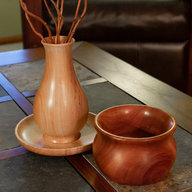
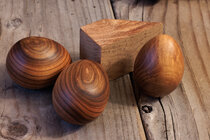
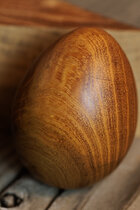
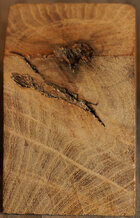
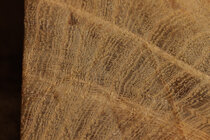
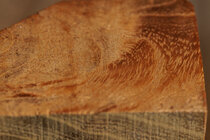
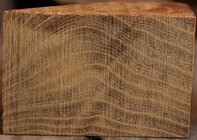
 Hopefully one of you will be able to identify the wood. It is porous, however, I am continuing to sand it...I've been wet sanding with the tung oil. I finished through 800 grit, and I have 1000/1200, 1500, 2000 and 3000 grits as well. It IS getting smoother, and more and more visible (but fine) scratches are being eliminated with each grit. I am hoping by 2000 all visible scratching is totally gone. The wood IS porous, you can see that in the remaining chunk of the wood that is left over after turning the egg. The egg, however, the pores seem to be getting filled in fairly well with the oil-wet sanding.